Things Allowed in the JEE Advanced Exam Hall, Check Permitted and Prohibited Items in JEE Advanced

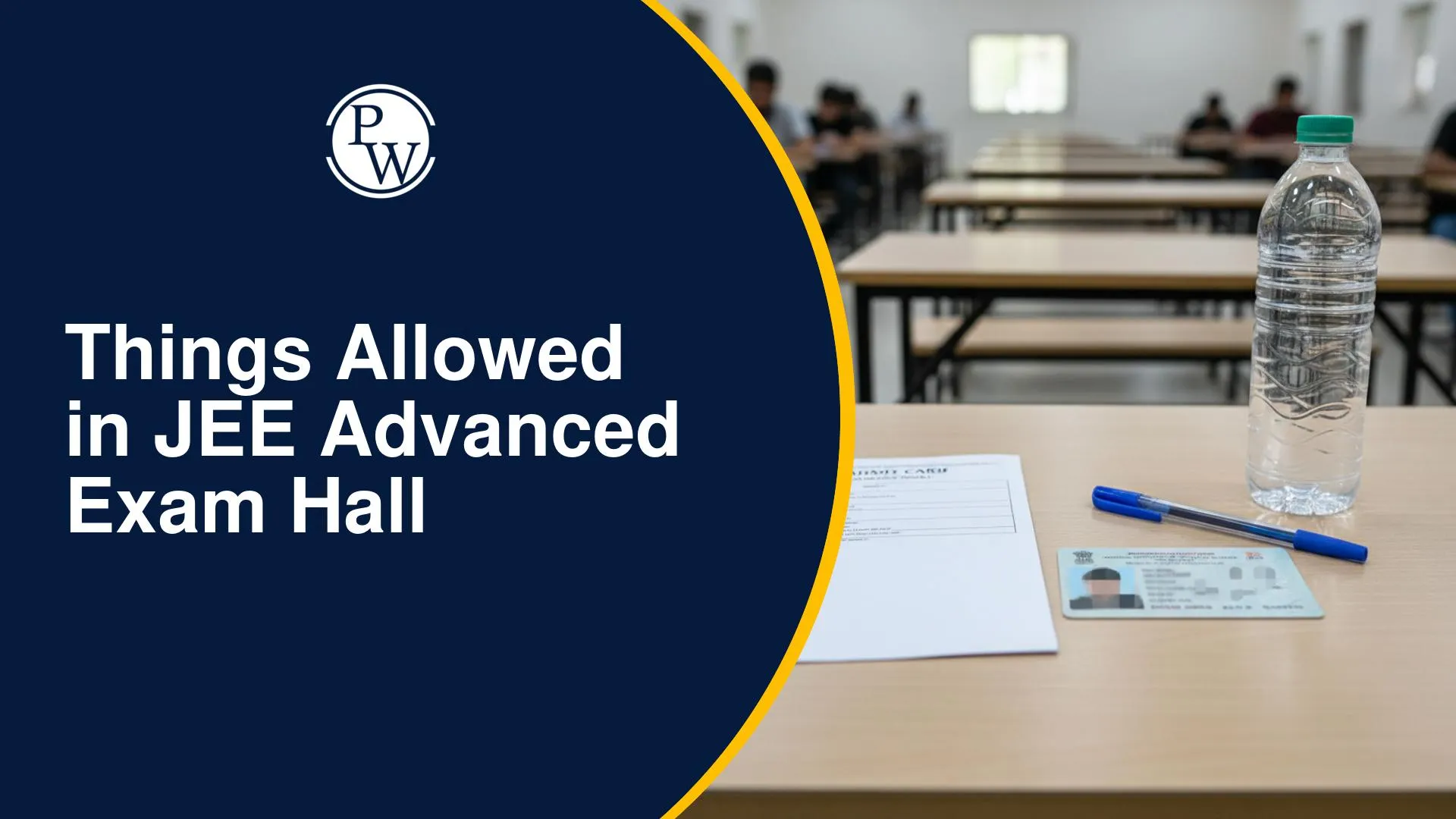
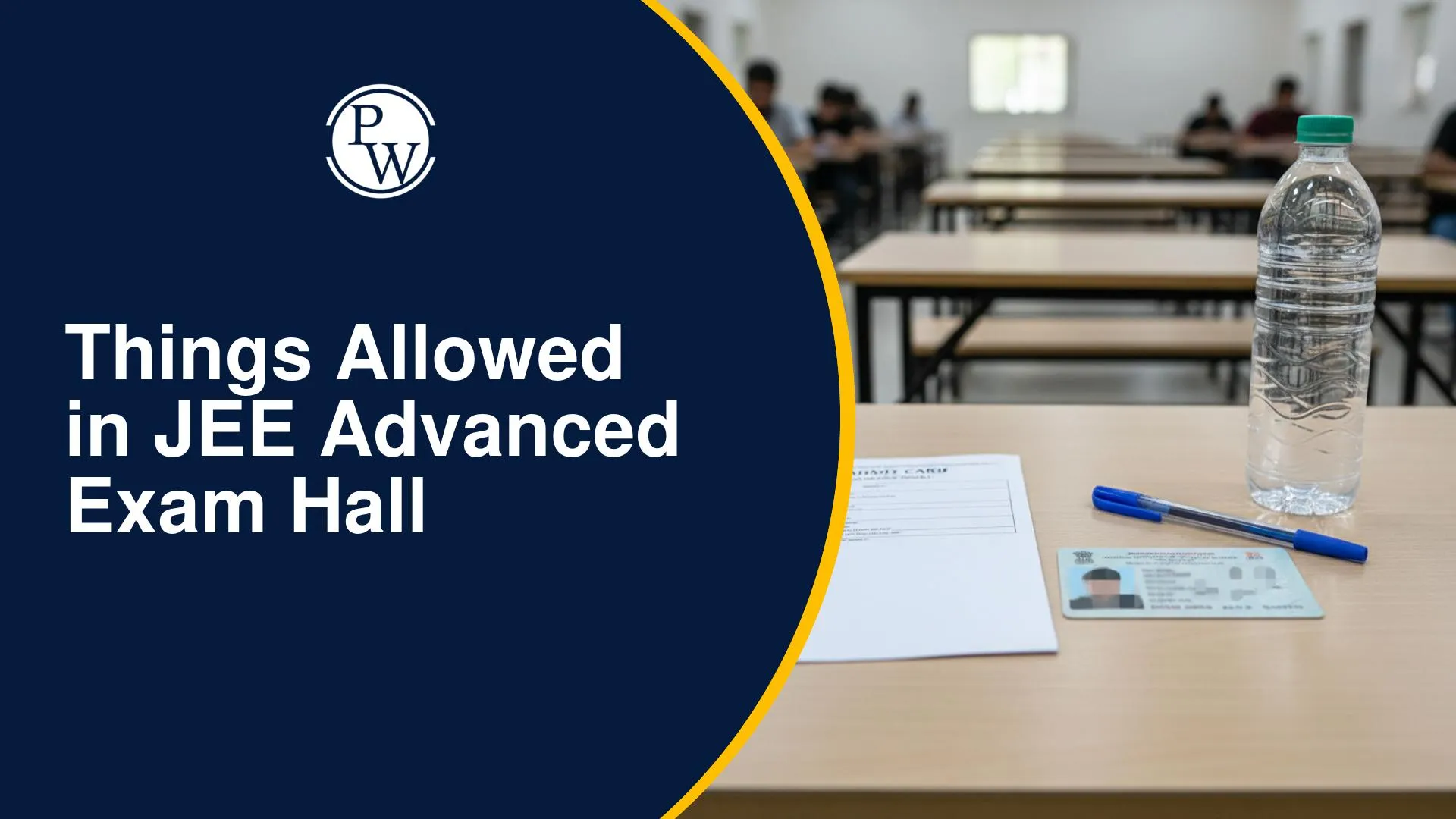
Things Allowed in JEE Advanced Exam Hall: The JEE Advanced examination is a critical step for aspiring engineers. Understanding the regulations for exam day, especially the things allowed in JEE Advanced exam hall, is vital for a smooth experience. This guide from Physics Wallah provides clarity on what you can and cannot carry, ensuring you are well-prepared and focused solely on your performance.
JEE Advanced 2026 Exam Schedule and Reporting Times
The JEE Advanced 2026 exam is a computer-based test scheduled for May 17, 2026. Candidates must appear for both Paper 1 and Paper 2. Missing either paper will lead to disqualification. Your specific schedule and reporting time will be detailed on your admit card. The entry gate closes 30 minutes before the exam begins, and latecomers will not be permitted entry.
To ensure a smooth experience on exam day, candidates should be fully aware of the official exam timings and reporting schedules. Here is an overview of the JEE Advanced 2026 exam schedule:
| JEE Advanced 2026 Exam Day Schedule | ||
|---|---|---|
| Event | Morning Session (Paper 1) | Afternoon Session (Paper 2) |
| JEE Advanced Timings | 9:00 AM - 12:00 PM | 2:30 PM - 5:30 PM |
| Exam Duration | 3 Hours | 3 Hours |
| Entry Time | 7:30 AM - 8:30 AM | 1:00 PM - 2:00 PM |
| Invigilator's Instruction | 8:30 AM - 8:50 AM | 2:00 PM - 2:20 PM |
| Exam Start Time | 9:00 AM | 2:30 PM |
| Exam End Time | 12:00 PM | 5:30 PM |
Preparation Before JEE Advanced Exam Day
Proper preparation the day before the exam is essential to prevent logistical problems and ensure timely arrival. Physics Wallah recommends the following:
-
Keep 2-3 clear printouts of your JEE Advanced admit card ready.
-
Prepare 2-3 passport-sized photos that match the one uploaded during registration.
-
Pack all mandatory documents and allowed stationery in JEE exam, such as a black ballpoint pen and a transparent water bottle.
-
Check your exam centre location and plan your travel to arrive at least one hour before the gate closing time.
-
Pack your bag the night before to avoid rushing on exam morning.
-
Ensure adequate sleep for optimal concentration during the exam.
JEE Advanced Exam Centre Entry Procedure
Understanding the entry procedure can help reduce anxiety on exam day. Here’s what candidates can expect:
-
Document Verification: Candidates will undergo one-by-one document verification. Only those with the correct documents, including the admit card and original photo ID, will be permitted entry.
-
Physical Security Frisking: Separate physical frisking will be conducted for male and female students by same-gender staff.
-
Prohibited Item Deposit: Any prohibited items found during the security check must be deposited outside the exam centre. It is advisable not to carry such items, as deposition takes time, and the safety of items is not guaranteed.
-
Seating Arrangement: Boards inside the centre will display seating arrangements based on application numbers and room numbers.
-
Biometric Registration: Before proceeding to your seat, a biometric registration process involving fingerprint and live photograph capture is required for identity verification.
Things Allowed in JEE Advanced Exam Hall
To maintain the integrity of the examination while ensuring candidate comfort, certain items are permitted inside the exam hall. Candidates are allowed to carry specific items allowed in JEE Advanced exam hall to ensure a fair and comfortable examination.
-
Transparent Water Bottle- Only plain, transparent water bottles are allowed; no coloured or tinted bottles.
-
Sugar-related items for diabetic students- Only with written permission from IIT Roorkee for insulin items.
-
Hearing Aids- Prior permission is required.
-
Prescription Spectacles/Glasses- Normal prescription glasses are allowed; smart glasses or camera-equipped frames are not.
-
Sanitary Product- Permitted only for female candidates.
-
Ball-Point Pen- A black ball-point pen is among the allowed stationery in JEE exam.
Prohibited Items at JEE Advanced Exam Centre
It is imperative for all candidates to be aware of items that are strictly forbidden inside the JEE Advanced exam centre. Carrying prohibited items is a serious offense and can lead to disqualification. Avoid bringing these things not allowed in JEE Advanced exam hall:
- Mobile Phones- Any type of mobile phone is not allowed.
- Smartwatches & Digital Watches- Any type of watch with displays and wireless connectivity is not allowed.
- Analog Watches- Only simple mechanical watches are allowed; no unusual thick designs or casings permitted.
- Bluetooth Earphones/Earbuds- Any kind of wireless audio device is not allowed.
- Scientific or Graphical Calculators- No kind of calculator is allowed.
- Textbooks/Notes/Study Materials- No study materials like flashcards or formula sheets are allowed.
- Stationery Items- Except for a black ballpoint pen, no other stationery items are allowed, including pencil boxes, pouches, geometry boxes, log tables, wallets, blank or written papers, notebooks, and textbooks.
- Wallets- Wallets with metal clasps will trigger metal detectors and are not allowed. Students can use a thin card holder for cash.
- Food Items- No food items are permitted inside the exam hall.
- Electronic Devices- Other electronic devices like fitness bands, earphones, portable chargers, USB drives, or power banks are not allowed.
JEE Advanced Dress Code
Adhering to the dress code is mandatory, and non-compliance may lead to additional searches or even denied entry.
Dress Code for Male Candidates
-
Top Wear: Light, breathable fabric like cotton. Half-sleeve t-shirts, shirts, or kurtas are allowed. Avoid full-sleeved shirts with zippers or clothing with multiple pockets.
-
Bottom Wear: Simple trousers or cotton pants. Avoid jeans, cargo pants, or outfits with multiple pockets.
-
Footwear: Flat and simple footwear like sandals, slippers, and chappals are recommended.
-
Accessories: Do not wear watches, bracelets, rings, or any metallic items.
Dress Code for Female Candidates
-
Top Wear: Simple kurta, kurti, or top with half sleeves. Avoid heavy embroidery or decorative designs.
-
Bottom Wear: Jeans, leggings, or palazzo are allowed, but avoid overly tight or flashy clothing.
-
Footwear: Sandals, slippers, or flats with thin soles are recommended.
-
Accessories: No earrings, nose rings, necklaces, bangles, or any jewellery.
Avoiding Clothing and Accessories Issues on Exam Day
Avoid the following clothing and accessories to prevent issues:
-
Clothing: Full-sleeved clothes (jackets, hoodies, multiple layers). Students wearing multiple layers will be asked to remove them.
-
Jewellery & Accessories: Rings, bracelets, metallic jewellery, or accessories of any kind.
-
Footwear: Footwear with thick soles, boots, and zipped footwear.
-
Headgear: Caps, hats, dupattas, or scarves are not allowed, except for religious accessories.
JEE Advanced Exam Hall Rules and Instructions
Inside the exam hall, candidates must maintain decorum and follow these instructions:
-
Follow the invigilator's instructions and do not touch the computer terminal until guided.
-
All rough work must be done only on the provided rough sheets. Do not use desks, tables, or your admit card for rough work.
-
Read the on-screen instructions thoroughly before starting the exam.
-
Raise your hand to call the invigilator for any doubts or assistance.
-
Avoid discussing questions with other candidates, as this is considered malpractice.
Common Mistakes to Avoid on Exam Day
Based on expert observations, avoiding these common mistakes will ensure a smooth exam experience:
-
Admit Card Quality: Do not use low-resolution or black-and-white printouts. Ensure a clear printout with a visible QR code, as this is a key JEE Advanced admit card requirement.
-
ID Proof: Only original photo ID cards are accepted; photocopies or digital copies (e.g., DigiLocker) will not be.
-
Late Arrival: Arriving exactly at the reporting time can lead to delays. Aim to arrive significantly earlier.
-
Ignoring Instructions: Do not skip reading the initial instructions provided on screen, as this can lead to mistakes.
Prohibited Items: Do not carry switched-off mobile phones into the exam hall. Being caught with a prohibited item will lead to disqualification.
Things Allowed in the JEE Advanced Exam Hall FAQs
What are the important documents required for JEE Advanced exam centre?
What is the gate closing time for the JEE Advanced 2026 exam?
Can I show Digilocker or a scanned image of an Aadhar card as a photo identity card?
Can I wear a simple analog watch to the JEE Advanced exam centre?