Life Processes Notes
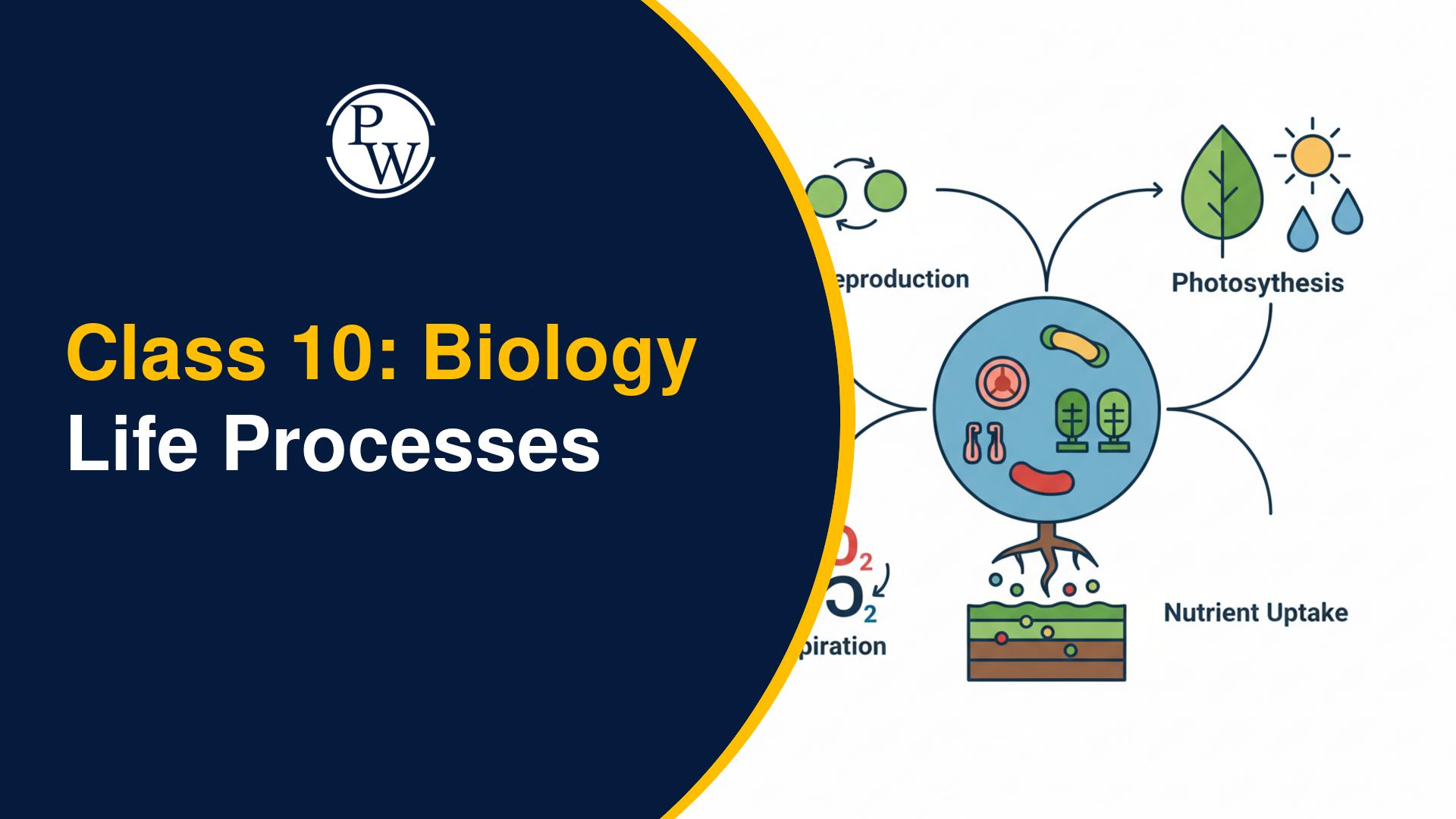
Life Processes are one of the important and major biological functions that help living organisms sustain and reproduce. They include processes like nutrition, respiration, transportation, and excretion.
Therefore, understanding these functions helps students learn how living systems maintain balance and adapt to their environment. The chapter provides a detailed overview of these processes based on the NCERT Class 10 Science syllabus 2025.
Nutrition and Respiration
Nutrition is a vital life process through which living organisms obtain and use food for energy, growth, and repair. It is mainly of two types, autotrophic and heterotrophic.
Autotrophic Nutrition occurs in green plants and some bacteria. It helps prepare their own food using sunlight, carbon dioxide, and water through photosynthesis. The presence of chlorophyll enables plants to capture sunlight, converting it into chemical energy in the form of glucose. This process provides energy for all organisms in the food chain.
Heterotrophic Nutrition is seen in animals and humans, where food is obtained from other organisms. It includes:
- Holozoic Nutrition – as in humans and amoeba, involves ingestion, digestion, and absorption.
- Saprophytic Nutrition – in fungi and bacteria, involves feeding on dead and decayed matter.
- Parasitic Nutrition – as in leeches and tapeworms, depends on living hosts for nourishment.
The process of releasing energy in the form of ATP (Adenosine Triphosphate) is called Respiration. It is of two types, aerobic respiration (in the presence of oxygen) and anaerobic respiration (without oxygen). The human respiratory system includes the nasal passage, trachea, bronchi, and alveoli. Gas exchange occurs in alveoli, while inhalation and exhalation help maintain oxygen and carbon dioxide balance.
Transportation and Excretion
Transportation in humans occurs only through the circulatory system. This process includes the heart, blood, and blood vessels. The heart pumps oxygenated blood via arteries and brings deoxygenated blood back through veins. Capillaries help exchange nutrients, gases, and wastes. In plants, xylem transports water and minerals, while phloem distributes food bidirectionally.
Excretion removes metabolic wastes to maintain chemical balance. In humans, kidneys filter blood through nephrons, forming urine by filtration, reabsorption, and secretion. The system includes kidneys, ureters, bladder, and urethra. Plants remove wastes through transpiration and gaseous exchange via stomata, helping maintain internal balance.



Have questions about your prep?
Our experts can answer all your questions