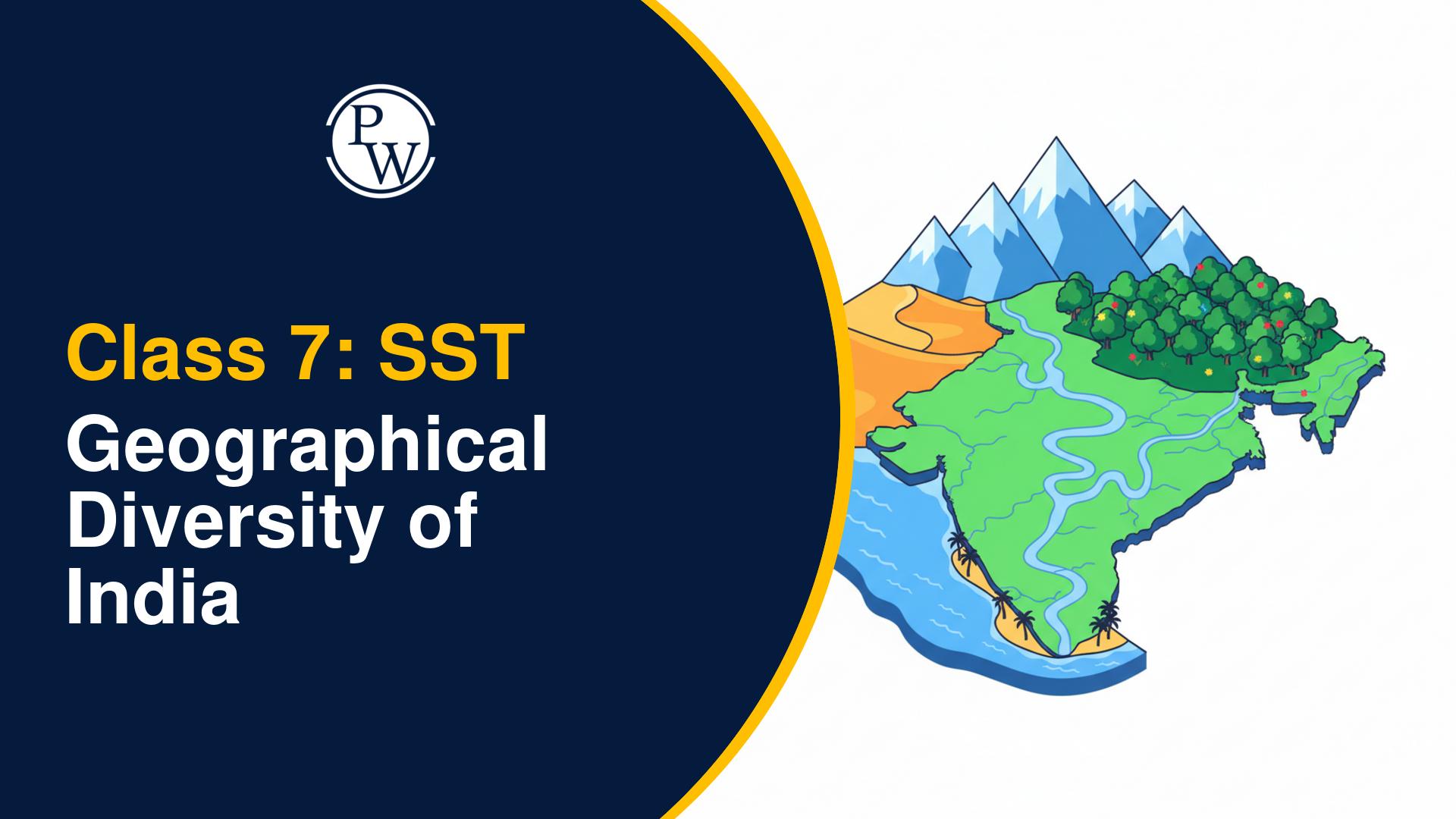
Geographical Diversity of India Class 7 Notes
Geographical Diversity of India helps students understand the various landforms, climates, and cultures found across India. It includes details related to the Himalayas, Plains, Plateaus, Deserts, and Coasts. Geographical Diversity teaches how people live differently in each region while sharing the same love for their land.
Geographical Diversity of India: India is a large and beautiful country. It is known for its different landforms, weather, and cultures. The landforms vary from high mountains to flat plains, wide plateaus, and long coastlines. This geographical diversity makes India special and rich in natural beauty.
India’s Physical Features
India is divided into many physical parts. These are the Himalayas, the Northern Plains, the Peninsular Plateau, the Desert, the Coastal Areas, and the Islands. Each part has its own kind of soil, climate, and living things.
- The Himalayas are the highest mountain range in the world. They lie in the north and have snow-covered peaks. These mountains protect India from cold winds and bring rain to many areas. The rivers Ganga, Yamuna, and Brahmaputra start from here.
- The Northern Plains are flat and fertile. They are formed by rivers that bring rich soil from the mountains. This region is good for farming and grows crops like wheat, rice, and sugarcane. Many people live here because of its good farmland.
- The Peninsular Plateau is in the southern part of India. It is made of hard rocks and is one of the oldest land areas in the world. The Deccan Plateau lies in the middle and has many hills and rivers.
- The Thar Desert is in Rajasthan. It is dry and sandy with very little rain. People live in small villages and keep animals like camels and goats.
- The Coastal Areas and Islands lie near the sea. The eastern and western coasts have beaches and ports. The Andaman and Nicobar Islands in the Bay of Bengal and the Lakshadweep Islands in the Arabian Sea are beautiful parts of India.
Climate and Vegetation
India has different kinds of weather. Some parts are hot, some are cold, and others get a lot of rain. The country has three main seasons: summer, rainy, and winter.
- The northern mountains are cold and covered with snow. The plains are hot in summer but cool in winter. The coastal regions stay warm throughout the year. The western desert is very dry, while the north-eastern states get heavy rainfall.
- Several types of flora and fauna are found only in India due to this variation. The mountains have pine and deodar trees. The plains grow crops and fruit trees. The coastal areas have coconut trees, while the desert has cactus and thorny bushes.
Downloadable Resources



Have questions about your prep?
Our experts can answer all your questions