The World of Metals and Non-Metals PDF Class 7 Notes
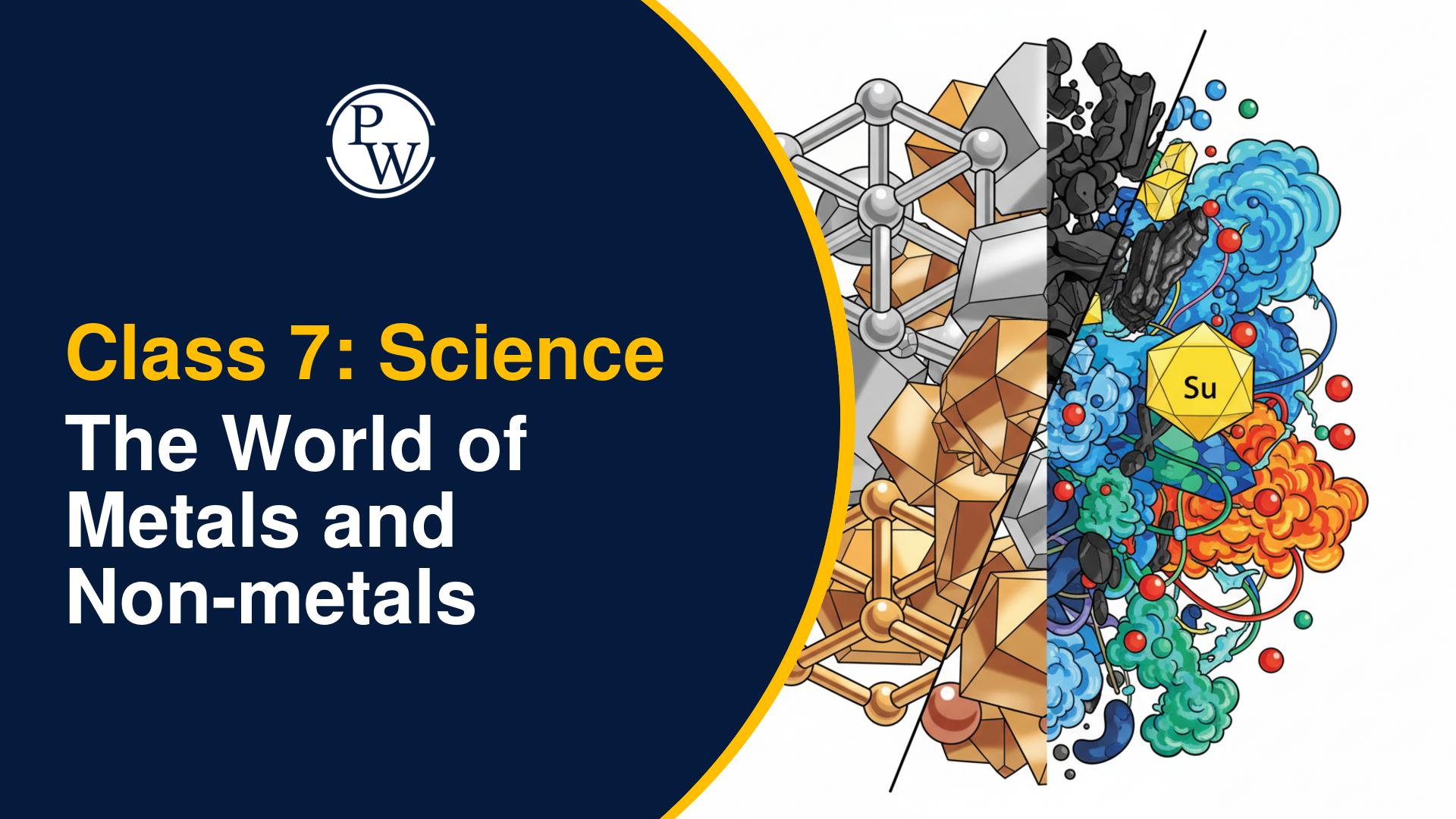
The World of Metals and Non-Metals: Metals are hard, shiny materials that conduct heat and electricity, like iron, copper, and gold. Non-metals are soft, dull, and do not conduct heat or electricity well, like sulfur, carbon, and oxygen. Both metals and non-metals are useful in our daily life for making tools, wires, medicines, and many other things.
Properties of Metals and Non-Metals
Metals and non-metals have different physical and chemical properties. The table below shows five main differences between them.
| Properties of Metals and Non-Metals | ||
| Properties | Metals | Non-Metals |
| Appearance | Shiny and lustrous | Dull and non-shiny |
| Hardness | Hard and strong | Soft and brittle |
| Conduction | Good conductors of heat and electricity | Poor conductors of heat and electricity |
| Malleability | Can be beaten into thin sheets | Cannot be beaten into sheets |
| Ductility | Can be drawn into wires | Breaks when stretched |
Why Metals Heat Up?
Metals are good conductors of heat, so they heat up fast. When we heat a metal rod from one end, the particles of the metal start vibrating fast and the heat gets transferred to the particles near them. That is why, metals like iron or copper feel hot.
Examples of metals that conduct heat are used for making cooking utensils, pans, and electric wires.
Rusting of Iron
Rusting is a slow chemical change in which iron objects gradually get covered in a reddish-brown flaky substance, called rust.
Conditions for Rusting:
- Air (oxygen) must be present.
- Moisture (water) must be present.
- Prevention of rusting
- Paint or oil can be applied to iron objects.
- Use rust-proof materials, like stainless steel, for making utensils.
- Galvanization (coating iron with zinc) can also prevent rusting.
- Rusting is seen in iron gates, nails, and old machines.
Corrision
Corrosion is a slow natural process in which metals are damaged by reacting with air, water or moisture present in the air. It weakens the surface of the metal and forms a rough layer on it. For instance, when iron combines with oxygen and water, it forms a reddish brown coating called rust.
Rust Prevention
Rust Prevention means protecting iron or steel from rusting when they come in contact with air and moisture. It can be done by painting, oiling, or greasing metal surfaces. Galvanization, which is coating iron with zinc, also prevents rust. Keeping metals dry and clean helps stop rust from forming and keeps them strong for longer.


Have questions about your prep?
Our experts can answer all your questions