Combustion And Flame, Class 8 Science Chapter Notes
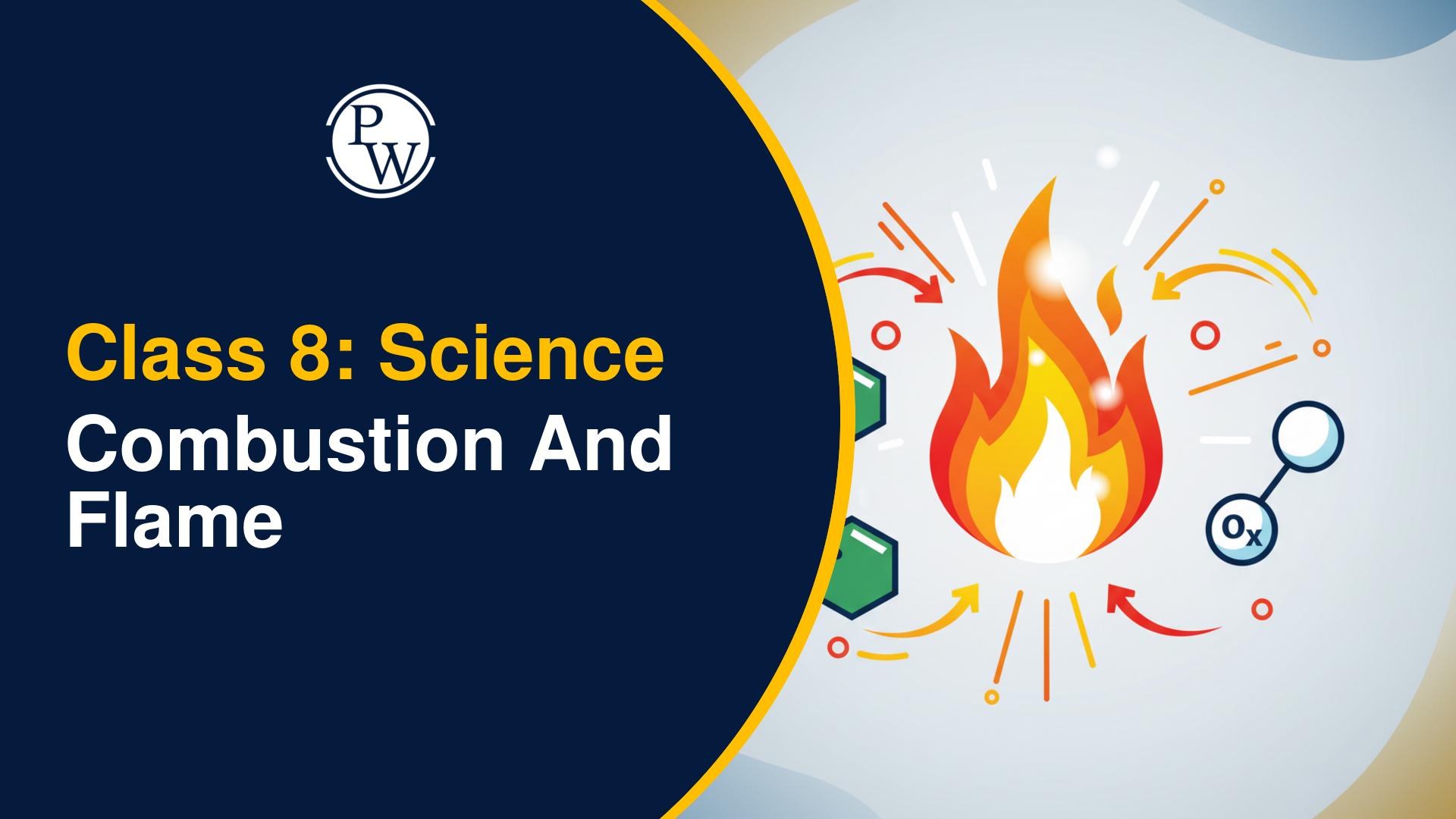
Combustion And Flame is a fundamental chemical process that is essential for energy production, from our homes to large industries. As per the NCERT curriculum, the chapter on Combustion and Flame Class 8 introduces students to this essential reaction explaining the conditions under which substances burn. It details the visible part of burning the flame and how we can measure the efficiency of different fuels. Understanding this topic is vital for safety, resource management and environmental awareness.
What is Combustion and Conditions for Burning?
Combustion is simply defined as a chemical process in which a substance reacts with oxygen (present in the air) to give off heat. Sometimes, light is also released in this process, either as a flame or as a glow. The substance that undergoes combustion is called a combustible substance or a fuel. Substances that do not burn are called non-combustible substances.
For any combustion to take place and continue, three essential factors must be present at the same time. These three elements form what is known as the Fire Triangle:
- Fuel: The presence of a substance that can burn.
- Oxygen: A continuous supply of air, which contains oxygen, the supporter of combustion.
- Ignition Temperature: The fuel must reach its ignition temperature. This is the lowest temperature at which a substance catches fire and starts burning.
Types of Combustion and Methods to Control Fire
Not all burning is the same; combustion can be classified based on how quickly it happens:
- Rapid Combustion: When a substance burns quickly and produces heat and light in a short time, it is called rapid combustion. The burning of cooking gas in your kitchen is a common example.
- Spontaneous Combustion: This is when a material suddenly bursts into flames on its own, without any external heat being applied. This often happens due to internal chemical reactions. For example some forest fires can start on their own due to the heat generated by dry leaves.
- Explosion: When a combustion reaction happens suddenly, with the rapid evolution of a large amount of gas, heat, light and sound it is called an explosion. This is what happens when you light a firecracker.
Controlling a Fire
To put out a fire, we must break the Fire Triangle by removing any one of the three required conditions:
- Cut off the Fuel Supply.
- Cut off the Oxygen Supply: Fire extinguishers that use Carbon Dioxide
- Lower the Temperature: Water is most commonly used as it cools the combustible material below its ignition temperature. However, do not use water for electrical fires or fires involving oil/petrol.
Structure of Flame and Fuel Efficiency
A flame is the visible glowing and gaseous part of the fire. Flames are only produced when the combustible substance vaporizes upon burning like wax in a candle or kerosene oil.
Zones of Candle Flame
A candle flame has three main zones, each with a different temperature:
- Outermost Zone: This is the area of complete combustion because there is plenty of air/oxygen. It is the hottest part of the flame and is usually blue in colour. Goldsmiths use this zone to melt gold and silver quickly.
- Middle Zone: In this zone partial combustion takes place due to insufficient oxygen. It is the bright, yellow, and moderately hot part of the flame.
- Innermost Zone: This area is near the wick and consists of unburnt wax vapours. It is the least hot part of the flame and appears dark.