Force And Pressure For Class 8, PDF Notes
Force and Pressure chapter from the science syllabus is aimed ot help students learn how things move or stop. The force is defined as a push or pull on an object. It can change shape, speed, or direction. On the other hand, Pressure means how much force acts on a given area. The smaller the area, the higher the pressure
Understanding Force and Pressure helps explain many natural events like wind, rain, and floating objects. These ideas are useful in daily life, science, and even engineering. This chapter is one of the essential chapters for class 8 science students.
What is Force?
Force is a push or pull that can make objects move, stop, or change shape. It is measured in Newtons (N). Force has both size and direction.
- Contact Forces: These need touch, such as muscular force, friction, and air drag. For example, pushing a door or rubbing hands together.
- Non-Contact Forces: These act from a distance like gravity, magnetism, and electric force. Examples include the Earth pulling objects down or a magnet attracting iron pins.
Force can change an object’s motion, speed, direction, or size. When two forces act together, they may add up, cancel out, or balance each other. Equal forces in opposite directions keep the object still.
What is Pressure?
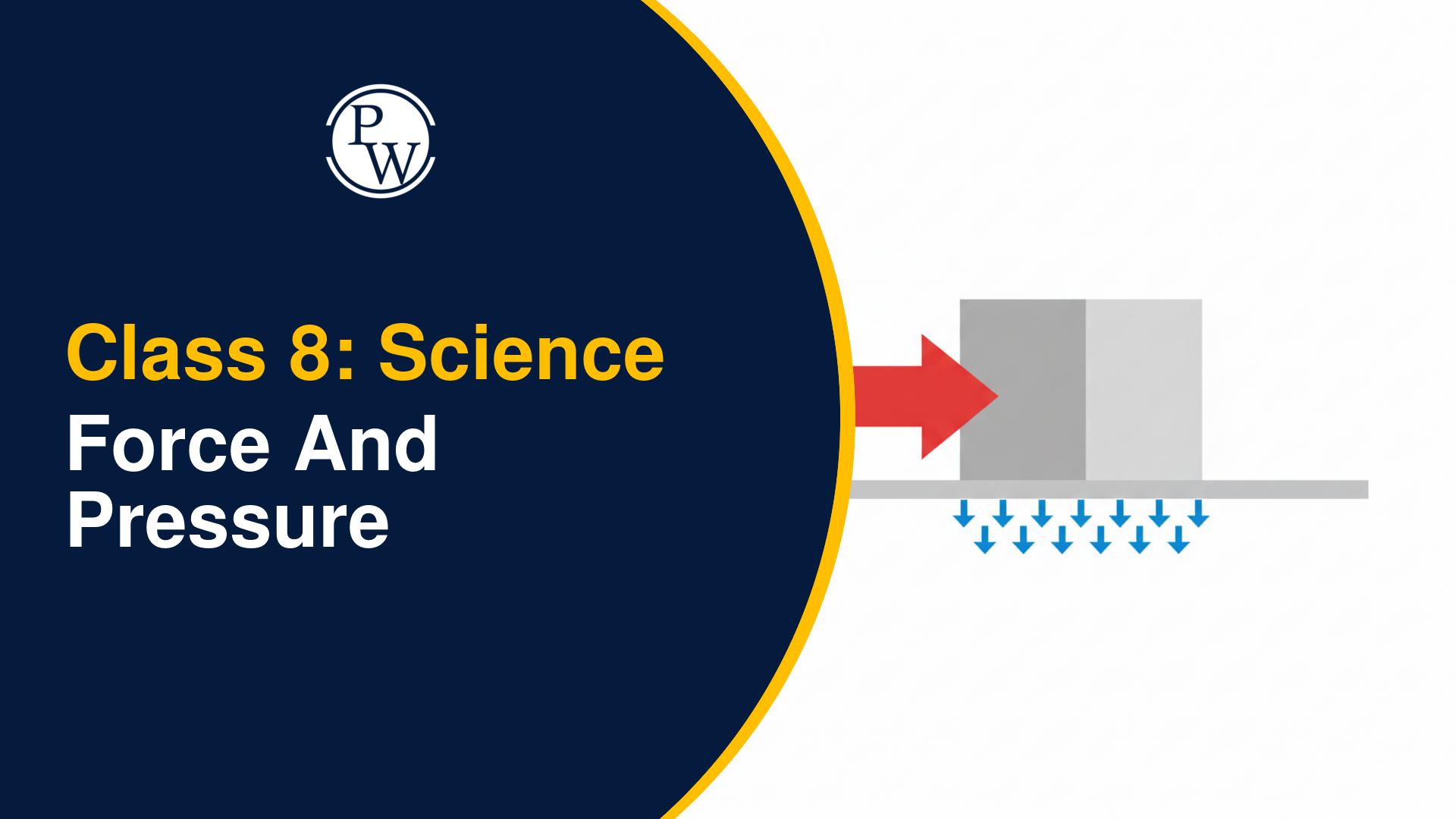
Pressure means force acting per unit area. The unit of pressure is Pascal (Pa). A smaller area means higher pressure for the same force.
Examples:
- A needle pierces cloth easily because its tip is sharp and small.
- A school bag with wide straps feels lighter since the force spreads over a larger area.
Pressure in liquids increases with depth. Water at the bottom of a bottle pushes harder than at the top. In gases, air pressure acts in all directions and keeps things like liquids in bottles from spilling out.
What is Atmospheric Pressure?
The process of swirling of air all around is called atmospheric pressure. This pressure helps us breathe and allows planes to fly. Atmospheric pressure becomes less as we go higher up a mountain. It also affects the weather and rainfall.
Understanding Effects of Force
Force can bring many changes to an object. It can make a resting object move or stop a moving one. It can also change an object’s speed, direction, or shape. For example, when you kick a football, it moves; when you press clay, its shape changes. Force can also help open doors, lift things, or squeeze objects. These effects show how important force is in our daily life and in understanding motion and balance.