Friction Class 8 Science Chapter Notes
friction is defined as the force that opposes motion between two surfaces in contact. Friction is a type of contact force which acts in the direction opposite to the movement or the force. Friction helps us in countless ways every day. That is why it is often called a necessary evil. It is both essential and causes unwanted effects like wear and tear. This chapter covers the basic concepts of friction for Class 8 Science students.
What is Friction and How Does it Act?
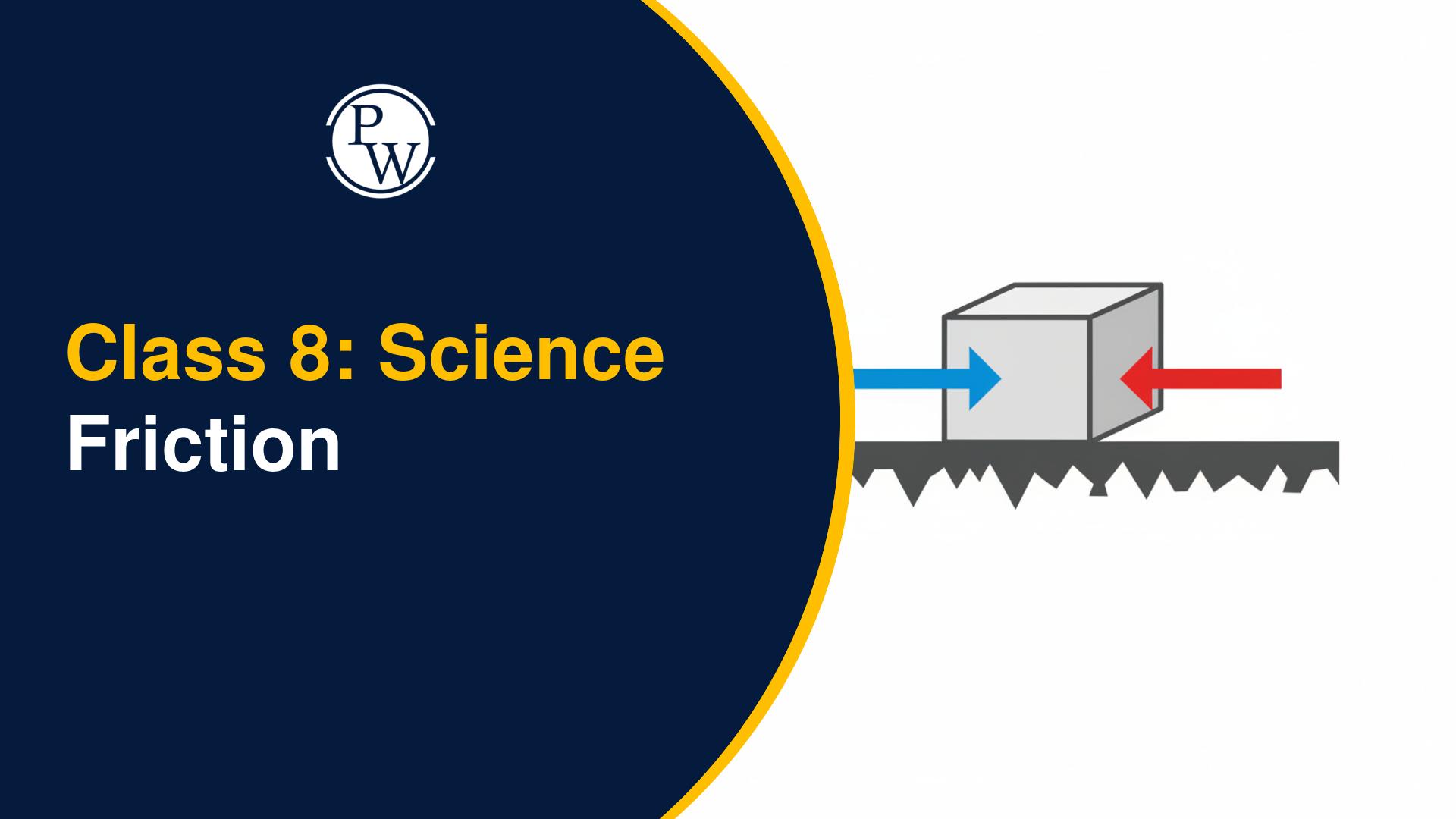
Friction is the opposing force that resists the relative motion when one object moves or tries to move over the surface of another object. Imagine you push a book across a table, or roll a ball on the ground, both objects slow down and stop. This happens because the force of friction is working against the direction of the motion of the object. If you push the book to the right, the force of friction acts toward the left, causing it slowing down. Because friction only occurs when two surfaces are touching each other, it is classified as a contact force.
Factors Affecting Friction
The magnitude (amount) of friction between two surfaces primarily depends on two factors. Nature of the Surfaces is the most important factor in the topic of Friction Class 8. Types of surfaces include
Rough Surfaces: A rough or uneven surface, like a concrete road or sandpaper, creates more friction. This is due to the greater number of irregularities (bumps and dips) on the surfaces. It causes them to interlock or catch onto each other, increasing the grip.
Smooth Surfaces: A smooth surface, like polished wood or ice, creates less friction. This is why walking on wet tiles or ice is difficult and risky. There is very little grip which makes you likely to slip.
Type of Material: The type of material also plays a role. Soft materials, like rubber, have more friction. It happens because they can easily change shape to interlock with the other surface. In contrast, hard materials like steel or glass have less friction because they cannot deform easily. This results in fewer interlocking points.
Types of Friction
Three main types of friction affect moving objects. These types of friction are static friction, sliding friction and rolling friction. Here is the description of Types of Friction:
Static Friction: This is the force of friction that acts on an object when it is at rest. It resists the initial push or pull required to start the motion of the object. It is the strongest type of friction.
Sliding Friction: This force comes into play when an object is sliding over another surface. For example, when you slide a box across the floor. Sliding friction is generally smaller than static friction. This is the reason it is easier to keep a heavy box moving once it has already started.
Rolling Friction: This force acts when an object, like a ball or a wheel, is rolling over a surface. Rolling friction is the smallest type of friction. Wheels and ball bearings are used in trolleys and vehicles to convert sliding friction into rolling friction, making movement much easier and more efficient.