
JEE Main 2026 Eligibility Criteria: Age Limit, Attempt Rules & 75% Marks Rule Explained
JEE Main 2026 has no age limit. Candidates can attempt the exam for three consecutive years after passing Class 12. A minimum of 75% marks (65% for SC/ST) in Class 12 is required for NITs, IIITs, and GFTIs.

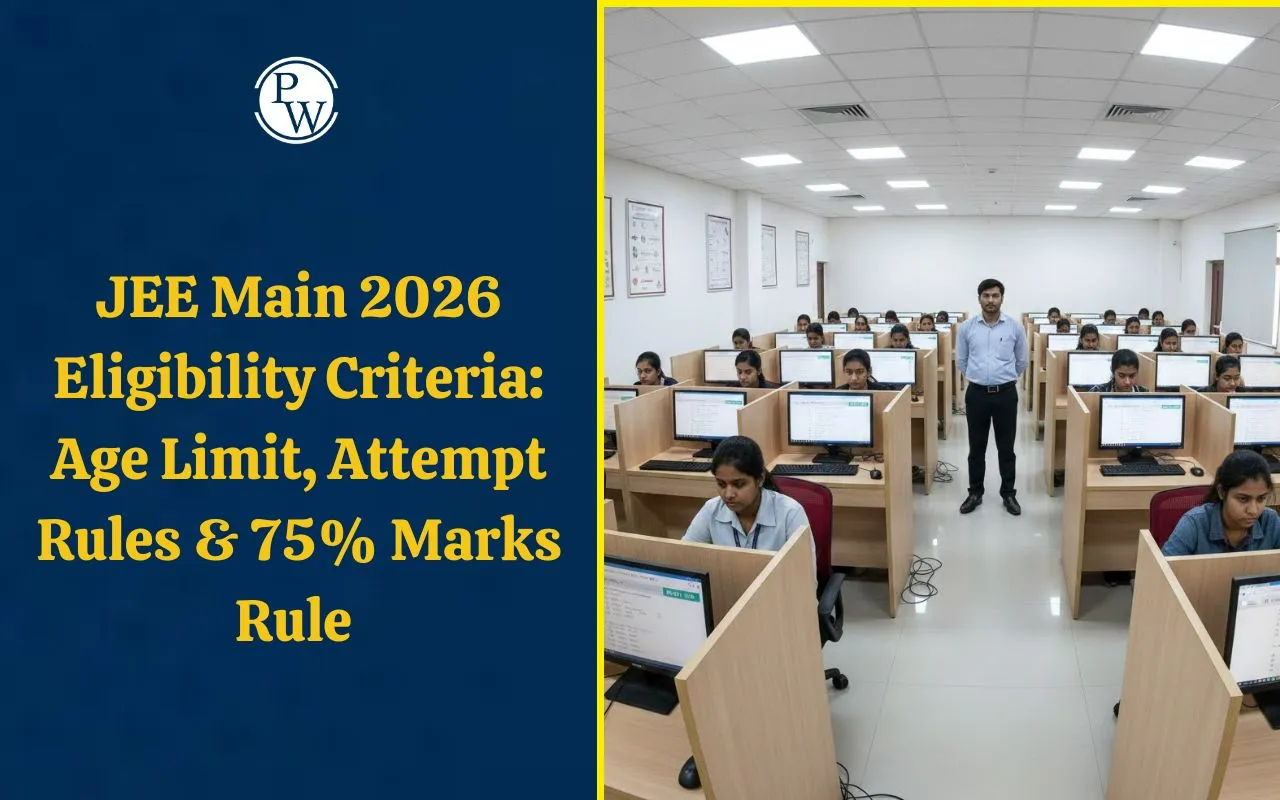
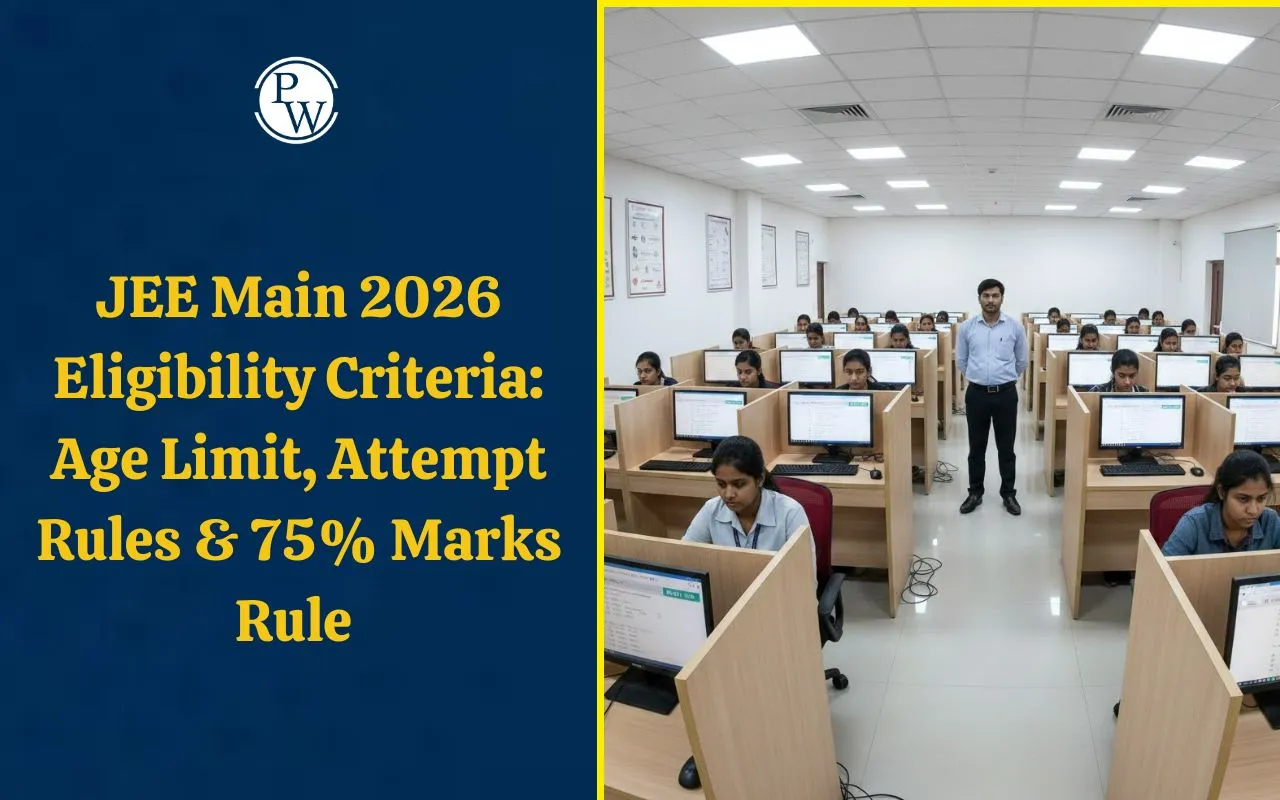
The JEE Main 2026 Session 1 is currently underway (January 21–29, 2026), and thousands of aspirants are appearing for the country’s most prestigious engineering entrance exam. However, a common point of confusion among candidates is the difference between exam eligibility and admission eligibility.
To help you navigate these rules safely, we have broken down the official NTA guidelines for age limits, attempt counts, and the critical 75% marks criteria.
Who Can Apply for JEE Main 2026? (Eligibility & Attempts)
To be eligible for JEE Main 2026, candidates must have passed or be appearing in a Class 12 or equivalent examination from a recognized board. Accepted qualifications include Class 12 (Central/State boards), NIOS, IB Diploma, Cambridge/GCE A-Levels, HSC Vocational, NDA (2-year course), and foreign boards recognized by AIU.
Year of Passing: Eligible candidates are those who passed Class 12 in 2024 or 2025, or are appearing in 2026. Candidates who passed in 2023 or earlier are not eligible.
Attempt Limit: A candidate can appear for JEE Main for three consecutive years after passing Class 12. The January and April sessions in the same year together count as one attempt year.
Class 12 Marks: The 75% vs. Top 20 Percentile Rule
This is where most students get confused. It is important to distinguish between sitting for the test and getting a seat.
A. To Appear in the Exam
There is no minimum percentage required in Class 12 just to write the JEE Main 2026 exam. You only need to have "passed" your board exams with the required subjects.
B. For Admission to NITs, IIITs, and CFTIs
To secure a seat in these premier institutes, you must meet one of the following academic criteria:
-
General/OBC-NCL/EWS: Minimum 75% aggregate marks in Class 12.
-
SC/ST/PwD: Minimum 65% aggregate marks in Class 12.
-
Alternative: You must be in the Top 20 percent of your respective category in your Board Results.
Mandatory Subject Combinations
Depending on the paper you choose, your Class 12 subjects must align with NTA requirements:
| Mandatory Subject Combinations | ||
| Paper | Targeted Course | Compulsory Subjects |
| Paper 1 | B.E. / B.Tech | Physics, Mathematics + (Chemistry/Biology/Biotech/Vocational) |
| Paper 2A | B.Arch | Physics, Chemistry, and Mathematics |
| Paper 2B | B.Planning | Mathematics |
Special Cases: NIOS & Droppers
-
NIOS/Open Schools: Students from the National Institute of Open Schooling (NIOS) are fully eligible. You must have passed at least 5 subjects, including the mandatory ones listed above.
-
State Code of Eligibility: This is determined by the state where you passed/are appearing for Class 12. For NIOS students, it is based on the location of your study center.
-
Droppers: You follow the same rules as freshers. If you passed in 2024 or 2025, you are eligible for the 2026 cycle.
Document Checklist for Application
Ensure you have these ready for the upcoming April Session 2 registration:
-
Scanned Photograph & Signature.
-
Class 10 & 12 Marksheets/Certificates.
-
Category Certificate (SC/ST/OBC-NCL/EWS) if applicable.
-
PwD Certificate (if applicable).
-
Valid Photo ID (Aadhaar, Passport, etc.).
Final Pro-Tip for Session 1 Aspirants
If you are currently appearing for the January shifts, don't worry about your board percentage yet. Focus purely on maximizing your NTA score. If you fall slightly below 75%, you can always opt for Improvement Exams later this year to meet the admission criteria!


Have questions about your prep?
Our experts can answer all your questions