
Improvement in Food Resources Class 9 Notes focuses on understanding how food production can be increased and made more sustainable to meet the needs of a growing population.
The chapter covers important topics such as crop improvement, modern farming techniques, irrigation methods, soil fertility management, and pest control. It also explains animal husbandry, poultry, fisheries, and aquaculture, highlighting ways to improve quality and quantity of food resources.
Using Class 9th Improvement in Food Resources notes, students can:
-
Understand key concepts clearly in a simple and structured way.
-
Prepare effectively for exams with concise and well-organized content.
-
Quickly revise important topics, formulas, and diagrams.
-
Gain insights into sustainable practices and real-life applications of science in food production.
Class 9th Improvement in Food Resources Notes
Improvement in food resources notes provides a clear and concise explanation of ways to increase food production, including modern farming techniques, crop improvement, and animal husbandry.
They help students understand concepts quickly and prepare effectively for exams.
Food
All of the fundamental needs for healthy growth, development, and well-being are met by food. All nutrients, including proteins, lipids, carbs, vitamins, and minerals, are found in food.
Agriculture
Agriculture is the science or art of farming, which includes tilling the land, cultivating crops, and raising livestock to produce meat, wool, and other goods.
Sources of Carbohydrates
Carbohydrates can be found in different forms, such as sugars, fresh fruits, starch, vegetables, cereals, corn, potatoes, fibers, bread, pastries, milk, and milk products.
Sources of Fats
Many foods, including butter, cheese, cream, and oilseeds like soybeans and groundnuts, naturally contain fats.
Sources of Vitamins and Minerals
The primary food sources of vitamins and minerals are fruits and vegetables. Fish and pork can also provide some of the vitamins.
Sources of Protein
The most popular foods that are higher in protein include cottage cheese, Greek yogurt, milk, broccoli, quinoa, soybeans, shellfish, almonds, poultry, eggs, and oats.
Fodder Crops
Fodder crops like berseem, oats, or sudangrass are raised as food for the livestock.
Kharif Crops
Kharif crops are those that are cultivated from June to October, during the monsoon season. Kharif crops include black gram, cotton, green gram, soybean, maize, paddy, and pigeon pea.
Rabi Crops
Rabi crops are those that are grown in the winter, from October to March. Rabi crops include wheat, gram, peas, mustard, and linseed.
Crop Variety Improvement
Hybridization
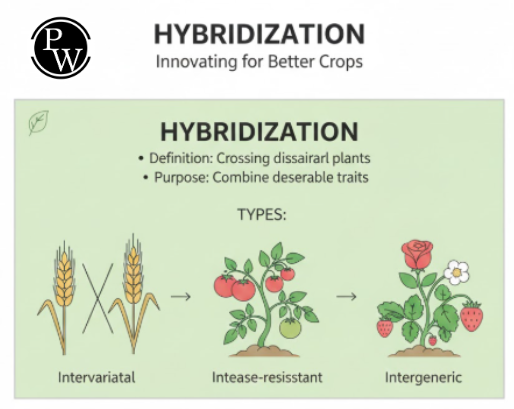
Hybridization is the process of crossing genetically dissimilar plants to combine desirable traits. It is widely used to produce improved crop varieties with enhanced performance and adaptability.
Types of Hybridization:
-
Intervarietal Hybridization: Cross between two varieties of the same species to combine favorable traits.
-
Interspecific Hybridization: Cross between two different species within the same genus to create superior varieties.
-
Intergeneric Hybridization: Cross between plants belonging to different genera, often used in research for unique traits.
Genetically Modified (GM) Crops
Genetically modified crops are developed by inserting a desired gene into the genome of a plant to achieve specific traits such as pest resistance or enhanced nutrition.
Examples include Golden Rice, Bt Cotton, and Bt Brinjal. GM crops play a vital role in sustainable agriculture and food security.
Factors for Crop Variety Improvement
Improvement of crop varieties is done to achieve several objectives:
-
Higher Yield: To increase food production and meet growing demand.
-
Improved Quality: Enhancing the nutritional value and marketability of crops.
-
Maturity Duration: Developing crops that mature faster or suit specific climates.
-
Wider Adaptability: Varieties that grow in diverse soil and climatic conditions.
-
Biotic and Abiotic Resistance: Resistance to pests, diseases, drought, and salinity.
-
Desirable Agronomic Traits: Traits like plant height, root system, flowering time, and harvesting ease.
Crop Production Improvement
Managing agricultural production is the process of cultivating and harvesting crops efficiently.
Nutrient Management
Nutrients are found in soil, water, and air for plants. Plants require sixteen different nutrients to survive. Carbon and oxygen are supplied by air, hydrogen is obtained from water, and plants receive the remaining thirteen nutrients from the soil. The process of managing nutrients involves adding manures and fertilizers to the soil to provide it with the necessary nutrients.
Macronutrients
Six of the thirteen basic nutrients are abundantly needed for the growth and development of plants. Together, these vital nutrients are referred to as macronutrients. The macronutrients that plants need include nitrogen (N), phosphorus (P), potassium (K), calcium (Ca), sulfur (S), and magnesium.
Micronutrients
Six of the thirteen necessary nutrients are categorized as macronutrients, and the remaining seven as micronutrients. Iron (Fe), boron (B), chlorine (Cl), manganese (Mn), zinc (Zn), copper (Cu), and molybdenum (Mo) are some of these nutrients. They are also known as trace minerals since they are needed in extremely small amounts.
Manure
Manure is an organic material made from the solid wastes of people and animals, as well as from sludge, sewage, domestic trash, dead plants and animals that have decomposed, and other plant wastes such as weeds, dry leaves, and twigs. It has an enormous amount of nutrients, which enhance the quality of the soil and raise the yield of nutritious crops.
Compost and Vermicompost
Composting is the process by which biological waste material breaks down in pits. Vermicompost is the term for compost that is made with earthworms to speed up the process.
Green Manure
Some plants, like sun hemp or guar, are cultivated and then mulched by plowing them into the soil before the crop seeds are sown. As a result, these green plants produce green manure, which improves the nutrient content of the soil.
Fertilizers
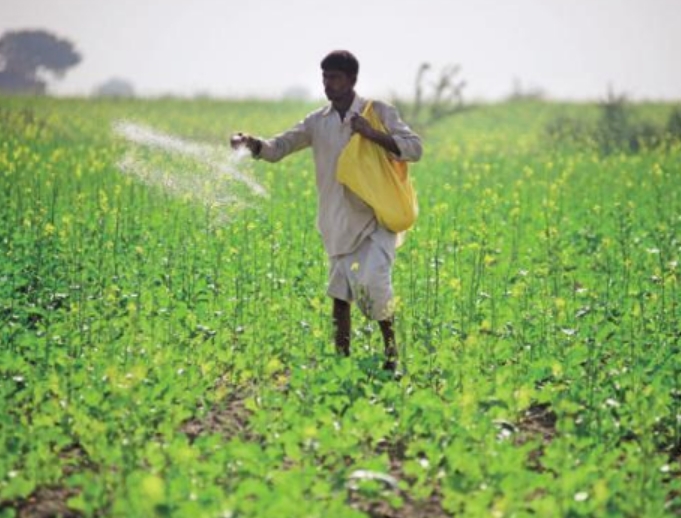
Commercially produced plant nutrients that are needed in small amounts are called fertilizers. This fertilizer comes in several brands on the market. The most used type of fertilizer is NPK fertilizer, which supplies potassium, phosphorus, and nitrogen.
Organic Farming
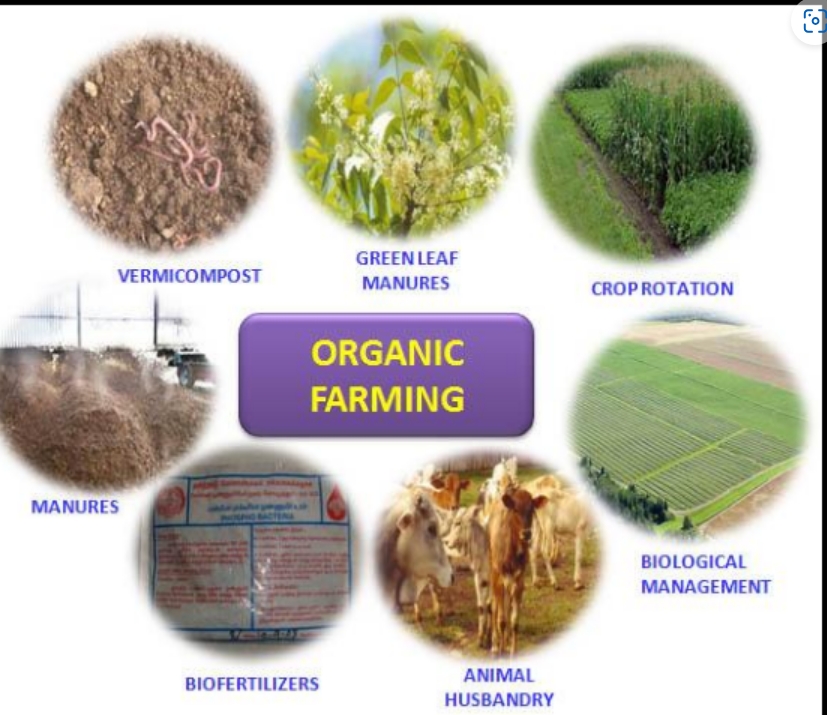
Organic farming involves using as much organic manure as possible in place of as little or no chemical fertilizer. For the highest, chemical-free yield, every resource is utilized to its fullest potential.
Irrigation
Applying artificial water to crops to meet their water needs is known as irrigation. A variety of irrigation techniques are used to increase crop productivity. This procedure aids in making sure the crops receive water at the appropriate times. i.e., during their growing season, which contributes to raising crop yield expectations. Watersheds, canals, wells, river lift systems, tanks, and rainwater collection all aid in irrigation.
Cropping Pattern
The percentage of area used for different crops is referred to as the cropping pattern. There are three categories of cropping patterns: Intercropping is a cropping practice where two or more crops are grown in parallel on the same plot of land while following a predetermined row pattern. The productivity of the crops is increased by using this kind of cropping arrangement.
Small farmers who are dependent on rainfall for increased production, therefore, follow it. Crop rotation is a cropping practice used to grow different crops in a prearranged succession on the same plot of land. The duration of the crops—one, two, and three years—is taken into consideration when choosing them.
A cropping strategy known as "mixed cropping" involves growing two or more crops concurrently on the same plot of land. Farmers most frequently utilize this strategy because it lowers the possibility of a crop failing due to insufficient rainfall or unfavorable weather.
Crop Protection Management
Field crops need to be protected against various threats, including weeds, insects, pests, and diseases, to ensure high yield and good quality produce. Understanding these threats and their management is crucial for effective agriculture.
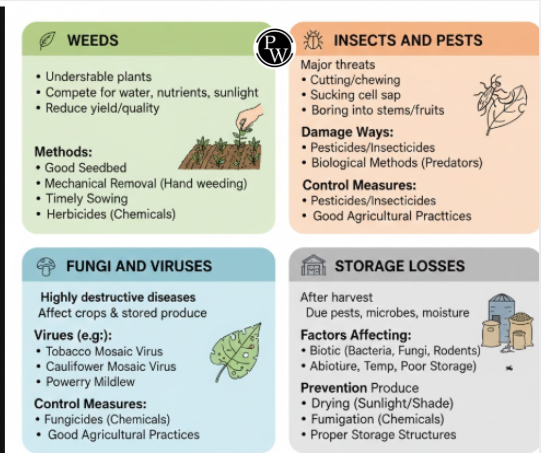
Weeds
Weeds are undesirable plants that grow alongside crops in cultivated fields. They compete with crops for water, nutrients, sunlight, and space, ultimately reducing crop yield and quality.
Methods to Control Weeds:
-
Preparing a Good Seedbed: Proper ploughing and leveling reduce weed growth.
-
Mechanical Removal: Hand weeding, hoeing, and ploughing remove weeds physically.
-
Timely Sowing: Planting seeds at the right time helps crops outgrow weeds and reduce their impact.
-
Herbicides: Chemical substances that selectively kill weeds without harming crops.
Insects and Pests
Insects and pests are major threats to crops and can cause significant yield loss.
Ways Insects Damage Plants:
-
Cutting or chewing roots, stems, and leaves.
-
Sucking cell sap from different parts of the plant weakens it.
-
Boring into stems, fruits, and seeds, reducing both quantity and quality of yield.
Control Measures:
-
Pesticides and Insecticides: Chemicals used to eradicate pests in fields and storage.
-
Biological methods, like predatory insects or biopesticides, can also reduce pest populations naturally.
Fungi and Viruses
Plant diseases caused by fungi and viruses are highly destructive. They affect growing crops as well as stored produce.
Common Plant Viruses:
-
Tobacco Mosaic Virus (TMV)
-
Cauliflower Mosaic Virus
-
Cucumber Mosaic Virus
Common Fungal Diseases:
-
Powdery Mildew
-
Stem Rust
-
Leaf Rust
Control Measures:
-
Fungicides: Toxic chemicals used to kill or control fungal growth.
-
Good Agricultural Practices: Crop rotation, resistant varieties, and timely spraying reduce infection risk.
Storage Losses
After harvest, food grains and other produce are stored in silos, warehouses, or granaries. However, a significant portion can be lost due to pest attacks, microorganisms, moisture, and poor storage conditions. This is referred to as storage loss.
Factors Affecting Storage Loss:
-
Biotic Factors: Losses caused by living organisms such as bacteria, fungi, mites, insects, and rodents.
-
Abiotic Factors: Losses caused by non-living factors like moisture content, temperature, and improper storage methods.
Prevention and Control of Storage Loss:
-
Cleaning Produce: Removing dust, dirt, and damaged grains before storage.
-
Drying: Proper drying under sunlight and shade reduces moisture and fungal growth.
-
Fumigation: Using chemicals to eliminate pests and insects in storage.
-
Proper Storage Structures: Maintaining cool, dry, and ventilated storage prevents spoilage.
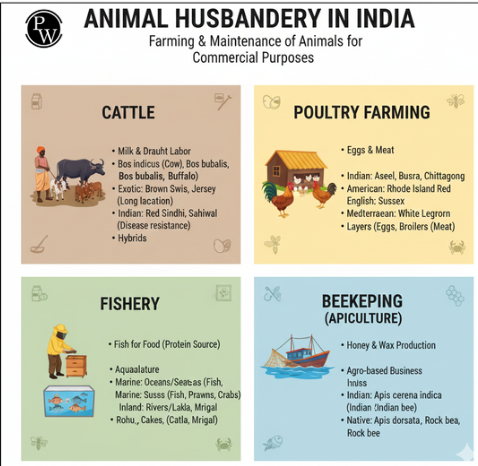
Animal Husbandry
Animal husbandry is the practice of farming and maintaining domestic animals for commercial purposes, such as producing milk, meat, eggs, and other animal products.
This branch of agriculture plays a critical role in enhancing food resources, generating income for farmers, and supporting rural livelihoods.
Cattle Rearing
Cattle are among the most commonly raised domestic animals in India, primarily for milk production and as draught animals for agricultural tasks. The main species include:
-
Bos indicus (cow)
-
Bos bubalis (buffalo)
Popular Indian Breeds:
-
Red Sindhi, Sahiwal: Known for disease resistance and suitability for drought-prone areas.
Exotic Breeds:
-
Brown Swiss, Jersey: Preferred for long lactation periods and high milk yield.
Hybrid Varieties:
-
Crossbred cattle are raised to combine high milk production with disease resistance, helping farmers meet commercial demands efficiently.
Poultry Farming
Poultry farming is a branch of animal husbandry focused on raising domestic birds for eggs and meat.
Indian Poultry Breeds:
-
Aseel, Busra Chittagong, Ghagus
American Breeds:
-
Rhode Island Red, Plymouth Rock, Wyandotte, New Hampshire
Other Notable Breeds:
-
English Breeds: Sussex, Cornish, Red Caps
-
Mediterranean Breeds: White Leghorns, Minorca
Types of Birds:
-
Layers: Raised primarily for egg production
-
Broilers: Raised for meat production
Poultry farming is a profitable and fast-growing sector, contributing significantly to protein availability in the human diet.
Fishery and Aquaculture
Fishery involves the cultivation and harvesting of fish and other aquatic organisms for human consumption. Fish is an excellent source of protein, especially for communities living near coasts and water bodies.
Types of Fisheries:
-
Marine Fisheries: Fishing in oceans and seas, including fish, prawns, lobsters, and crabs.
-
Inland Fisheries: Fishing in rivers, lakes, ponds, and tanks, including Rohu, Catla, Mrigal, and Grass Carp.
Aquaculture:
-
The practice of breeding, rearing, and harvesting fish in controlled environments to increase productivity and meet demand.
-
Beekeeping (Apiculture)
Apiculture is the practice of raising bees for honey, wax, and other bee products. It is a profitable agro-based business and contributes to the pollination of crops.
Bee Species in India:
-
Apis mellifera, Apis adamsoni, Apis cerana indica (Indian Bee) – Exotic and native species
-
Apis dorsata (Rock Bee) – Indigenous species
Beekeeping is a high-value enterprise that supports rural economies while enhancing crop productivity through pollination.
Improvement in Food Resources Class 9 Notes FAQs
What is Improvement in Food Resources in Class 9?
How are improvement in food resources class 9 notes helpful for students?
What topics are covered in improvement in food resources notes?