
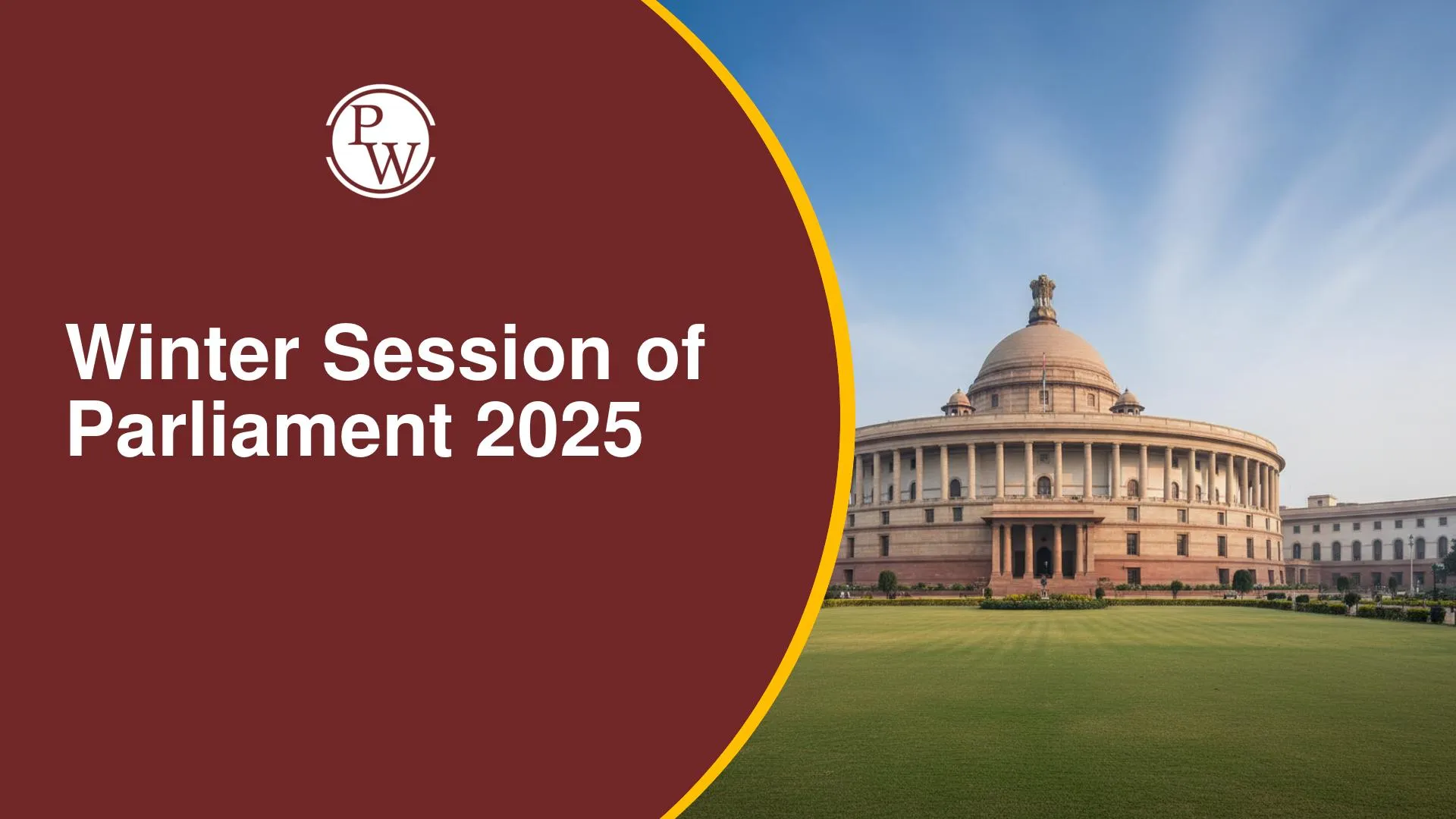
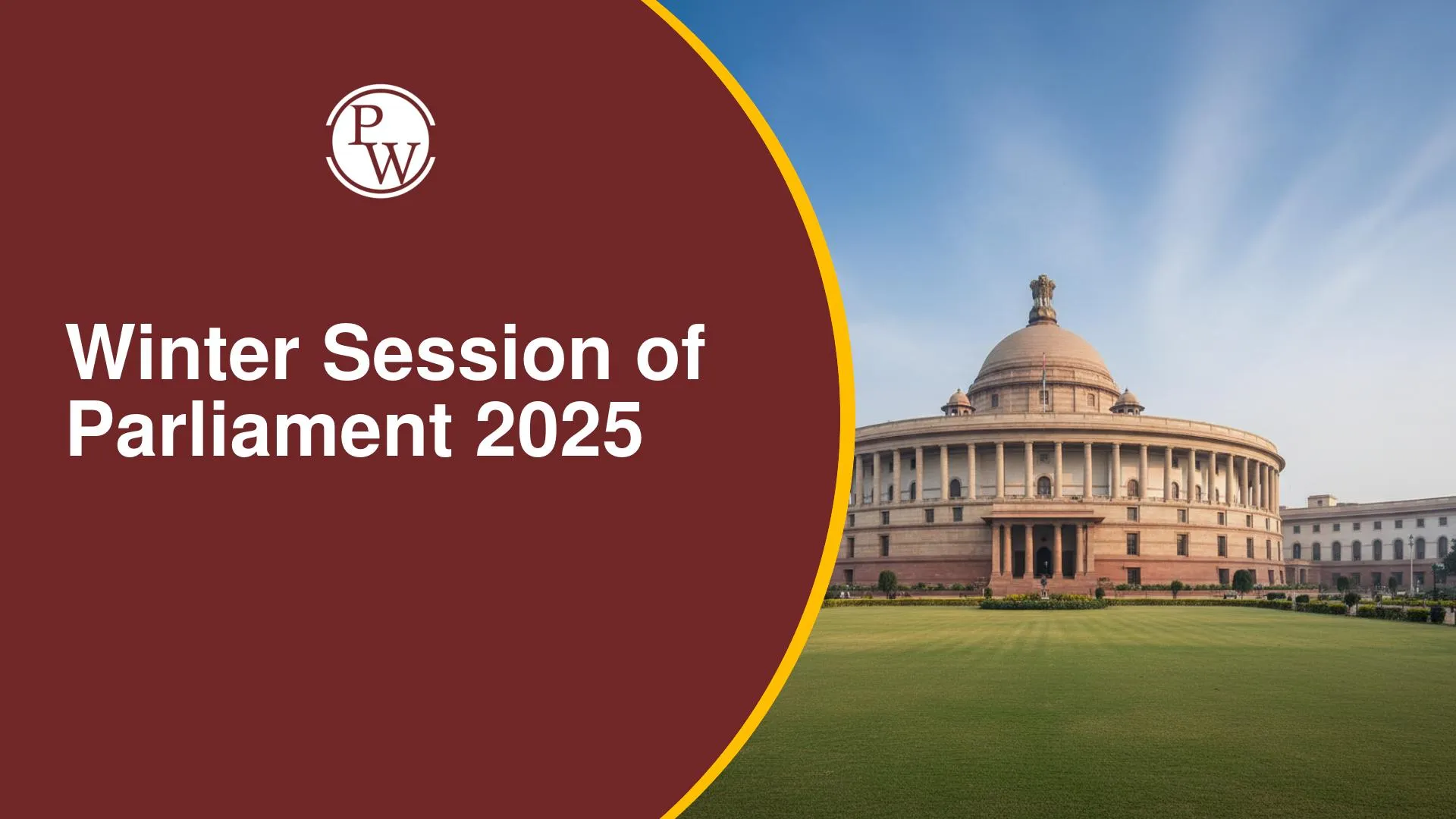
Winter Session of Parliament 2025: The Indian Parliament sits at certain times, called Sessions of Parliament, to transact business. According to Art. 85 of Indian Constitution, the President summons each House, and there should be no more than a period of 6 months between the sittings. There are generally three main sessions, the Budget, Monsoon and Winter Sessions, which are held every year. It is through these constitutional assemblies that there is a critical legislative platform as well as passing of laws that are crucial in the development of this country.
Winter Session of Parliament 2025
The Winter Session of Parliament 2025 will be held between December 1 and December 19, 2025 and the session will include 15 sittings in total during which a lot of intense debate and passage of important bills will be carried out. This is the shortest of the three regular Parliament sessions of India and the session is important in passing urgent laws, national issues and previous pending issues.
Purpose and Importance
The Winter Session serves to clear any legislative backlog and allow robust discussion on newer socio-economic and political developments. In 2025, major topics include amending GST for Manipur, the Higher Education Commission of India Bill, the Jammu and Kashmir Reorganisation (Amendment) Bill, and the Constitution (One Hundred and Thirtieth Amendment) Bill, amongst others. The government also targets economic reforms, administrative restructuring, and social welfare measures.
Political and Legislative Highlights
This period is marked by intense collaboration and deliberation between parties. The Chairman of the Rajya Sabha and the Lok Sabha Speaker preside over the debates, ensuring smooth proceedings. The session is expected to see serious discussions around “One Nation, One Election,” revisions to civil codes, and recently held state assembly election results. The government aims to achieve consensus on bills pending with Joint Committees, like the Waqf Amendment Bill, while opposition parties seek thorough scrutiny for issues impacting secularism, democracy, and federalism.
Types of Parliamentary Sessions
Parliament conventionally conducts three annual sessions, each with a distinct focus, providing platforms for legislative engagement throughout the year. Each session carries specific objectives and follows a particular schedule:
-
Budget Session: This is historically the longest and often considered the most important session, usually spanning from February to March.
-
Monsoon Session: Typically occurring between July and August, this session primarily concentrates on enacting new legislation.
-
Winter Session: As the final parliamentary session of the calendar year, the winter session of parliament 2025 is anticipated to occur between November and December.
-
Special Session: These unique assemblies are convened outside the regular schedule to address urgent or highly specific issues.
Key Parliamentary Procedures
The smooth functioning of parliamentary sessions relies on established procedures, from initiating a session to its conclusion.
Several essential procedures govern the lifecycle of a parliamentary session:
-
Summoning: Parliament sessions commence with a formal "summoning" by the President. This action is typically based on the recommendation of the Cabinet Committee on Parliamentary Affairs (CCPA). Article 85 mandates that the President must summon each House at least twice a year, ensuring a maximum interval of six months between sessions.
-
Adjournment: This procedure temporarily suspends a Parliament sitting for a specified period, which could range from hours to days or weeks. Significantly, adjournment does not affect any pending bills or other business. An "Adjournment Sine Die" ends a parliamentary sitting indefinitely, without specifying a date for reassembly.
-
Prorogation: This formally terminates a session of either House of Parliament. Issued by the President, prorogation signifies the end of a session's work. Unlike an adjournment, prorogation brings an end to all session-related business, although pending bills (with some exceptions) do not lapse.
-
Dissolution: This refers to the complete termination of the Lok Sabha, necessitating new elections. Dissolution occurs either automatically after its five-year term or through a Presidential decree. It is a final and irreversible action, contrasting with prorogation. The Rajya Sabha, however, remains a permanent body and is not subject to dissolution.
- Quorum: Essential for valid proceedings, a quorum represents the minimum number of members required to be present for the House to conduct business. This is set at one-tenth of the total membership of the House, including the presiding officer. For the Lok Sabha, 55 members are required, while for the Rajya Sabha, 25 members constitute a quorum.
Need guidance for Prelims? Explore PW UPSC Courses now!
Winter Session of Parliament 2025 FAQs
What is the winter session of parliament?
When is the winter session of parliament 2025 date?
What are the constitutional provisions for sessions of parliament in India? .
How many types of sessions does the Indian Parliament typically hold?


Have questions about your prep?
Our experts can answer all your questions