ACCA Recovery Strategy & Comeback Plan | What to Do Next
Re-attempting an exam requires a strategic approach. Students must conduct a "Why Analysis" to pinpoint weaknesses in technical knowledge, exam technique, or platform familiarity. Based on scores, decide whether to re-study thoroughly or focus on targeted practice. Adopting a "question-first approach" and cultivating a positive mindset are crucial for success.

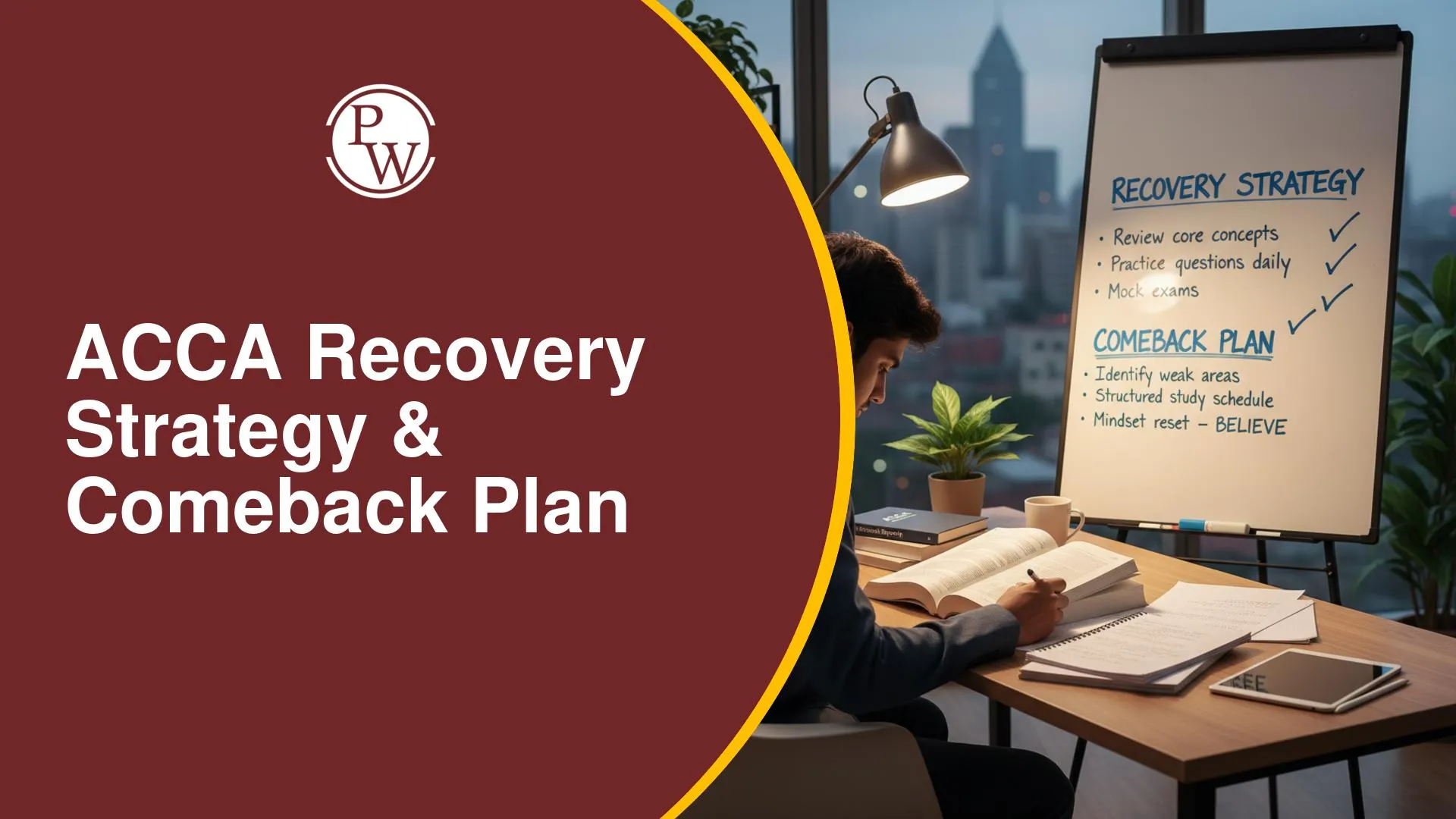
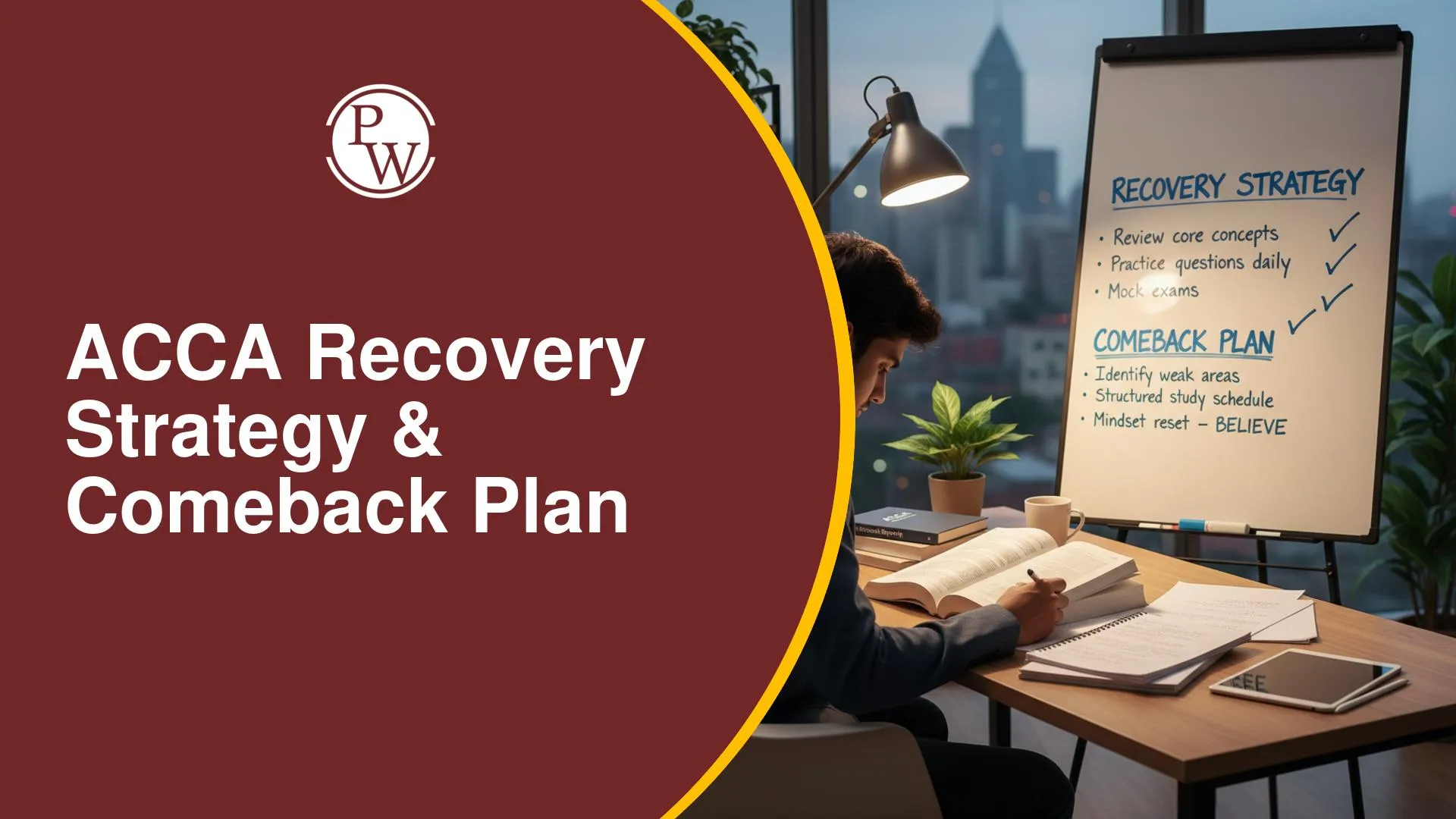
ACCA Recovery Strategy: Failing an ACCA exam can feel discouraging, but it doesn’t mean the end of your journey. In fact, it’s an opportunity to learn, grow, and come back stronger.
An effective recovery strategy helps you understand why you didn’t pass, identify areas for improvement, and plan your next steps carefully. By analyzing past performance, focusing on targeted practice, and adopting the right mindset, you can turn a setback into a successful comeback and increase your chances of clearing the exam in your next attempt.
ACCA Recovery Strategy
Facing an exam setback can be disheartening, but it's also an opportunity for significant growth. This guide outlines a structured recovery strategy for students who have attempted a competitive exam like ACCA but couldn't clear it. It emphasizes understanding past performance, making informed decisions, and adopting effective study and mindset shifts for a successful re-attempt.
Strategies for Re-attempting an Exam After a Failed Attempt
If you have attempted an exam but did not clear it, it's essential not to get demotivated. The act of attempting the exam itself is a significant step. The following strategies provide a roadmap to improve your score in the next attempt.
1. Conduct a "Why Analysis"
The first crucial step is to perform a "Why Analysis" to understand the specific reasons for not clearing the paper. This analysis involves examining three potential areas of weakness:
-
Technical Knowledge: Identify any topics that appeared in the exam which you had not studied or covered thoroughly. A lack of self-study or incomplete topic coverage often leads to failure.
-
Exam Technique: Assess if you struggled with applying your knowledge effectively. Sometimes, you may understand a concept but fail to answer a question due to:
-
The question being highly technical.
-
Difficulty in understanding the language of the question.
-
Misinterpreting the question's requirement.
-
Exam Platform: For computer-based exams, evaluate your comfort and proficiency with the platform. Many students can articulate answers verbally or in writing during classes but struggle to manage software tools (like Excel or Word) efficiently under strict exam conditions.
Action Point: Review your official report card carefully. Check your performance in each section (e.g., Section A, Section B, Section C) to identify specific weak areas and understand where your answers were incorrect. Identifying these shortcomings is the first step toward improvement.
2. Deciding Whether to Continue or Drop the Course
After a failure, it is common to question continuing the course or switching paths. However, any worthwhile professional course demands significant hard work and dedication. Switching to an "easier" course is generally not a viable long-term solution.
To make an informed decision, analyze your score to diagnose the root cause of the failure:
|
Score Range |
Interpretation & Meaning |
Recommended Action |
|---|---|---|
|
Close to Passing (e.g., 48/100) |
You are very close to clearing. Your conceptual understanding is likely strong, but there are minor gaps. |
You do not need to start over. Focus on targeted revision and applying a little extra effort. |
|
Very Low Score (e.g., 20-25/100) |
This indicates a significant lack of conceptual clarity. |
You must re-study the entire syllabus. Go through all lectures and chapters again to build a strong foundation. |
|
Repeated Low Scores (e.g., 20-30 after 3-4 attempts) |
This suggests a complete lack of conceptual clarity or that the subject may not be your area of strength. |
Re-evaluate your approach fundamentally or consider if this is the right path for you. |
3. Adopting a "Question-First Approach"
While many students study concepts diligently, they often fail to practice enough questions. Practice is the most important factor for success. For your re-attempt, shift your focus from simply reading concepts to actively solving problems.
Approaching an exam is like going into a war; you cannot succeed without sufficient practice and preparation.
Adopt a practical, question-solving approach. Solve as many questions as possible from all available resources, such as:
-
The practice platform
-
The study hub
-
The question bank
Combining concept study with a rigorous question-solving methodology is essential to clear the exam.
4. The "Mindset Shift"
Failing an exam can feel defeating, but it is crucial not to give up. Your next attempt is an opportunity to prove that you can overcome challenges and succeed. A mindset shift is mandatory. If you believe you cannot pass, you will not be able to. You must cultivate a positive and determined mindset that you can and will succeed.
ACCA Exam Recovery Strategy FAQs
What is the first step after failing an exam?
How important is practicing questions for a re-attempt?
Should I re-study the entire syllabus if my score was very low?
How can my official report card help in my re-attempt strategy?