







Elements of Financial Statements and Double-Entry Bookkeeping Notes By PW

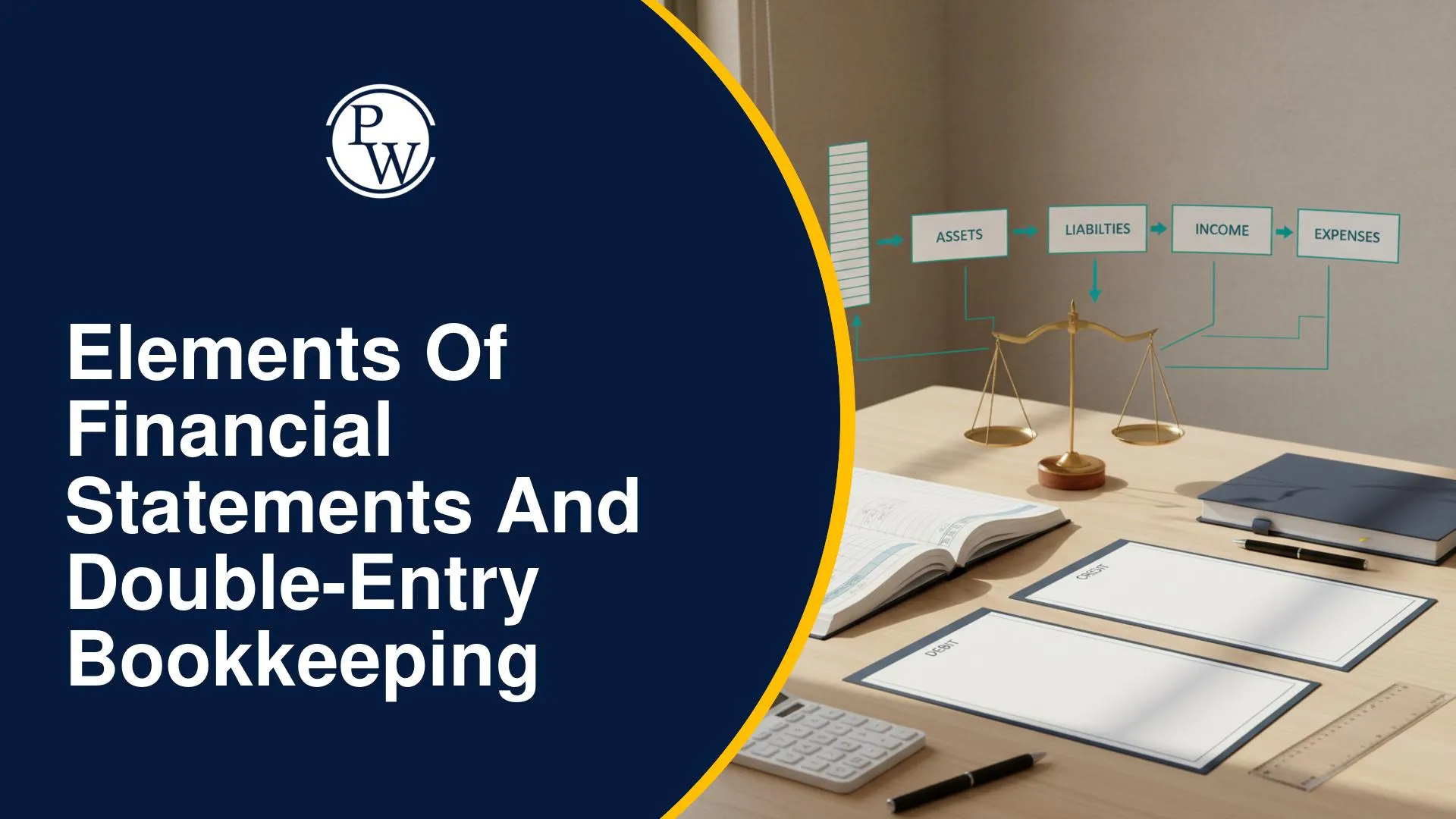
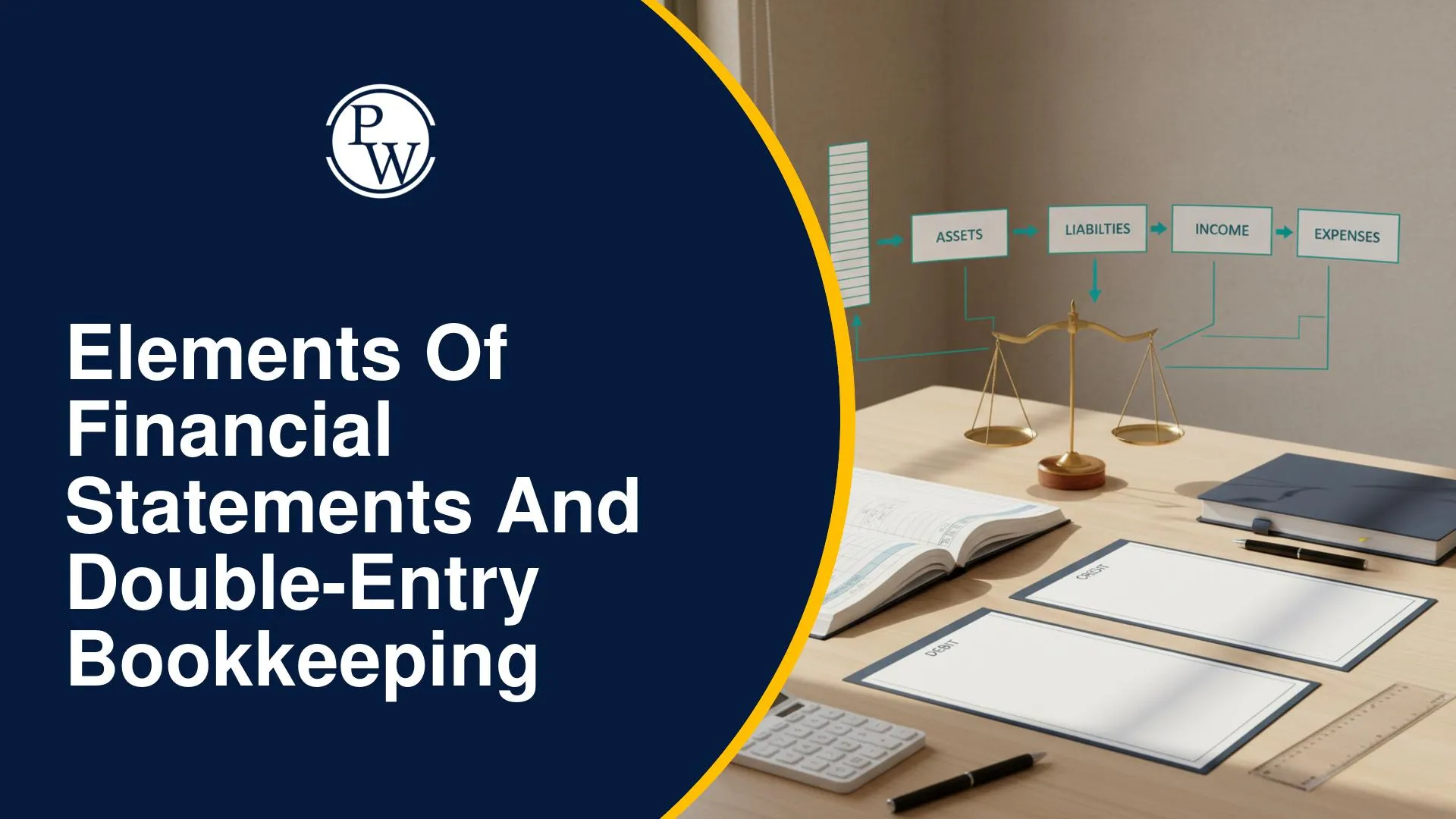
After understanding financial reporting and financial statements, the next step in ACCA Financial Accounting (FA/FFA) is to understand the elements that make up financial statements and how business transactions are recorded. Assets, liabilities, equity, income and expenses form the foundation of accounting, while double-entry bookkeeping explains how each transaction affects the accounts.
For ACCA FA/FFA preparation, PW’s ACCA resources can help you revise these concepts through topic-wise notes and practice material. You can use these resources with the ACCA syllabus and exam pattern to strengthen your understanding of accounting equations, classification of transactions and debit-credit entries.
About Elements of the Financial Statements
The financial statements are built around five key elements: assets, liabilities, equity, income and expenses.
Assets: Resources controlled by the business as a result of past events and expected to provide future economic benefits. Current assets, such as cash, bank balances, inventory and trade receivables, are generally expected to be used, sold or converted into cash within 12 months. Non-current assets are held for longer-term use and may be tangible, such as machinery and buildings, or intangible, such as software, patents and trademarks.
Liabilities: Present obligations arising from past events that the business is expected to settle in the future. Current liabilities, such as trade payables, bank overdrafts and accruals, are generally settled within 12 months. Non-current liabilities, such as long-term bank loans and debentures, are payable after more than one year.
Equity: The residual interest in the assets of a business after deducting its liabilities.
-
Equity = Assets − Liabilities
-
Closing Capital = Opening Capital + Additional Capital − Drawings + Profit
Income and Expenses: Income increases equity, while expenses reduce equity. Sales revenue and commission received are examples of income, while rent, salaries and depreciation are examples of expenses. Money invested by the owner is treated as capital rather than income.
-
Gross Profit = Revenue − Cost of Sales
-
Profit for the Period = Gross Profit + Other Income − Operating Expenses
Asset Expenditure vs Expense
When a business spends money, it is important to determine whether the expenditure creates a long-term asset or relates to the day-to-day running of the business.
|
Asset Expenditure |
Expense |
|
Provides a long-term benefit |
Provides a short-term benefit |
|
Recorded as an asset in the SoFP |
Recorded as an expense in the SoPL |
|
Cost is generally recognised over its useful life through depreciation where applicable |
Generally charged to the accounting period |
|
Example: purchase of machinery |
Example: rent |
Incorrectly recording an expense as an asset can overstate assets and profit, making the financial statements misleading.
Duality Concept and the Accounting Equation
The duality concept means that every accounting transaction has two equal effects. This is the basis of double-entry bookkeeping. For example, a credit sale increases trade receivables and sales, while receiving a loan increases cash or bank and the corresponding liability.
The basic accounting equation is:
Assets = Liabilities + Capital
The expanded accounting equation is:
Assets + Drawings + Expenses = Capital + Liabilities + Income
Understanding these equations helps learners identify how transactions affect different elements of the financial statements.
Double-Entry Bookkeeping and the DEAD CLIC Rule
Under double-entry bookkeeping, every transaction is recorded with at least one debit and one credit of equal value. The DEAD CLIC rule can be used as a simple way to remember which accounts normally increase on the debit and credit sides.
-
DEAD — Debit increases: Drawings, Expenses and Assets
-
CLIC — Credit increases: Capital, Liabilities and Income
Some common double entries include:
|
Transaction |
Debit |
Credit |
|
Start business with cash |
Cash/Bank |
Capital |
|
Buy equipment for cash |
Equipment |
Cash/Bank |
|
Credit purchases |
Purchases |
Trade Payables |
|
Credit sales |
Trade Receivables |
Sales |
|
Cash sales |
Cash/Bank |
Sales |
Elements of Financial Statements and Double-Entry Bookkeeping PDF
These PW Elements of Financial Statements and Double-Entry Bookkeeping notes bring the core accounting concepts together for quick ACCA FA/FFA revision. The PDF can help you revise the classification of assets, liabilities, equity, income and expenses, along with the accounting equation and common double-entry rules.
PW ACCA provides learning and revision resources that can be used alongside these notes for concept reinforcement and question practice. You can revise the chapter from the PDF and then practise accounting transactions to strengthen your understanding of debit and credit entries.
Elements of Financial Statements and Double-Entry Bookkeeping Notes By PW
How to Prepare Elements of Financial Statements and Double-Entry Bookkeeping for ACCA FA/FFA?
A chapter-wise preparation approach can help you connect these accounting concepts with the wider ACCA FA/FFA syllabus and exam requirements.
-
Start with the ACCA FA/FFA syllabus: Identify the areas related to financial statement elements, accounting concepts and double-entry bookkeeping before beginning your revision.
-
Understand the ACCA exam pattern: Familiarise yourself with the question format and assessment structure so you can practise concepts in the context of the FA/FFA examination.
-
Learn the five elements: Revise the meaning and classification of assets, liabilities, equity, income and expenses. Pay attention to the difference between current and non-current items.
-
Practise the accounting equation: Use simple transactions to understand how changes in assets, liabilities and capital affect the equation.
-
Revise debit and credit rules: Use the DEAD CLIC rule as a revision aid, but focus on understanding the underlying accounting treatment rather than relying only on memorisation.
-
Practise double-entry questions: Work through objective test questions involving purchases, sales, cash, credit transactions, expenses, capital and liabilities.
-
Revise before attempting the exam: Use the PDF notes to revisit definitions, equations and common entries before moving to mixed question practice.
Elements of Financial Statements and Double-Entry Bookkeeping forms an important foundation for ACCA FA/FFA. Understanding assets, liabilities, equity, income and expenses, along with the accounting equation and double-entry system, helps you approach later accounting topics with greater clarity. Along with the chapter notes, PW ACCA provides learning, revision and practice resources that can support your FA/FFA preparation.
FAQs
What are the five elements of financial statements?
What is the accounting equation in ACCA FA/FFA?
What is double-entry bookkeeping?
Where can I find Elements of Financial Statements and Double-Entry Bookkeeping notes?





Get Free Counselling Today
and Clear up all your Doubts
 Live & recorded classes available at easeDashboard for progress trackingLakhs of practice questions

