







IAS 7 Statement of Cash Flows Notes By PW

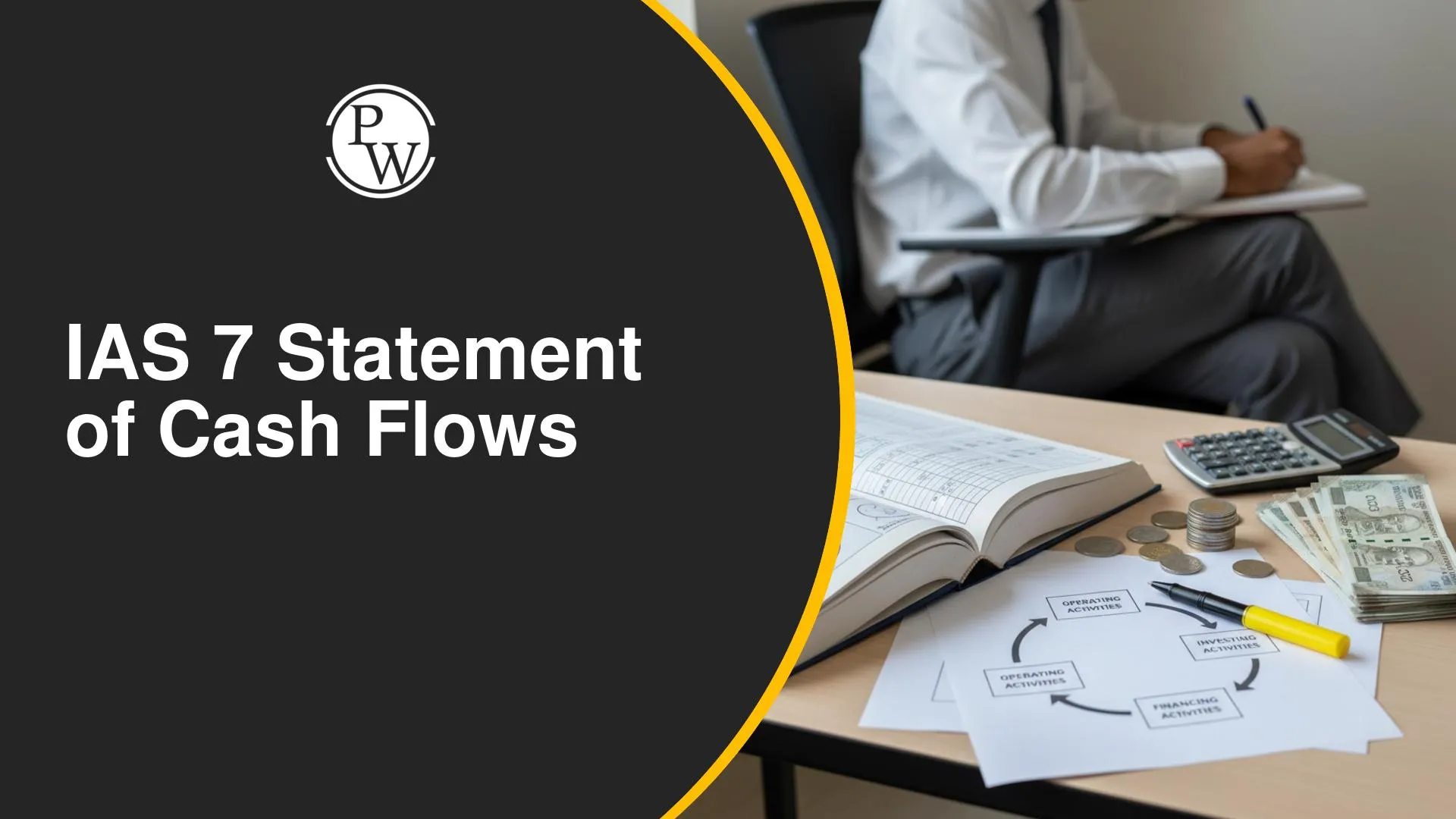
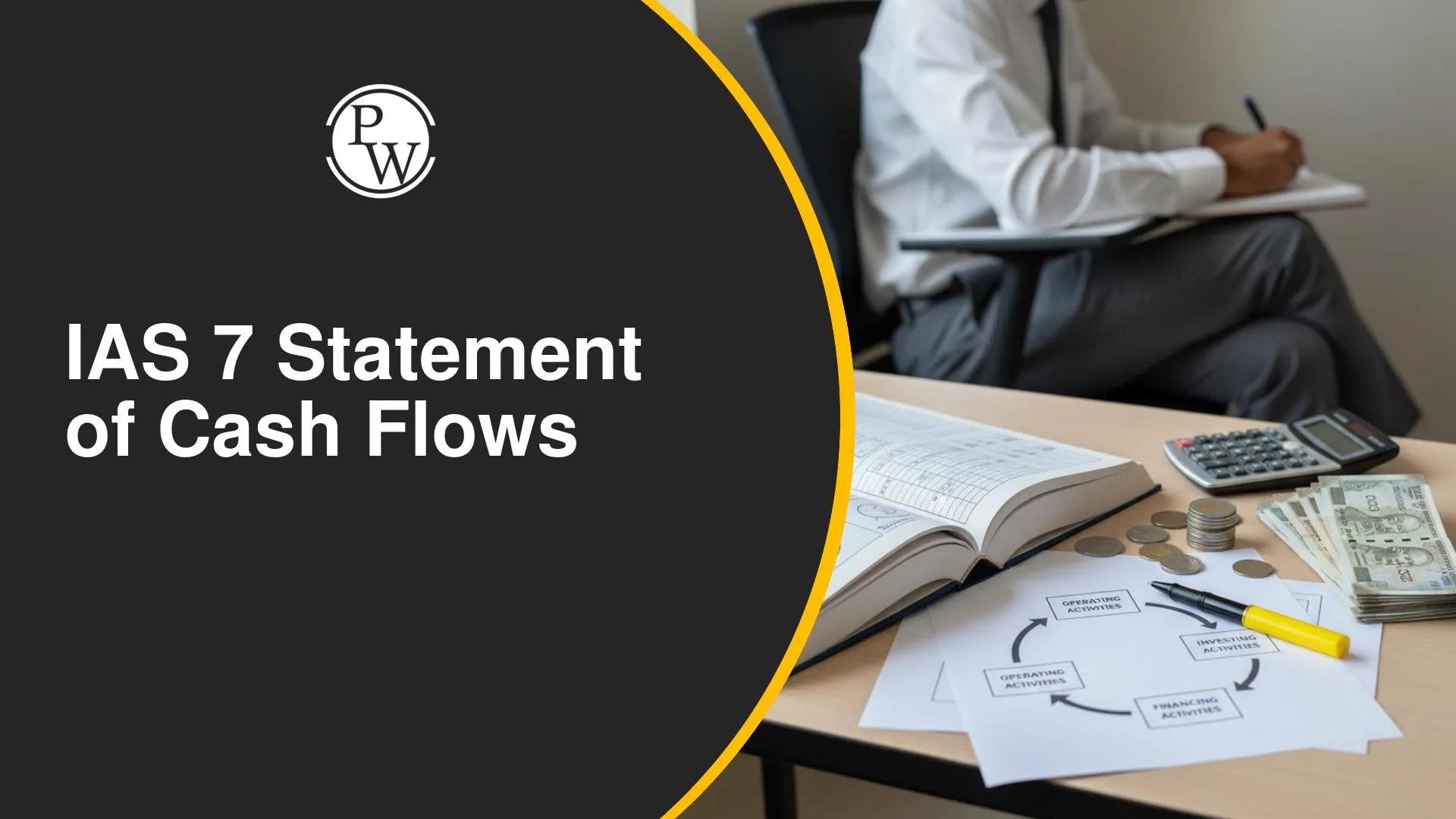
A profitable business does not necessarily have enough cash available to meet its immediate obligations. The statement of cash flows helps explain this difference by recording how cash and cash equivalents move during an accounting period.
For ACCA FA/FFA, IAS 7 focuses on classifying cash flows, calculating operating cash flow using direct and indirect methods, and identifying cash movements from investing and financing activities. PW’s ACCA resources can also support your preparation through syllabus-based notes, question practice and related FA/FFA topics.
Importance of Cash Flow Information
The statement of cash flows records the cash received and paid by an entity during a particular period. Unlike profit, which follows the accruals basis and can include non-cash items such as depreciation, cash flow information focuses on actual movements in cash.
For instance, when a business makes a credit sale, revenue and profit may be recognised even though the customer has not yet paid. The statement of cash flows therefore provides information that cannot be understood from profit alone.
Advantages of Cash Flow Information
Cash flow information can help users assess:
-
The entity's liquidity and solvency.
-
Its ability to generate cash and cash equivalents.
-
The timing of future cash flows.
-
The certainty of future cash inflows and outflows.
Limitations of Cash Flow Information
There are also limitations to consider:
-
It mainly reflects past cash movements.
-
Cash balances can be influenced by the timing of payments and receipts.
-
A reduction in cash does not automatically indicate poor cash management.
Classification of Cash Flows Under IAS 7
IAS 7 divides cash flows into three main categories. Understanding the nature of each activity is important when answering classification and calculation questions in ACCA FA/FFA.
|
Activity |
Typical Cash Flows |
|
Operating Activities |
Cash received from customers, payments to suppliers and employees, income taxes paid |
|
Investing Activities |
Purchase and sale of non-current assets and investments, interest and dividends received |
|
Financing Activities |
Proceeds from shares and loans, loan repayments, interest and dividends paid |
Cash and Cash Equivalents
Cash and cash equivalents can include:
-
Cash held by the business.
-
Deposits.
-
Short-term, highly liquid investments with a maturity of less than three months.
-
Bank overdrafts repayable on demand when they form part of the entity's cash management.
The combined movement from operating, investing and financing activities should reconcile with the change in cash and cash equivalents shown in the statement of financial position.
Calculating Operating Cash Flow Using the Direct Method
Under the direct method, operating cash flow is determined by calculating the actual cash receipts and payments.
The main calculations include:
-
Cash received from customers = Opening receivables + Sales − Closing receivables
-
Cash paid to suppliers = Opening payables + Purchases − Closing payables
-
Cash paid to employees = Opening accrual + Wages expense − Closing accrual
-
Income tax paid = Opening tax payable + Tax charge − Closing tax payable
This method therefore converts relevant income and expense figures into the corresponding cash amounts.
Indirect Method for Operating Activities
The indirect method begins with operating profit rather than individual cash receipts and payments. Adjustments are then made for non-cash items and movements in working capital.
The treatment of common adjustments is as follows:
|
Adjustment |
Treatment |
|
Depreciation and amortisation |
Add back |
|
Profit on disposal of non-current assets |
Deduct |
|
Loss on disposal of non-current assets |
Add back |
|
Increase in inventories or receivables |
Deduct |
|
Decrease in inventories or receivables |
Add |
|
Increase in trade payables |
Add |
|
Decrease in trade payables |
Deduct |
Both the direct and indirect approaches arrive at the same operating cash flow before income taxes.
For example, where operating profit is $925,000 and depreciation is $345,000, the calculation also considers the $230,000 profit on disposal and the relevant working capital movements. After these adjustments, the cash generated before income taxes is $1,050,000.
Investing Activities Under IAS 7
Investing activities relate mainly to transactions involving non-current assets and investments.
When calculating the cash paid for a non-current asset, an NCA carrying amount T-account can be used. The purchase figure can then be identified as the balancing amount.
For disposals, the cash received can be calculated as:
Sale proceeds = Cost − Accumulated depreciation + Profit on disposal
Where there is a loss, the loss is deducted instead.
Only the actual cash proceeds from the sale are reported as an investing cash flow. The accounting profit or loss itself is not treated as the cash receipt.
Interest and dividends are included based on the amounts actually received rather than amounts that have only been accrued.
Financing Activities and Cash Movements
Financing activities cover transactions involving the entity's equity and borrowings.
Key points include:
-
Proceeds from a share issue are recorded at the amount of cash received rather than the shares' par value.
-
Bonus issues are not included because they do not generate a cash inflow.
-
Loan proceeds are financing inflows.
-
Repayment of loans and leases represents financing outflows.
-
Interest paid can be calculated as Opening interest payable + Interest charge − Closing interest payable.
-
Dividends paid are treated as cash outflows.
When analysing a cash flow statement, the three categories should be considered together. For example, cash spent on acquiring non-current assets under investing activities may be supported by funds raised through financing activities.
IAS 7 Statement of Cash Flows PDF
Having the key IAS 7 concepts together can make revision easier, particularly when you need to revisit calculation methods and cash flow classifications. This PDF by PW can be used alongside your ACCA FA/FFA syllabus preparation for quick reference.
You can also use the PDF to revise areas such as the Jesstika Co and Lishades Co worked examples, activity classification and NCA T-account calculations.
IAS 7 Statement of Cash Flows Notes By PW
IAS 7 Statement of Cash Flows Preparation Strategy for ACCA FA/FFA
Build your preparation around understanding how accounting figures translate into actual cash movements. Once the concepts are clear, practise calculations and classification-based questions to improve accuracy.
-
Start with the ACCA FA/FFA syllabus to understand the topics covered under financial accounting and place IAS 7 within your overall preparation.
-
Review the ACCA FA/FFA exam pattern to understand the question format and assessment requirements.
-
Revise Financial Statements to connect cash flow statements with the other financial statements.
-
Practise ACCA FA/FFA Objective Test Questions covering direct and indirect cash flow calculations, working capital adjustments and activity classification.
-
Study Operating, Investing and Financing Activities separately and practise identifying the correct category for different transactions.
-
Revise Cash and Cash Equivalents along with the conditions used to identify qualifying cash equivalents under IAS 7.
-
Practise NCA T-Account Calculations to improve accuracy when working out purchases and proceeds from the disposal of non-current assets.
IAS 7 Statement of Cash Flows explains how an entity's cash movements are presented through operating, investing and financing activities. For ACCA FA/FFA, focus on the direct and indirect methods, working capital adjustments, NCA T-accounts and the treatment of financing transactions. You can also join PW’s ACCA online coaching alongside these notes to revise the FA/FFA syllabus, practise relevant questions and connect IAS 7 with other financial accounting topics.
FAQs
What does IAS 7 cover in ACCA FA/FFA?
What is the difference between the direct and indirect method?
Which activities are included in a cash flow statement?
How can PW ACCA resources help with IAS 7 preparation?





Get Free Counselling Today
and Clear up all your Doubts
 Live & recorded classes available at easeDashboard for progress trackingLakhs of practice questions

