








ACCA Job, Batch and Service Costing Notes by PW
 Mehjabeen Hussain8 Oct, 2026
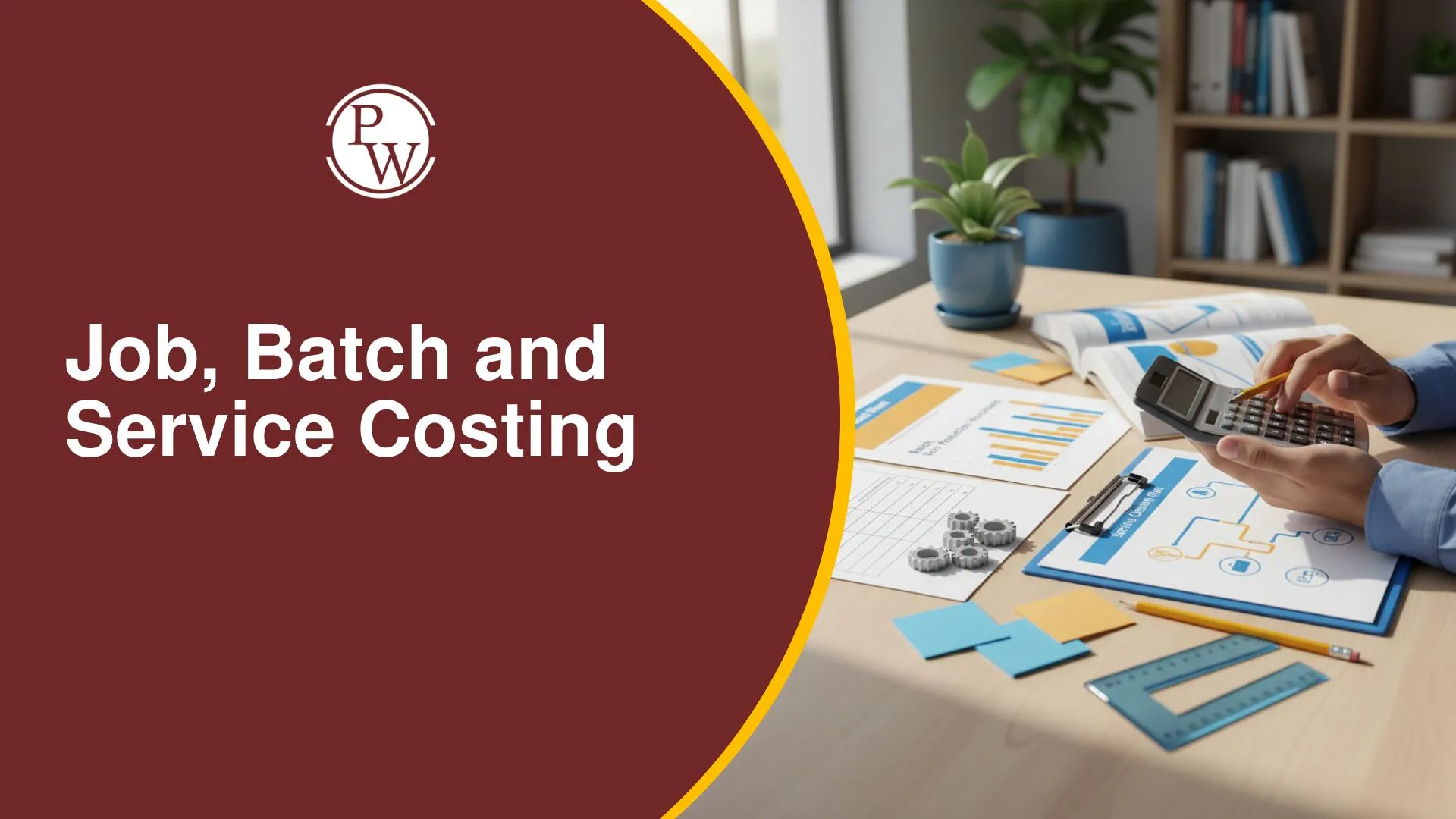
Job, batch and service costing are closely linked to the way costs are assigned to different types of output in Management Accounting. Job costing focuses on specific and customised work, while batch costing is used when identical units are produced together. Service costing applies to organisations that provide services and uses simple or composite cost units to measure service output.
For ACCA Management Accounting preparation, it is important to understand how each costing method works and why the cost unit changes according to the nature of the activity. The Job, Batch and Service Costing PDF by PW focuses on job cost cards, batch costing, mark-up and margin calculations, and service cost units to help you revise these costing methods and their related calculations.
Job Costing
Job costing is a costing method used to determine the cost of a specific job, order or contract. It is suitable when each job is identifiable, customised and limited in scope or duration.
A job acts as a separate cost unit, with direct materials, direct labour, direct expenses and an appropriate share of overheads assigned to it.
Examples of activities where job costing can be used include:
-
Construction of a shopping centre
-
Website development
-
Custom tailoring
-
Event or wedding planning
-
Office redecoration
Unlike continuous or mass production, each job is generally distinct and may have different resource requirements.
Job Cost Card
A job cost card records the costs associated with a particular job. The total job cost can be calculated by adding direct costs and relevant overheads.
Direct Materials + Direct Labour + Direct Expenses = Prime Cost
Prime Cost + Production Overheads = Total Production Cost
Total Production Cost + Non-Production Overheads = Total Job Cost
These calculations show how the cost of a job builds from directly attributable costs to production and non-production overheads.
Batch Costing
Batch costing is a variation of job costing used when a group of identical or homogeneous units is produced together. The batch is treated as a single cost unit, and the total cost of the batch is calculated before determining the cost per individual unit.
Batch costing can be used in industries such as:
-
Pharmaceuticals
-
Garments and clothing
-
Electronics
-
Printing
Set-Up Costs in Batch Costing
Set-up costs are incurred when equipment or production facilities are prepared for a particular batch. These costs can include preparing, adjusting or cleaning equipment before production begins.
For costing purposes, set-up costs are treated as direct expenses of the relevant batch because they can be specifically associated with that batch.
Service Costing
Service costing is used to determine the cost of providing services rather than producing tangible goods. It can be applied to both internal services provided within an organisation and external services provided to customers.
Types of Services
Internal Services
Internal services are provided within an organisation to support its operations. Examples include maintenance, canteen facilities and power plants.
External Services
External services are provided to clients or customers. Examples include transport, legal services and healthcare.
Job, Batch and Service Costing PDF
The Job, Batch and Service Costing PDF by PW focuses on the key concepts involved in calculating and analysing costs for individual jobs, batches and services. It covers job cost cards, mark-up and margin calculations, batch costing, set-up costs, service characteristics and simple and composite cost units.
Job, Batch and Service Costing PDF
Study without using the internet
Why Use PW’s ACCA Job, Batch and Service Costing Notes for Your Preparation?
The Job, Batch and Service Costing PDF by PW brings together three costing methods that differ in how costs are accumulated and measured. Revising these methods can help you understand how a cost unit changes from an individual customised job to a batch of identical units or a measurable service output.
Understand Where Job, Batch and Service Costing Fits in the ACCA MA Syllabus
Job costing, batch costing and service costing involve different approaches to identifying cost units and accumulating costs. Revising the ACCA MA syllabus alongside this topic can help you place these costing methods within the wider Cost Accounting Techniques section.
Revise Mark-Up, Margin and Costing Formulas with the ACCA MA Formula List
Job costing includes calculations for prime cost, total job cost, mark-up and margin, while batch and service costing require unit-cost calculations. Use the ACCA MA Formula List to revise these formulas and distinguish between calculations based on total cost, selling price and the number of units produced or services provided.
Connect Job and Batch Costing with Wider Management Accounting Concepts
Job and batch costing show how costs can be accumulated for customised work and groups of identical units. After revising these methods, the ACCA Management Accounting (MA) Complete Guide can help you continue with related Management Accounting concepts and see how different costing methods fit together.
Apply Costing Concepts During ACCA MA Preparation
Service costing introduces simple and composite cost units, while job and batch costing involve identifying costs for specific jobs or groups of units. Revising these concepts as part of ACCA Management Accounting preparation can help you practise identifying the appropriate cost unit and applying the relevant costing method to different scenarios.
Job, batch and service costing differ mainly in the type of output being costed and the way expenses are assigned to that output. Knowing when to apply each method and how to calculate the related cost can help you solve Management Accounting questions with greater accuracy.
The Job, Batch and Service Costing PDF by PW can help you revise these methods, formulas and applications as part of your ACCA preparation.
FAQs
What is job costing?
What is batch costing?
What is service costing?
What is the difference between job costing and batch costing?





Have questions about your prep?
Our experts can answer all your questions
 Live & recorded classes available at easeDashboard for progress trackingLakhs of practice questions

