College vs Job After 12th Agriculture: Courses, Salary & Career Scope

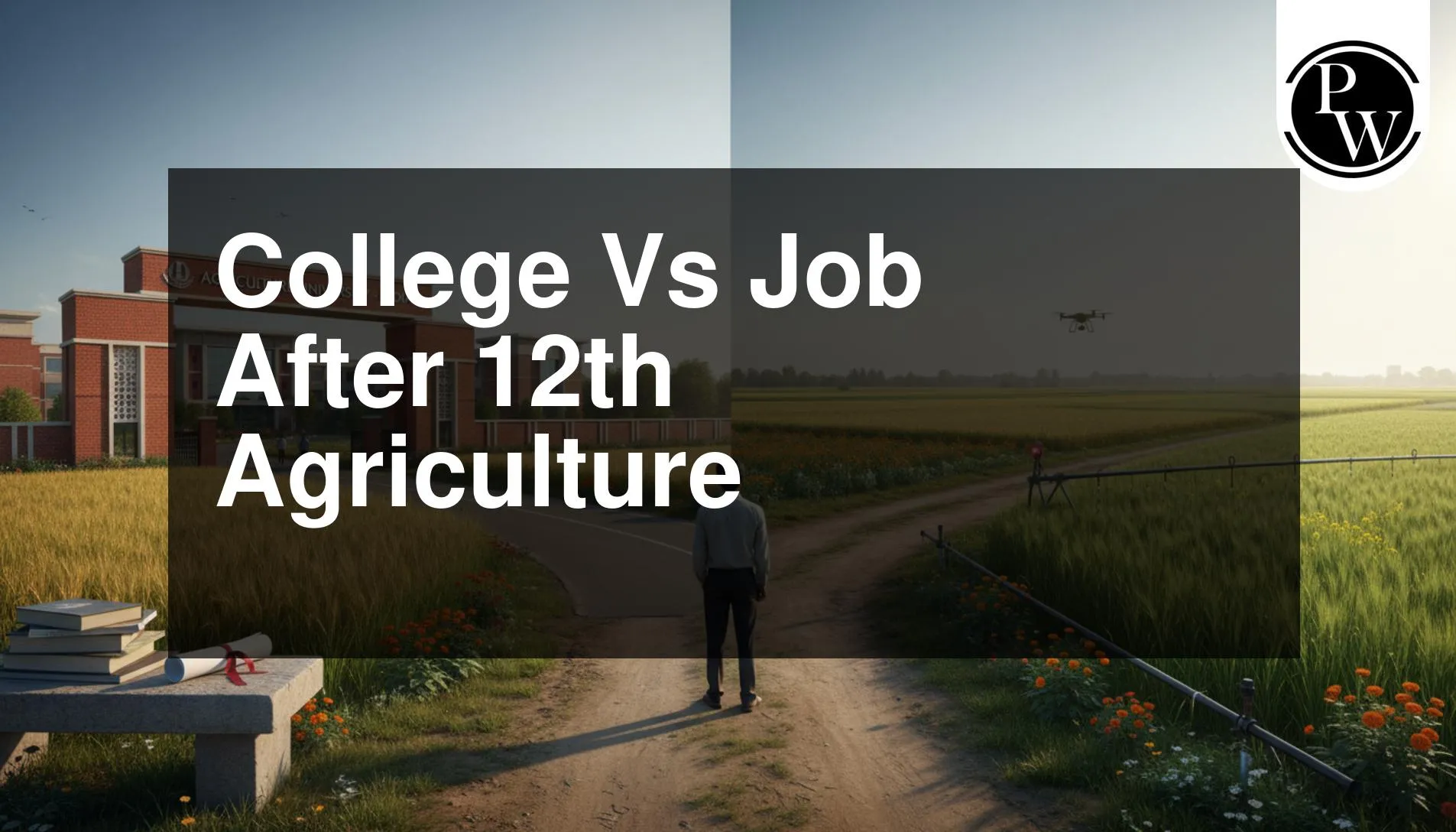
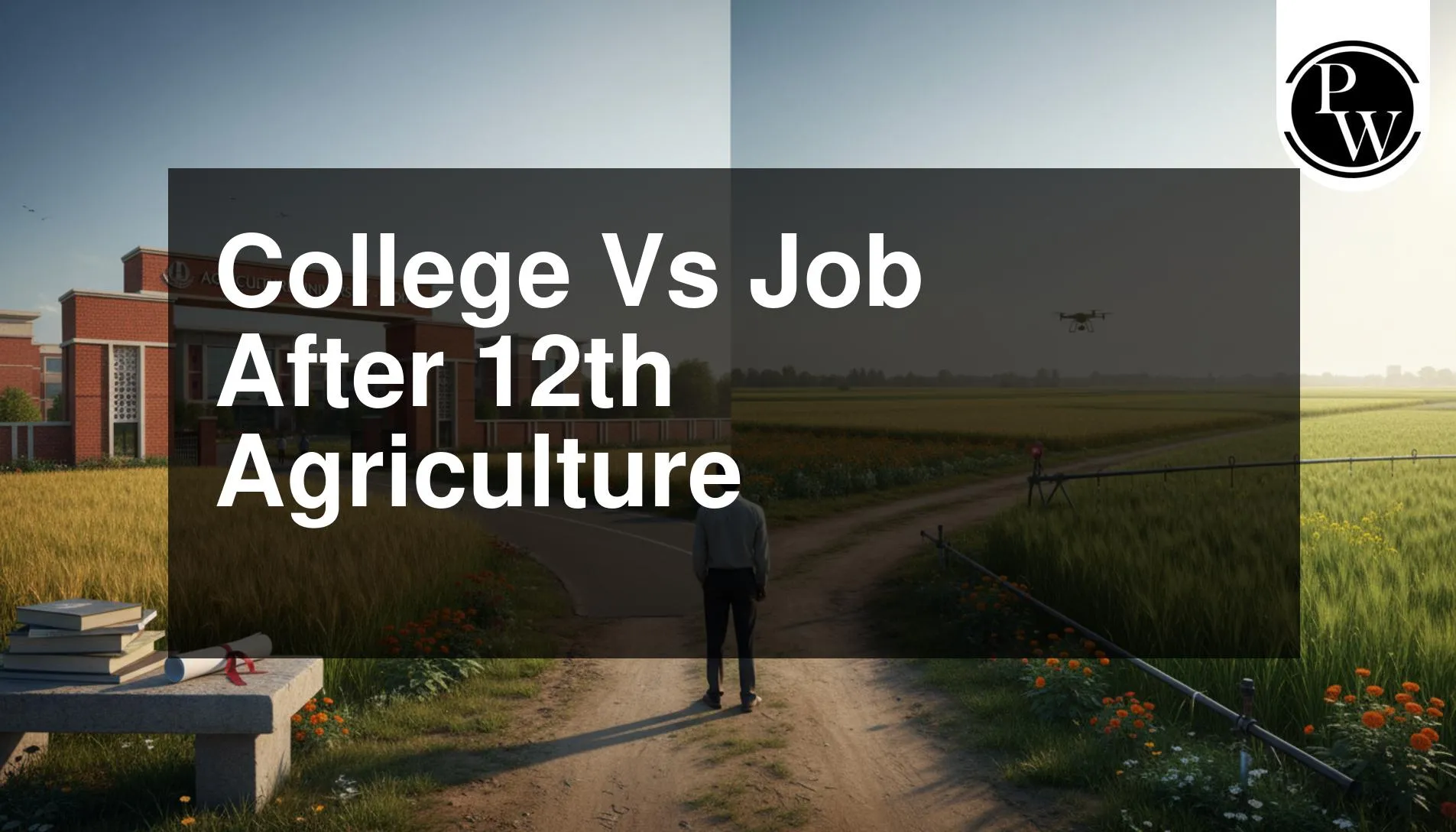
Choosing between college and a job after 12th Agriculture depends on your career goals and financial situation. College options like B.Sc. Agriculture or Horticulture provides strong theoretical knowledge, practical exposure, and better long-term career growth in both government and private sectors.
On the other hand, jobs or short-term courses help you start earning early and gain hands-on experience. However, growth may be limited without a degree. Overall, pursuing college is a better long-term option, while jobs can be suitable for immediate income or skill-based careers.
College vs Job After 12th Agriculture: What Should You Choose?
For students completing 12th grade in Agriculture, exploring available career options is crucial. This video covers diverse degree and diploma courses, self-employment avenues, and the future scope of agriculture.
The primary focus is on establishing a successful career in agriculture after 12th grade and understanding the available job opportunities to make informed educational and professional choices.
College After 12th Agriculture: Courses and Career Benefits
Choosing college after 12th Agriculture helps you build strong knowledge, practical skills, and better career opportunities in both government and private sectors. It also opens doors to higher studies and specialized fields in agriculture.
1. Certification Courses
Certification courses offer short-term, specialized training to gain expertise in specific agricultural areas. These programs are beneficial for developing focused skills rapidly. Examples include Agriculture Science, Food and Beverage Service, and Bio-fertilizer Production. These are trending topics with continuous research and innovations, making certifications in these fields highly valuable.
2. Diploma Courses
Diploma courses provide a mid-term educational pathway, generally shorter than a full degree. They focus on practical skills and direct application.
|
Type |
Duration & Focus |
|---|---|
|
Diploma |
Shorter duration, concentrated on practical skills. |
|
Degree |
Longer (typically 4 years), comprehensive coverage including practical knowledge, experiments, and theoretical understanding. |
Recommended diploma courses include Diploma in Agriculture, Diploma in Agriculture and Allied Practices, and Diploma in Food Processing.
3. Bachelor's Degree Programs
Pursuing a Bachelor's degree after 12th Agriculture is highly recommended, especially without a strong agricultural business background. A 4-year degree offers extensive exposure, aids in understanding different agricultural branches, identifying personal interests, and leveraging agricultural knowledge effectively.
Common Bachelor's Degree Programs:
-
Bachelor of Science (B.Sc.) in Agriculture / B.Sc. (Hons.) Agriculture: A 4-year program, often including a RAWE program (Rural Agricultural Work Experience) in the final year.
-
B.Sc. Horticulture
-
B.Sc. Crop Physiology
B.Sc. Agriculture and B.Sc. Horticulture are highly trending and frequently chosen by students, leading to quick seat filling. While other options like Food Technology, Biotechnology, and Agricultural Engineering exist, these two are the most sought-after.
Entrance Examinations for University Admissions
To secure admission to reputable universities for B.Sc. programs, students must clear entrance examinations. These exams are typically categorized as State-level or Central-level.
|
Exam Type |
Description |
Examples |
|
State-Level Exams |
Conducted by individual states for admission into their respective state universities. |
JET (Rajasthan), MP PAT, UP CATET (for 6 top UP universities), CG PAT, BCECE (Bihar), PAU CET (Punjab), AgriCET |
|
Central-Level Exams |
Common entrance tests offering admission opportunities to universities across different states based on merit. |
ICAR AIEEA (Indian Council of Agricultural Research All India Entrance Examination for Admission) |
Diverse Streams in B.Sc. Agriculture
Beyond general Agriculture, a B.Sc. degree offers a wide range of specialization streams:
-
B.Sc. Horticulture
-
B.Sc. Plant Pathology
-
B.Sc. Food Science and Dairy
-
B.Sc. Agricultural Biotechnology
-
B.Sc. Fishery Science
-
B.Sc. Forestry
-
B.Sc. Agricultural and Food Engineering (leading to B.E. or B.Tech in Agricultural Engineering, Dairy Technology, or Agri-IT)
Job After 12th Agriculture: Available Opportunities and Scope
After 12th Agriculture students can explore entry-level jobs, private sector roles, and self-employment opportunities. The field offers a good scope with growing demand in agri-business, government sectors, and modern farming industries.
1. General Job Roles
Common job profiles after an agriculture degree include:
-
Agriculture Supervisor
-
Farm Manager
-
Soil Scientist
-
Pathologist
-
Agronomist
-
Soil Engineer
-
Scientist (e.g., through Agricultural Research Service - ARS)
-
Agriculture Research Officer (ARO)
2. Private Sector Opportunities
While government jobs are often preferred for security, the private sector offers significant growth and exploration opportunities. The privatization trend is increasing, leading to a growing demand for skilled agricultural professionals in the private sector.
Private Sector Areas:
-
Fertilizer Companies: (e.g., Chambal Fertilizers, Bayer, Syngenta)
-
Seed Corporations: Private seed companies.
-
Agriculture Marketing: Roles in sales and marketing of agricultural products.
-
Private Banking: Many banks (e.g., HDFC) have vacancies for Agriculture Officers to assist farmers with loans.
-
Private Colleges/Universities: Teaching positions.
-
Agriculture Finance Sector
-
Pesticide Companies
-
Food Industry: (e.g., Nestle, Amul, Mother Dairy) involved in food processing and product development.
3. Government Sector Opportunities
Government jobs provide job security and a structured career path. There are excellent job opportunities at the State-level, including:
-
Agriculture Development Officer (ADO)
-
Horticulture Development Officer (HDO)
These positions are regularly released by various state governments.
Government Sector Organizations/Roles:
-
National Seed Corporation (NSC)
-
Food Corporation of India (FCI)
-
NABARD Grade A Officer (National Bank for Agriculture and Rural Development)
-
IBPS AFO (Institute of Banking Personnel Selection Agriculture Field Officer) - for public sector banks.
-
IBPS RRB (Regional Rural Banks)
-
KVK (Krishi Vigyan Kendra)
-
School Lecturer (Agriculture Teachers are hired by state governments)
-
College Lecturer
4. Agri-Business and Entrepreneurship
For individuals with an entrepreneurial spirit and innovative ideas, starting one's own venture in agriculture is a rewarding path. This involves generating self-employment and creating job opportunities for others. There are countless examples of successful agri-businesses for those willing to innovate.
Agri-Business Ideas:
-
Agri-Clinic
-
Dairy Farm
-
Agro Farm
-
Coaching Institutes (related to agriculture)
Which Option is Better: College or a Job After 12th in Agriculture?
Choosing between college and a job after 12th Agriculture depends on your goals, financial condition, and career vision. However, based on expert guidance, pursuing a Bachelor’s degree like B.Sc. Agriculture or Horticulture is generally the better option, as it provides deeper knowledge, practical exposure, and access to higher-paying jobs in both government and private sectors.
On the other hand, starting a job early or doing short-term courses can help you earn quickly and gain practical experience, but career growth may be limited without a degree. Therefore, if possible, opting for college is the safer and more rewarding long-term choice, while jobs or diplomas can be considered for immediate income or skill-based careers.
College vs Job After 12th Agriculture FAQs
What are the primary educational pathways after 12th Agriculture?
Which Bachelor's degree programs are most popular in agriculture?
What are some key entrance exams for B.Sc. Agriculture admissions?