How to Prepare for Govt Job Along With B.Sc Agriculture?

Share
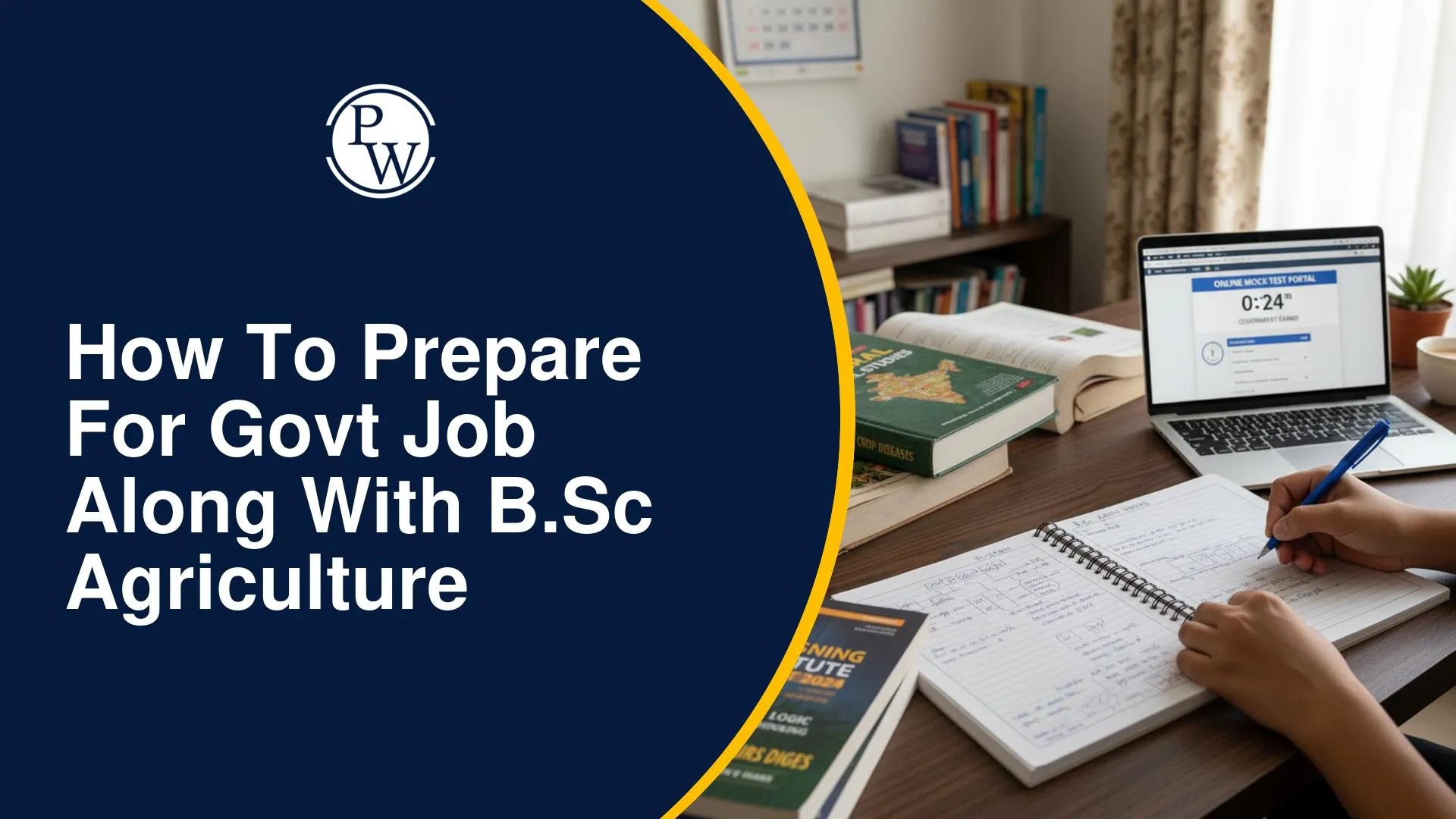
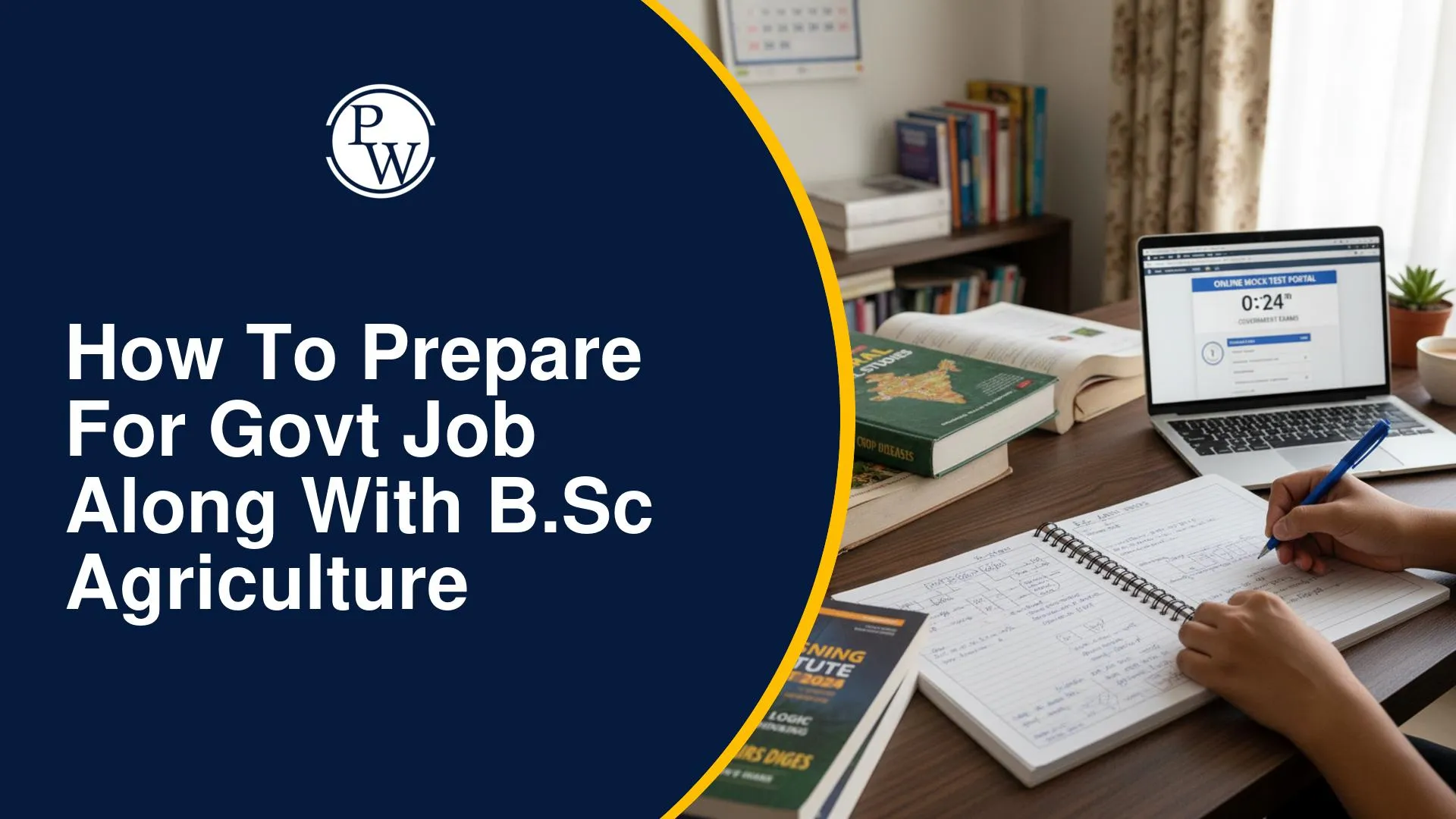
Know how to prepare for Government Job along with B.Sc Agriculture. While agricultural degrees are highly sought after, understanding specific eligibility and the right preparation strategy is important. Here competitive exam structure is covered along with information about the key non-agriculture and agriculture subjects, and the importance of early, consistent study to secure a government career.
Career Opportunities After B.Sc. Agriculture
For B.Sc. Agriculture graduates seeking immediate employment, numerous opportunities exist. Approximately 70% of job opportunities require a B.Sc. Agriculture or allied field degree as the primary eligibility criterion.
Other roles may require specializations, such as a Master's degree, for scientific or teaching positions. Many individuals, including those without a formal agricultural degree, are now exploring business and corporate roles within the agriculture sector.
B.Sc. Agriculture Course Structure
B.Sc. Agriculture is a four-year undergraduate course, structured into eight semesters, with two semesters per academic year. The first three years focus on academic coursework, practicals, note-taking, and assignments.
The fourth year often involves practical courses, Rural Agricultural Work Experience (RAWE), fieldwork, and Experiential Learning Programs. This comprehensive program ensures students cover important subjects frequently tested in competitive exams.
Challenges in Competitive Exams: Descriptive vs. Objective Approach
A significant hurdle for B.Sc. Agriculture graduates in competitive exams are the difference in examination patterns compared to their academic studies.
|
Challenges in Competitive Exams: Descriptive vs. Objective Approach |
||
|---|---|---|
|
Feature |
Academic Exams (B.Sc.) |
Competitive Exams |
|
Question Type |
Primarily descriptive |
Primarily Multiple Choice Questions (MCQ), objective |
|
Study Approach |
Often focuses on writing length and general understanding; "passing" is the goal. |
Requires in-depth conceptual understanding for precise answers |
|
Answer Selection |
May involve rephrasing limited knowledge to fit descriptive answers. |
Requires choosing the single correct answer from multiple options, often with very similar choices. |
|
Marking Scheme |
No negative marking |
Often includes negative marking, which reduces positive scores |
|
Outcome |
Aim is to pass or score well descriptively. |
Requires selecting the exact correct answer to gain marks; incorrect answers result in deduction. |
The main problem is that academic studies emphasize descriptive writing, not precise conceptual recall needed for objective questions. This can make similar options in MCQs challenging to differentiate.
Categorization of Career Paths Post B.Sc. Agriculture
After completing B.Sc. Agriculture, graduates have diverse career options:
-
Government Jobs: Highly sought after for stability and benefits.
-
Private Sector Opportunities: Roles within agricultural companies and businesses.
-
Further Studies: Pursuing Master's or Ph.D. degrees for teaching or research positions.
-
Entrepreneurship: Starting personal agricultural ventures or businesses.
Government Job Opportunities for B.Sc. Agriculture Graduates
For those targeting government jobs, several prominent avenues exist:
-
UPSC Exams: A highly competitive examination where agriculture can be an optional subject, offering a good chance for candidates with a strong agricultural background.
-
Banking Sector: Institutions like NABARD, IBPS, and RRBs frequently recruit agriculture graduates, sometimes requiring prior experience.
-
Central Level Exams: Opportunities through organizations such as FCI, IFFCO, NSC, CWC, and NFL.
-
State Level Exams: Various state government vacancies, including Extension Officer (EO) and Horticulture Development Officer (HDO). Many Bachelor's degree holders are eligible, though some development officer roles might prefer Master's degrees.
These options allow graduates to choose between administrative roles, banking, or field/extension services.
Strategies for Competitive Exam Preparation: Non-Agriculture Subjects
To succeed, strengthening foundational skills in non-agriculture subjects is critical, as these often form the preliminary (Pre-Exam) stage. Clearing this stage is essential to proceed to agriculture-specific sections.
Key Non-Agriculture Subjects for Pre-Exams:
-
English: Cultivate a reading habit through newspapers and essays to improve comprehension and vocabulary.
-
Quants (Quantitative Aptitude): Study topics systematically and practice regularly. The logic applied here is similar to everyday problem-solving (Memory Tip: Everyday life involves logic; apply this to academic problems).
-
Reasoning: Focus on problem-solving techniques for topics like puzzles and seating arrangements. Regular practice is essential.
-
Computer Awareness: Develop a strong grasp of computer fundamentals and applications, as this subject is common in many competitive exams.
Strategies for Competitive Exam Preparation: State-Specific General Knowledge
For State Level Exams, it is important to begin studying State General Knowledge (GK) and General Studies (GS) specific to your state well in advance. This section is a mandatory component of state-level examinations.
Approach to Studying Agriculture for Competitive Exams
Studying agriculture for competitive exams demands a shift from descriptive, rote-learning to a conceptual and in-depth understanding.
-
Exams feature direct questions, reasoning-based questions, logical questions, and in-depth conceptual questions.
-
Avoid rote memorization (Ratta-maarna).
-
Prioritize conceptual understanding (concept-wise study) for agriculture topics. This approach helps in differentiating between similar options and avoids confusion in objective questions.
-
Tailor your study depth to the specific exam. A strong, deep conceptual foundation will enable you to clear any type of agriculture-related exam.
Importance of Early and Consistent Preparation
Success in competitive exams is significantly influenced by early and consistent preparation.
-
Proactive Study: Do not wait for exam notifications, as timelines can be very short, leaving only time for revision.
-
Breaks for Preparation: Utilize semester breaks or dedicate a few hours daily during your B.Sc. program for competitive exam preparation.
-
Consequences of Delayed Preparation: Waiting until after graduation may necessitate a gap year, whereas early preparation can lead to direct employment post-B.Sc.
-
Practice: Consistent practice is as important as studying the concepts.
-
Building a strong foundation in these areas will empower you to clear any competitive exam comfortably.
Aspirants must join Physics Wallah's Join Agriculture Online Courses to boost their readiness for the Agriculture Competitive Examinations. Our courses offer daily live classes, study notes, recorded classes, test series, and more.
How to Prepare for Govt Job Along With B.Sc Agriculture FAQs
What are the main challenges B.Sc. Agriculture graduates face in competitive exams?
Why is early and consistent preparation important for government job aspirants?
What non-agriculture subjects are crucial for competitive exam preliminary stages?
How should B.Sc. Agriculture graduates approach studying agriculture for competitive exams?
What government job opportunities are available for B.Sc. Agriculture graduates?