ISRO Conducts Test Flight (TV-D1) as Part of the Gaganyaan Mission
 Praveen Kushwah21 Oct, 2023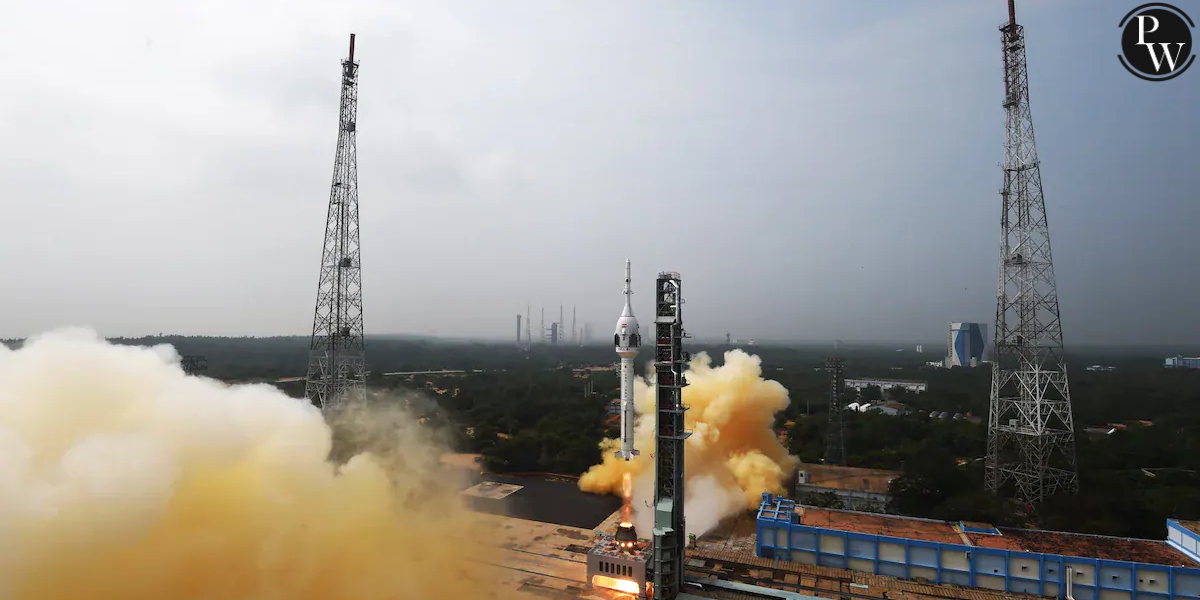
ISRO Conducts Test Flight (TV-D1)
ISRO Conducts Test Flight (TV-D1): The Indian Space Research Organisation (ISRO) successfully conducted the inaugural test vehicle development flight (TV-D1) for India’s maiden human space flight, Gaganyaan.
ISRO Conducts Test Flight (TV-D1) Gaganyaan Mission Overview
Gaganyaan is India's inaugural human spaceflight mission aimed at demonstrating ISRO’s capability to launch and safely retrieve a human crew from an orbit of 400 km. The total cost of the program is estimated at approximately Rs 9023 crore. The launch vehicle for Gaganyaan is GSLV Mk III, also known as LVM-3, which has been human-rated and renamed Human Rated LVM-3. Astronauts for the mission are undergoing training in Russia.
ISRO Conducts Test Flight (TV-D1) Key Points
- The Gaganyaan Mission is India's first human spaceflight project. Its main goal is to show that ISRO (Indian Space Research Organization) can send a crew of astronauts into space, orbit at 400 km, and bring them back safely to Earth. The whole mission is expected to cost around Rs 9023 crore.
- The launch vehicle for this mission is GSLV Mk III, which is now called Human Rated LVM-3 after adjustments to ensure human safety. To prepare for space travel, astronauts are trained in Russia to experience weightless conditions.
- Various Indian organizations, such as the Armed Forces, Defence Research Development Organization, Meteorological Department, Maritime Agencies, and academic institutes, are working together to advance the Gaganyaan Mission.
- Associated parts of the mission include Vyommitra, a humanoid robot that will be part of the second uncrewed Gaganyaan mission. It will perform experiments in microgravity and assist astronauts with tasks like operating switches and interacting with them.
- The final stage involves sending a human astronaut into space. The astronaut will return to Earth with a soft landing in the Arabian Sea off the coast of Gujarat.
Associated Components of the Gaganyaan Mission
- Vyommitra: A humanoid robot designed for microgravity experiments and to assist astronauts.
- Manned Flight: The final phase involves launching a human astronaut to space and safely bringing them back to Earth with a soft landing in the Arabian Sea off the coast of Gujarat.
Crew Escape System (CES)
CES, also known as the Launch Abort System, is a critical emergency exit option for manned space missions. It is designed to safely remove the crew module from the launch vehicle in the event of an abort or during ascent, taking it to a safe altitude before returning it to Earth.
The Crew Escape System (CES) is a crucial safety feature of the Gaganyaan Mission. Also known as the Launch Abort System, it provides an emergency exit option during launch failures or ascent issues. It pulls the crew module to a safe altitude and brings it back to Earth, prioritizing the safety of the crew. This system has been used in the past during a failure of the Russian Soyuz FG rocket in Expedition 57 on October 11, 2018.
Potential Benefits of Gaganyaan Mission
- Innovation: Inspiring the next generation and fostering innovation and creativity.
- Manned Missions: Developing critical technology for future space exploration.
- Employment Creation: Creating job opportunities in the private sector through indigenously developed components.
- Private Sector Growth: Encouraging private sector investment and expansion.
- Human Beneficial Technology: Utilizing developed technologies for the betterment of humanity.
- International Collaboration: Paving the way for future international space collaborations.
- Interdisciplinary Collaboration: Involving collaboration between various agencies, disciplines, and industries.
- Industry-Academia Partnership: Promoting collaboration between academia and industry for national development.
Challenges and Navigating Success
- Human Survival Technologies: Developing essential technologies for human survival from scratch.
- Human Training: Astronauts trained overseas due to inadequate facilities in India.
- Cost Effectiveness: Balancing mission success with cost-effectiveness.
- Human Safety: Safely bringing astronauts back to Earth and addressing long-term impacts on the human body.
Gaganyaan Mission Way to Success
- Meticulous Testing: Ensuring precision through thorough testing.
- Best Practices: Adopting global best practices.
- High-Quality Training: Preparing astronauts for physical and mental challenges.
While Gaganyaan's international significance may be limited, its success could serve as a morale booster for the scientific community and pave the way for the development of the space tourism sector in India.
Gaganyaan Mission Highlights
The Gaganyaan Mission holds numerous potential benefits for India, fostering innovation, growth, and collaboration. It aims to inspire the next generation, promote the development of critical space exploration technology, and create employment opportunities in the private sector. Additionally, the mission's success is expected to encourage private sector investment and expansion, with the technologies developed having applications for human betterment.
International collaboration is a key aspect, as the mission involves interdisciplinary collaboration among various agencies, disciplines, laboratories, industries, and departments. It is also set to promote an industry-academia partnership, furthering collaboration between educational institutions and industries for national development.
However, the mission faces challenges that need careful consideration. Developing technology for human survival in space is a time-consuming process. Astronauts shortlisted for the Gaganyaan mission have been trained overseas due to the lack of adequate facilities in India. Cost-effectiveness is crucial, requiring the development of low-cost yet highly effective technology. Ensuring the safety of human astronauts during their return to Earth is identified as a significant challenge, along with understanding the long-term impact of space conditions on the human body.
To navigate these challenges and ensure success, ISRO emphasizes meticulous testing to prevent issues during the mission, adoption of best global practices, and high-quality training for astronauts to overcome any physical or mental challenges they may face. These steps are crucial in ensuring precision and excellence in the Gaganyaan Mission.
What is the first test flight of Gaganyaan?
What is the Gaganyaan mission of ISRO?
What is TV-D1 test flight?
What is the test for Gaganyaan?
What are the three stages of Gaganyaan?



 Live & recorded classes available at easeDashboard for progress trackingMillions of practice questions at your fingertips