






CA Foundation Quantitative Aptitude 2026: Syllabus and Preparation Strategy
CA Foundation Quantitative Aptitude is a 100-mark objective paper combining Maths, LR, and Statistics. To excel in CA Foundation Quantitative Aptitude, focus on high-weightage topics like Finance Mathematics and Central Tendency. Use "option elimination" and calculator shortcuts to save time. Success requires balancing conceptual clarity with consistent mock test practice to manage negative marking.

CA Foundation Quantitative Aptitude: Mastering CA Foundation Quantitative Aptitude is a significant milestone for any student aiming to become a Chartered Accountant. This paper, often referred to as Paper 3, is unique because it combines Business Mathematics, Logical Reasoning, and Statistics into a single 100-mark objective exam. As of 2025, the ICAI has streamlined the syllabus to focus more on practical application and logical analysis.
For many aspirants, this subject can feel challenging due to the vast range of topics. However, with the right CA Foundation Maths preparation tips and a structured approach to the CA Foundation Statistics syllabus, you can secure a high score. Provided here is a detailed breakdown of the curriculum and strategies to excel in the upcoming sessions.
CA Foundation Quantitative Aptitude Framework
The Quantitative Aptitude paper is designed to test your ability to use mathematical and statistical tools in business and economics. The paper is entirely objective, meaning you will face multiple-choice questions (MCQs). A key factor to remember is the negative marking of 0.25 for every incorrect answer.
Exam Pattern and Marks Distribution
The paper is divided into three distinct parts:
| Exam Pattern and Marks Distribution | |||
| Section | Subject | Marks | Nature |
| Part A | Business Mathematics | 40 Marks | Objective |
| Part B | Logical Reasoning | 20 Marks | Objective |
| Part C | Statistics | 40 Marks |
Objectiv |
CA Foundation Maths Syllabus Breakdown
The CA Foundation Maths syllabus for 2025-2026 focuses on topics that have direct relevance to financial calculations and data analysis.
1. Equations and Inequalities
Equations form the bedrock of mathematical modelling in business.
-
Linear Equations: Solving for one, two, or three variables.
-
Quadratic Equations: Understanding the nature of roots ($D = b^2 - 4ac$) and using the quadratic formula.
-
Cubic Equations: Using hit-and-trial methods and the relation between roots and coefficients.
-
Inequalities: Representing regions on a graph and finding feasible solutions for business constraints.
2. Mathematics of Finance
This is arguably the most important chapter for CA aspirants. It covers:
-
Simple and Compound Interest.
-
Annuities, Sinking Funds, and Perpetuity.
-
Net Present Value (NPV) and Internal Rate of Return (IRR).
-
Valuation of Bonds and EMI calculations.
3. Calculus and Algebra
While calculus is often feared, the CA curriculum limits it to basic applications in business and economics, such as marginal cost and revenue. Other key topics include:
-
Ratio and Proportion, Indices, and Logarithms.
-
Permutations and Combinations.
-
Sequence and Series (Arithmetic and Geometric Progressions).
-
Sets, Relations, and Functions.
CA Foundation Statistics Syllabus
The CA Foundation Statistics syllabus is often considered the scoring area of Paper 3. Statistics help in interpreting data, which is a core skill for auditors.
Key Chapters in Statistics:
-
Statistical Description of Data: Understanding frequency distributions and graphical representation.
-
Measures of Central Tendency and Dispersion: Calculating Mean, Median, Mode, Standard Deviation, and Quartile Deviation.
-
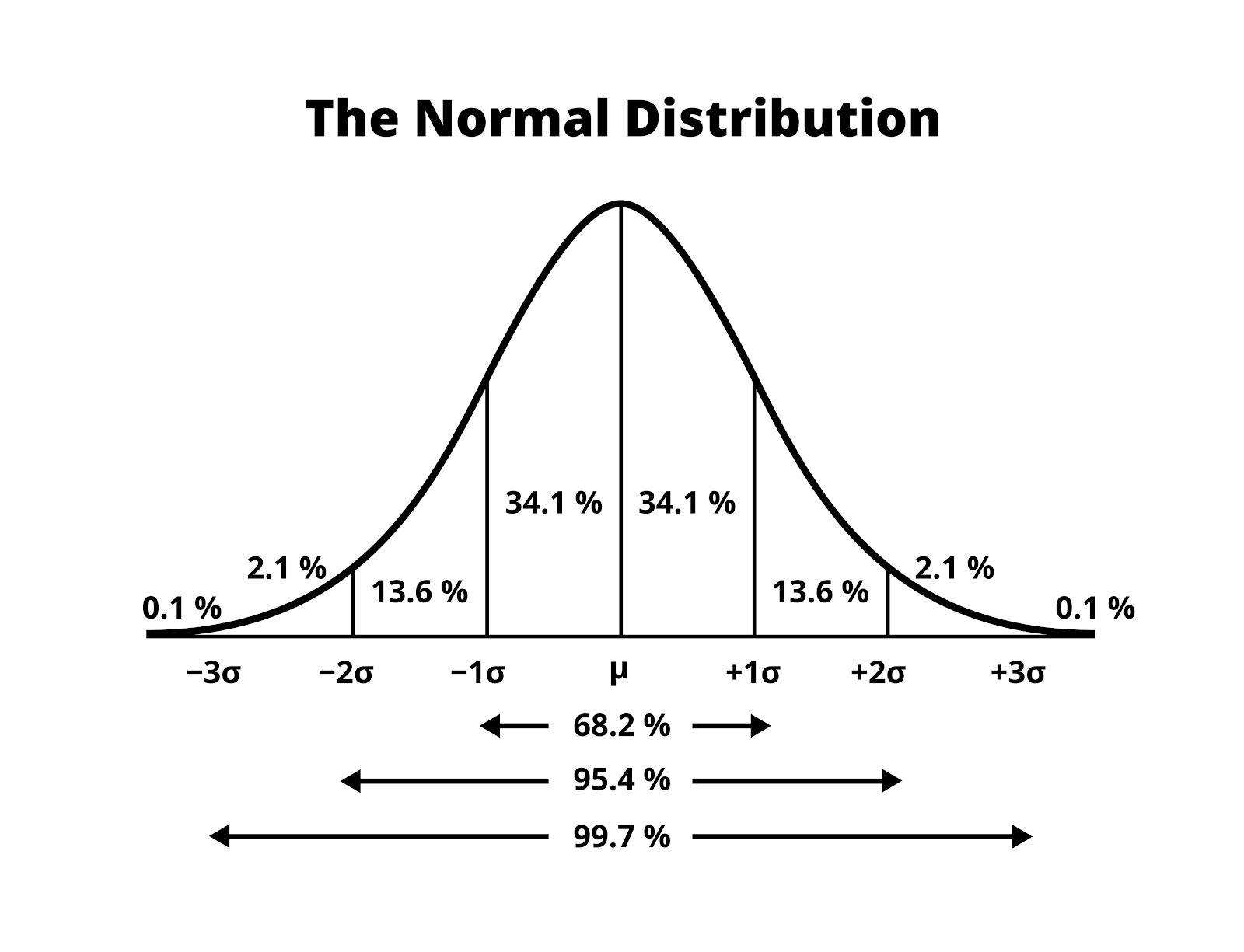
Probability and Theoretical Distributions: Focusing on Binomial, Poisson, and Normal distributions.
-
Correlation and Regression: Analyzing the relationship between two variables.
-
Index Numbers: Measuring changes in variables over time, crucial for economic analysis.
Practical CA Foundation Maths Preparation Tips
Success in CA Foundation Quantitative Aptitude depends more on strategy than on raw mathematical talent. Since you only have 120 minutes for 100 questions, speed is your greatest asset.
1. The Power of "Going by Options"
For many equations and word problems, you do not need to solve the entire algebraic expression. Instead, substitute the given options into the equation to see which one satisfies the condition. This "reverse-solving" method saves significant time.
2. Smart Calculator Usage
In the exam, a basic calculator is allowed. You must master shortcut keys for:
-
Calculating compound interest quickly.
-
Finding the sum of a series using the 'GT' (Grand Total) key.
-
Using memory functions (M+, M-, MR) for multi-step calculations.
3. Focus on Logical Reasoning
The 20 marks allocated to Logical Reasoning are the "low-hanging fruit." Topics like Blood Relations, Seating Arrangements, and Direction Sense Tests require no formulas—only practice and a clear mind.
CA Foundation Statistics Preparation: Step-by-Step
CA Foundation Statistics preparation should be approached by balancing theory and numericals. Many students ignore the theoretical questions in statistics, which often make up 10-15% of the section.
-
Create a Formula Sheet: Statistics involves numerous formulas for Mean Deviation, Correlation Coefficients, and Probability. Keep a dedicated notebook for these.
-
Understand the Properties: Many MCQ questions test the properties of measures (e.g., "the sum of deviations from the mean is always zero").
-
Practice Sampling Theory: The 2025 syllabus places importance on sampling techniques. Ensure you understand the difference between random and non-random sampling.
Effective Revision Strategy for CA Foundation Maths and Statistics
The combined study of CA Foundation Maths and Statistics requires a dual-track revision plan.
Phase 1: Conceptual Clarity (Months 1-3)
Focus on completing the ICAI study material. This is the primary resource, and most exam questions are inspired by the examples and exercises provided here.
Phase 2: Speed Building (Month 4)
Start solving Scanner or Previous Year Questions (PYQs). Time yourself. Aim to solve 100 questions in 100 minutes during your practice sessions to leave a buffer for the actual exam.
Phase 3: Mock Test Papers (Final Month)
Taking at least 5 to 10 full-length mock tests is essential. This helps in overcoming the fear of negative marking and improves your "question selection" skills, knowing which questions to skip is as important as knowing which ones to solve.
Common Mistakes to Avoid in Paper 3
Listed here are some of the common mistakes to avoid in Paper 3:
-
Ignoring Negative Marking: Blind guessing can lead to a significant drop in your aggregate score. Only attempt questions where you can eliminate at least two options.
-
Over-reliance on Long Methods: If a question takes more than 2 minutes, you are likely using the wrong method. Look for a shortcut or an option-based approach.
-
Neglecting Theory: In Statistics and Business Maths, theoretical concepts carry weight. Do not just focus on calculations.
-
Skipping Chapters: While you can prioritize high-weightage topics like "Mathematics of Finance" and "Measures of Central Tendency," avoid skipping entire chapters like "Calculus" or "Probability."
Summary of High-Weightage Topics
To help you prioritize your study, here is a list of topics that traditionally carry the most weight in CA Foundation Quantitative Aptitude:
| Summary of High-Weightage Topics | |
| Subject Area | High-Weightage Topics |
| Mathematics | Mathematics of Finance, Equations, Sequence & Series |
| Logical Reasoning | All Chapters (Total 20 Marks) |
| Statistics | Central Tendency & Dispersion, Correlation & Regression, Index Numbers |
The journey through the CA Foundation Quantitative Aptitude paper is about discipline and smart work. By mastering the CA Foundation Maths syllabus and using effective CA Foundation Statistics preparation techniques, you can turn this subject into your strongest scoring area. Remember, the goal is not just to find the answer, but to find it in the shortest time possible.
Stay consistent with your practice, keep your formula sheet updated, and utilize your calculator to its full potential. With these strategies, you are well-prepared to clear the Foundation level and move toward your goal of becoming a Chartered Accountant.