CA Inter Advanced Accounting Revision Strategy: Last 30 Days Plan to Score High
 Priyanka Yadav16 Apr, 2026
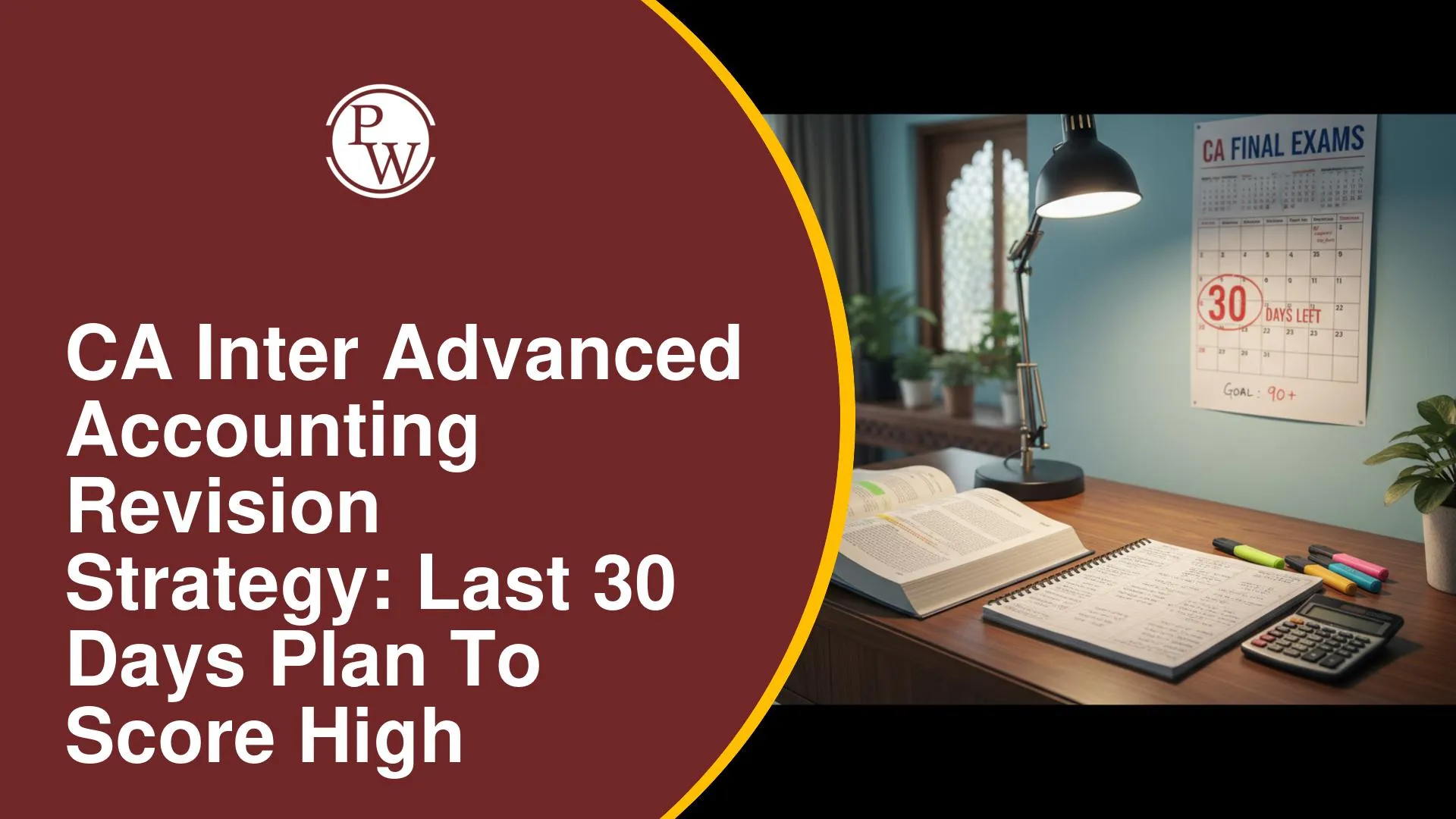
CA Inter Advanced Accounting Revision Strategy: Last 30 Days Plan to Score High is designed to help students make the most of the final month before the exam with a focused and structured approach. Advanced Accounting is a scoring yet challenging subject that requires both conceptual clarity and consistent practice. This plan breaks down the last 30 days into manageable phases, covering high-weightage topics, regular revision, and mock test practice. By following this strategy, students can strengthen their understanding, improve accuracy, and build confidence to perform well in the CA Inter examination.
CA Inter Advanced Accounting Last 30 Days Plan to Score High
Preparing for the CA Inter Advanced Accounting exam in the final month requires a blend of conceptual depth and rigorous practice. As one of the most scoring yet challenging papers, Advanced Accounting demands a systematic approach. This 30-day CA Inter Advanced Accounting revision strategy is designed to help aspirants navigate the vast syllabus efficiently, ensuring every high-weightage topic is mastered.
By following this CA Inter accounts revision plan, students can transition from basic understanding to exam readiness, minimizing the risk of errors and maximizing their potential to score high.
Phase 1: Strengthening the Core (Days 1–10)
The first ten days of your CA Inter accounts last month preparation should focus on the heavyweights: Accounting Standards (AS) and Consolidated Financial Statements.
-
Mastering Accounting Standards (AS): AS typically covers 20–25 marks. Focus on AS 7, 9, 18, 19, 20, and 24. Instead of just reading, practice drafting answers to include the reference of the AS number, the core principle, and the final conclusion.
-
Consolidated Financial Statements: This is a cornerstone of the syllabus. Practice at least 5–7 full-length problems involving adjustments like unrealized profits, minority interest, and cost of control.
-
Amalgamation and Reconstruction: These chapters require clarity on "Purchase Consideration" and "Journal Entries." Ensure you practice the preparation of the post-amalgamation Balance Sheet as per Schedule III.
Phase 2: Specialized Accounting & Financial Reporting (Days 11–20)
In the middle phase of your CA Inter accounts scoring strategy, focus on technical chapters that are often overlooked but carry significant marks.
-
Banking and NBFCs: These chapters have specific formats for Profit & Loss and Balance Sheets. Pay close attention to "Provisioning Norms" and "Income Recognition" criteria.
-
Buyback and Equity with Differential Rights: These are relatively shorter topics. Mastering them ensures quick marks in the exam.
-
Financial Statements of Companies: Focus on the disclosure requirements under Schedule III. Understanding the "Current vs. Non-Current" classification is vital for an accurate Balance Sheet.
Phase 3: Final Practice & Simulation (Days 21–30)
The final stretch of your CA Inter accounts revision plan is about speed, accuracy, and presentation.
-
Solve Revision Test Papers (RTPs): ICAI’s RTPs for the current and previous attempts are mandatory. They often hint at the level of difficulty and types of adjustments expected.
-
Mock Test Papers (MTPs): Treat MTPs as real exams. Sit for 3 hours without distractions to improve your time management. This is a crucial part of the CA Inter accounts exam tips shared by toppers.
-
Daily Format Drill: Spend 20 minutes every morning recalling the formats of Cash Flow Statements, Banking Balance Sheets, and Consolidated accounts.
Essential CA Inter Accounts Exam Tips for Success
To ensure your preparation translates into a high score, keep these pointers in mind:
-
Prioritize Working Notes: Even if your final balance sheet doesn't tally, you can secure 70-80% of the marks if your working notes are clear and logically derived.
-
Use Official Terminology: Stick to the language used in ICAI modules. For example, use "Finance Cost" instead of "Interest Expenses" where applicable under Schedule III.
-
Step-wise Execution: Always approach long questions in steps. This reduces the chance of calculation errors and ensures you get credit for every correct entry.
Avoid New Topics: In the last 15 days, do not pick up a new chapter. Strengthen what you have already covered to ensure 100% accuracy in those areas.
CA Inter Advanced Accounting Revision FAQs
Which chapters carry the highest weightage in Advanced Accounting?
How can I manage time during the 3-hour exam?
Is it necessary to solve previous year's papers?
Should I start new topics in the last few days?