CA Inter FM & SM Study Plan for Jan 2026 Exams by CA Sunil Keswani
 Neha Tanna9 Apr, 2026
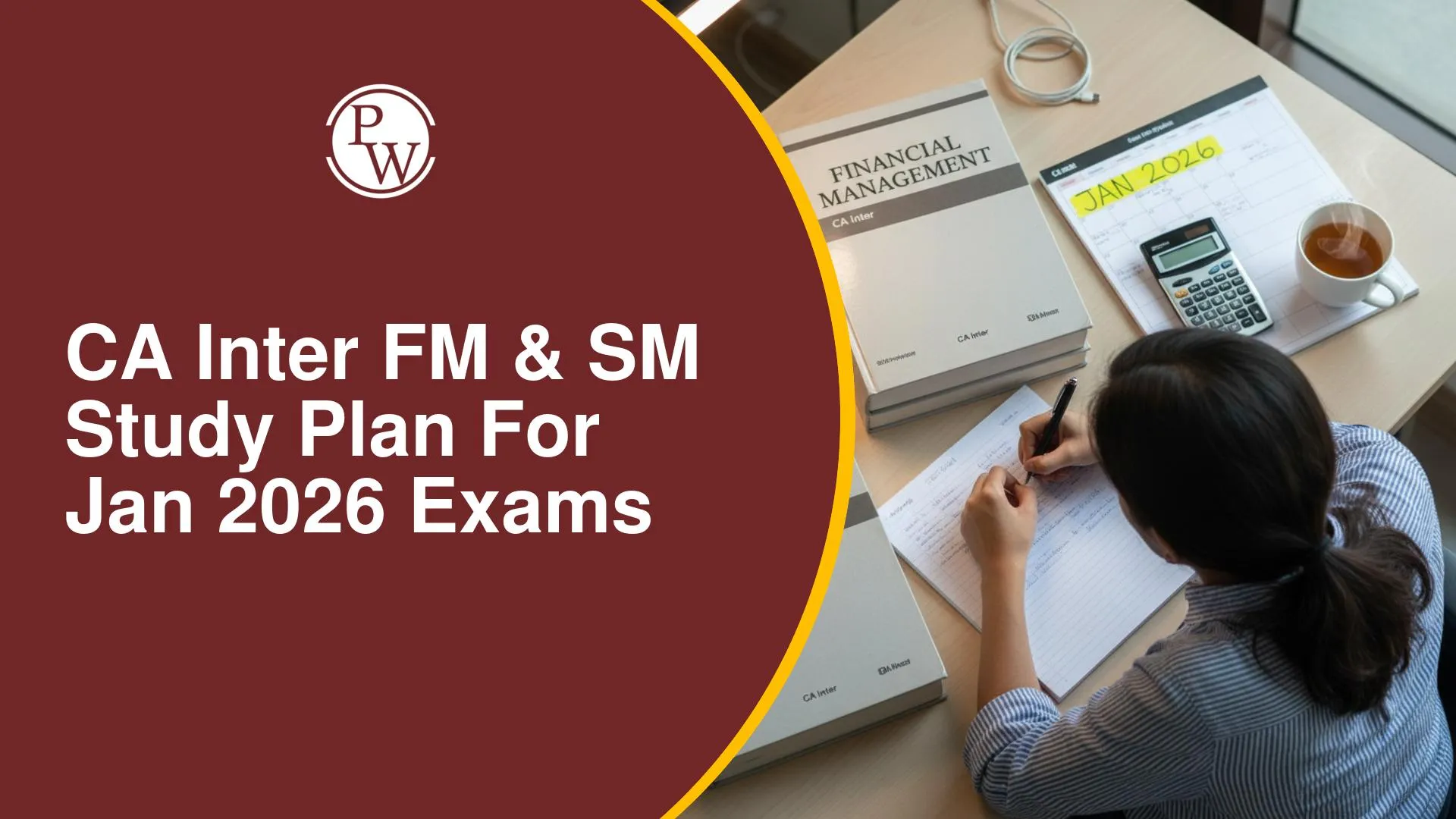
The Financial Management (FM) and Strategic Management (SM) papers for the CA Inter exams are among the most scoring papers if prepared in the right way. With the recent changes in the exam schedule, students now have extra time to prepare for these papers.
This extended time can work to your advantage if you plan and utilize it effectively. Here, it outlines a comprehensive and practical study plan for FM and SM, designed specifically for the January 2026 CA Inter exams.
Why January 2026 is a Golden Opportunity for FM & SM?
The January 2026 attempt presents a unique opportunity for CA Inter students:
-
Audit paper postponed – The change in schedule provides extra time to focus on FM and SM.
-
More revision time – With extra days, you can revise thoroughly and consolidate your learning.
-
Time for writing practice – Since these papers require a lot of written answers, this extra time can be used for effective writing practice.
-
MCQs and Case Studies – Focused practice in these areas can help you secure fixed marks in the exam.
Considering these factors, FM and SM are not just the "last-minute panic subjects" but can be your rank-boosting subjects with the right strategy.
Where Do You Stand in Your Preparation?
The first step in creating a study plan is to understand where you stand. Here are two broad categories of students based on their current preparation status:
Category 1:
"FM-SM are okay, but Audit is weak."
-
If you feel that Audit is the area where you need more focus, the study plan should prioritize Audit preparation first.
-
Start with Audit revision from 12th January evening, then dedicate the 13th of January for full-day Audit preparation.
-
By 14th January lunchtime, you should aim to complete the Audit revision so that you can devote the remaining time to FM and SM.
Category 2:
"Audit is strong, FM-SM needs more focus."
-
If Audit is already strong, you can allocate minimal time for Audit revision and dive directly into the FM-SM study plan.
-
In this case, modify the dates for FM-SM according to your convenience and start following the plan immediately.
Note: This plan assumes that Audit will be completed by 14th January noon so that you can start with FM and SM by 14th evening.
Detailed FM & SM Study Plan
A well-structured FM & SM study plan helps students manage time effectively and cover the syllabus in a systematic manner. This detailed plan focuses on concept revision, problem practice, and regular review to ensure strong understanding and better exam performance.
Day 1: 14th January – Kickoff Your FM-SM Preparation
6:00 PM to 9:00 PM – Cost of Capital (FM)
Start with the Cost of Capital chapter. Allocate 3 hours for this topic. Focus on the technical questions and key concepts. It is essential to practice as many questions as possible in a writing format. This is critical because, in FM and SM, you need to focus on writing out your answers clearly and concisely.
-
Tip: Use the Marathon questions or LDR questions (Last Day Revision) for writing practice.
-
Focus Area: Work on conceptual clarity and solving complex numerical problems related to Cost of Capital.
9:30 PM to 11:30 PM – Leverage (FM)
After a 30-minute break, allocate 2 hours to Leverage. This topic is relatively straightforward, and you should aim to solve multiple writing-based questions.
-
Tip: Make sure to cover the theory aspects as well, as these will often form the base for case study questions in the exam.
This gives you 5 hours of solid study time on Day 1.
Day 2: 15th January – Intensive Revision and Practice
6:30 AM to 9:30 AM – Capital Structure (FM)
Start the second day with Capital Structure. Dedicate 3 hours to this topic. Make sure you focus on all the theory concepts and numerical problem-solving. This will require thorough practice and writing-based revisions.
10:00 AM to 1:00 PM – Investment Decisions (FM)
Allocate another 3 hours to Investment Decisions. This topic covers vital areas for both FM and the case studies. Focus on understanding the investment models and formulas for better conceptual clarity. Practice writing answers and solving questions related to NPV, IRR, and other investment metrics.
2:00 PM to 3:30 PM – Working Capital (FM)
Next, spend 1.5 hours on Working Capital. This is another important topic for FM, and practicing questions will help you secure easy marks in the exam. This is a short topic, and solving MCQs and case studies related to it will be beneficial.
3:45 PM to 5:15 PM – Receivables Management (FM)
Dedicate another 2 hours to Receivables Management. This will allow you to revise key cash management techniques and the methods used to handle short-term assets.
5:30 PM to 7:00 PM – Ratio Analysis (FM)
Finally, spend 1.5 hours on Ratio Analysis. This is an easy topic to score in, so make sure you practice questions from both theory and writing-based MCQs.
Day 3: 16th January – Focusing on SM and Theory Revision
6:00 AM to 9:00 AM – Strategic Management (SM)
Start your SM preparation with Strategic Management fundamentals. Dedicate 3 hours to understanding the key concepts of strategic planning, mission and vision, and SWOT analysis. Focus on writing answers for conceptual clarity and understanding case studies.
9:30 AM to 1:00 PM – Strategic Management Case Studies & MCQs
The next 3 hours should be spent solving MCQs and case studies based on the previous years' question papers. This will help you secure easy marks during the exam and allow you to apply your knowledge practically.
1:30 PM to 4:00 PM – FM & SM Short Notes Revision
Take a 30-minute break, then proceed to revise short notes for FM and SM. Go through the mnemonics, key formulas, and important bullet points to ensure that all core concepts are fresh in your mind.
4:30 PM to 7:00 PM – FM & SM Revision (Quick Overview)
Finally, take 2.5 hours to quickly revise all FM and SM concepts. This final session will focus on overarching concepts and last-minute touch-ups before the exam.
Day 4: 17th January – Final Review and Warm-up
Morning: 1.5 Hours – FM Final Review
Start the day with a 1.5-hour review of FM concepts. Focus on understanding and re-writing answers to key numerical problems.
Warm-up Session
Spend the rest of the day doing a warm-up session by practicing quick FM & SM questions and reviewing the important tips and tricks for the exam.
-
Warm-up tips:
-
Practice writing fast.
-
Focus on time management to ensure you can complete your exam in the given time.
| Also Check: | |
| CA Intermediate Taxation Syllabus 2026 | |
| CA Intermediate Cost and Management Accounting Syllabus 2026 | CA Intermediate Advanced Accounting important questions 2026 |
CA Inter FM & SM Study Plan for Jan 2026 FAQs
How can I effectively manage my time for FM and SM preparation?
What should I focus on first in the CA Inter FM & SM preparation?
How can writing practice improve my FM and SM scores?
Can I modify the study plan based on my personal strengths and weaknesses?