

CA Inter Taxation 2026: Complete Guide for Income Tax & GST Preparation
 Ekta Rakesh Singh23 Apr, 2026
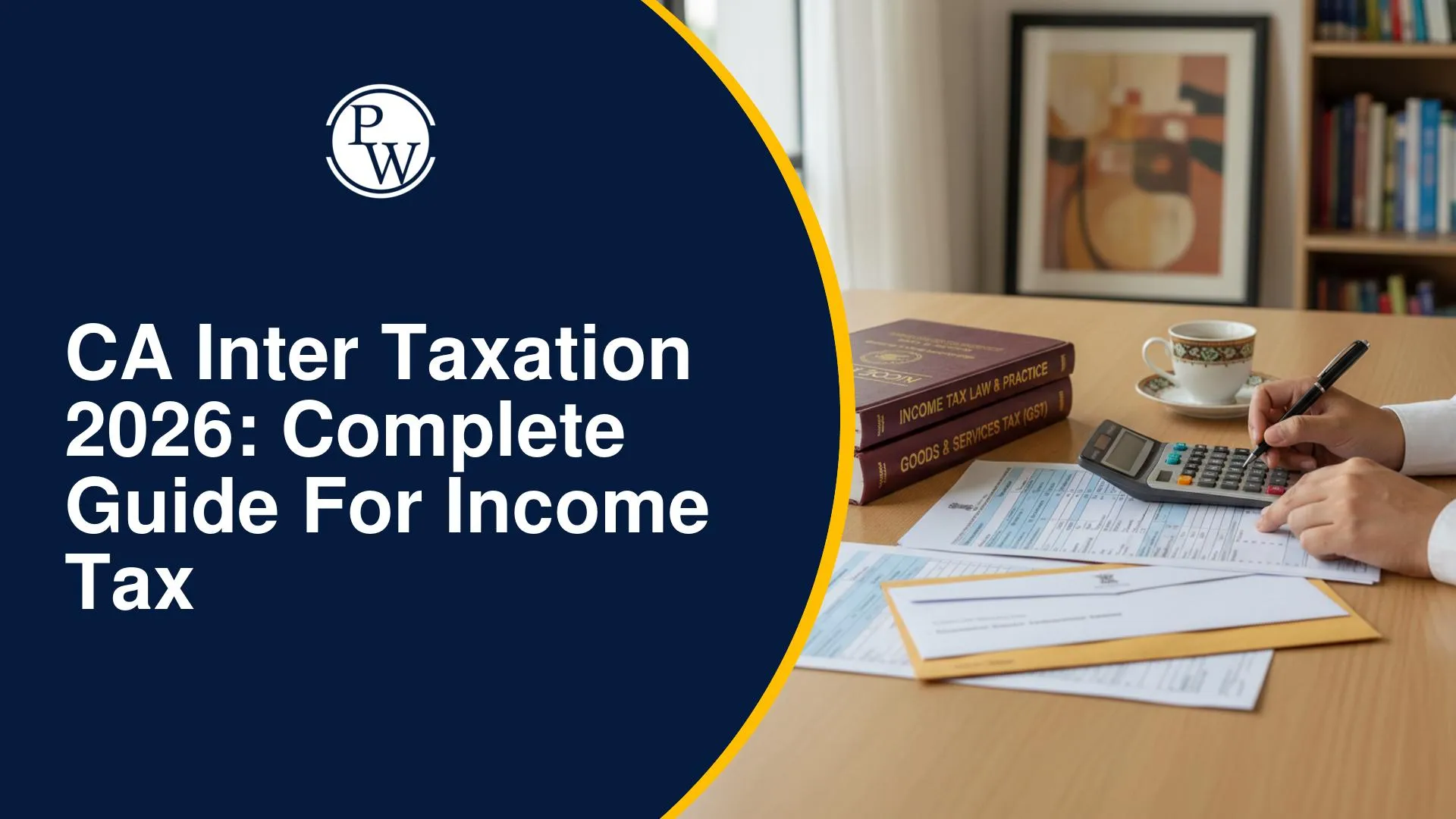
A clear and well Planned approach to CA Inter Taxation helps students understand the syllabus, exam pattern, and preparation strategy in a simplified way, making it easier to study with clarity and confidence.
CA Inter Taxation Overview
A clear understanding of the subject structure helps students build a strong foundation before starting preparation. Without knowing the scope and weightage, students often struggle to prioritise topics effectively.
|
CA Inter Taxation Overview |
|
|
Particulars |
Details |
|
Paper Name |
Taxation |
|
Paper Number |
Paper 3 |
|
Conducting Body |
Institute of Chartered Accountants of India |
|
Sections |
Income Tax (50) + GST (50) |
|
Total Marks |
100 |
|
Mode |
Descriptive |
|
Exam Level |
Intermediate |
CA Inter Taxation Subject Details
Understanding what exactly needs to be studied is essential for focused preparation. Many students feel overwhelmed because they do not break the subject into manageable sections.
Section A: Income Tax (50 Marks)
-
Basic concepts of Income Tax Act
-
Residential Status and Scope of Income
-
Heads of Income (Salary, House Property, PGBP, Capital Gains, Other Sources)
-
Clubbing and Set-off of Losses
-
Deductions under Chapter VI-A
-
Computation of Total Income and Tax Liability
Section B: GST (50 Marks)
-
GST framework and concepts
-
Supply under GST (taxable event)
-
Input Tax Credit (ITC) mechanism
-
Registration provisions
-
Tax invoice, returns, and payment
-
Basic compliance and procedural aspects
CA Inter Tax Paper Pattern (As per ICAI)
Understanding the official exam pattern is important to align preparation with how the paper is actually set. Many students lose marks not due to lack of knowledge but due to misunderstanding the question format.
|
CA Inter Tax Paper Pattern |
|
|
Component |
Details |
|
Total Marks |
100 |
|
Income Tax |
50 Marks |
|
GST |
50 Marks |
|
Question Type |
Descriptive + Practical |
|
Case-Based Questions |
Included (as per ICAI pattern) |
|
Internal Choice |
Available |
Note: The pattern is based on the latest structure followed by ICAI for Intermediate Paper 3 (Taxation).
CA Inter Taxation 2026 Syllabus Structure
The syllabus is designed to test both conceptual clarity and application skills. Students often focus only on theory, which creates difficulty in solving practical questions.
Key Features of the Syllabus:
-
Equal weightage to Income Tax and GST
-
Strong focus on computation and application
-
Case-based and scenario-driven questions
-
Regular amendments incorporated in exams
CA Inter Tax Preparation Strategy & Scoring Tips
Preparing for taxation requires a strategic approach rather than just covering the syllabus. Many students study everything but still struggle to score because they lack direction and exam-oriented preparation.
1. Focus on Conceptual Clarity
-
Understand provisions instead of memorising
-
Link concepts with practical examples
-
Build a strong base in core topics
2. Practice Application-Based Questions
-
Solve RTPs, MTPs, and past exam papers
-
Focus on working notes and step-wise solutions
-
Practice full-length questions regularly
3. Revise in Multiple Cycles
-
Prepare short notes for quick revision
-
Revise amendments separately
-
Focus more on weak areas during revision
4. Maintain Balance Between Income Tax & GST
-
Allocate equal study time
-
Avoid ignoring GST (common mistake)
-
Practice both sections consistently
5. Improve Presentation in Exams
-
Write clear and structured answers
-
Show proper working notes
-
Attempt questions in a logical sequence
Study Plan for CA Inter Taxation 2026
Having a structured plan helps students cover the syllabus without last-minute pressure. Without planning, many students either rush or leave important topics incomplete.
Recommended Study Approach
-
First Reading (30–40 days): Focus on understanding concepts and building clarity
-
Second Phase (20–25 days): Practice questions and strengthen application
-
Final Revision (10–15 days): Mock tests, revision notes, and important topics
Important Topics to Focus On in CA Inter Taxation
Certain topics carry higher weight and require deeper understanding. Ignoring these can directly impact scores.
Income Tax
-
Residential Status
-
Capital Gains
-
Deductions (Chapter VI-A)
-
Clubbing of Income
GST
-
Supply (core concept)
-
Input Tax Credit (ITC)
-
Registration
-
Returns and compliance
CA Inter Taxation 2026 demands a balanced mix of conceptual understanding, regular practice, and effective revision. Students who follow a structured approach and focus on application-based learning are more likely to perform well. With consistent effort and the right strategy, scoring well in both Income Tax and GST becomes achievable.
CA Inter Taxation 2026 FAQs
1. What does CA Inter Taxation include?
2. How to prepare for CA Inter Taxation 2026?
3. Is GST difficult in CA Inter?
4. How many marks are required to pass Taxation?
5. Which section is more scoring in CA Inter Taxation?