






Introduction
Novel, Society And History of Class 10
THE RISE OF THE NOVEL:
The novel is a modern form of literature. It is born from print, a mechanical invention. We cannot think of the novel without the printed book. In ancient times manuscripts were handwritten. These circulated among very few people. In contrast, because of being printed, novels were widely read and became popular very quickly.
At this time big cities like London were growing rapidly and becoming connected to small towns and rural areas through print and improved communications. Novels produced a number of common interests among their scattered and varied readers. As readers were drawn into the story and identified with the lives of fictitious characters, they could think about issues such as the relationship between love and marriage, the proper conduct for men and women, and so on.
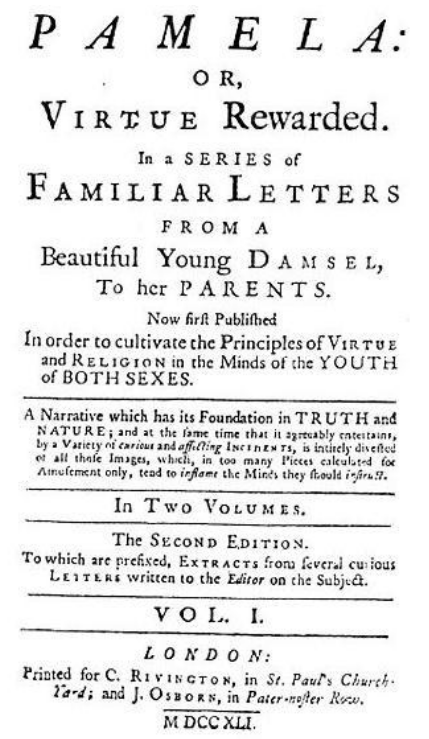
Samuel Richardson’s Pamela
The novel first took firm root in England and France. Novels began to be written from the seventeenth century, but they really flowered from the eighteenth century. New groups of lower-middle-class people such as shopkeepers and clerks, along with the traditional aristocratic and gentlemanly classes in England and France now formed the new readership for novels.
As readership grew and the market for books expanded, the earnings of authors increased. This freed them from financial dependence on the patronage of aristocrats, and gave them independence to experiment with different literary styles.
THE PUBLISHING MARKET:
(i) For a long time the publishing market excluded the poor. Initially, novels did not come cheap. But soon, people had easier access to books with the introduction of circulating libraries in 1740. Technological improvements in printing brought down the prices of books and innovations in marketing led to expanded sales. In France, publishers found that they could make super profits by hiring out novels by the hour.
(ii) There were several reasons for novel's popularity. The worlds created by novels were absorbing and believable, and seemingly real. While reading novels, the reader was transported to another person's world, and began looking at life as it was experienced by the characters of the novel. Besides, novel allowed individuals the pleasure of reading in private, as well as the joy of publicly reading or discussing stories with friends or relatives.
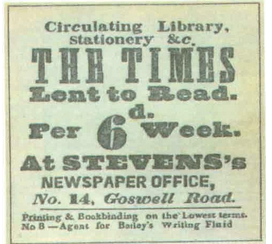
Library notice
(iii) In 1836 a notable event took place when Charles Dickens’ Pickwick Papers was serialized in a magazine. Magazines were attractive since they were illustrated and cheap. Serialisation allowed readers to relish the suspense, discuss the characters of a novel and live for weeks with their stories - like viewers of television soaps today.
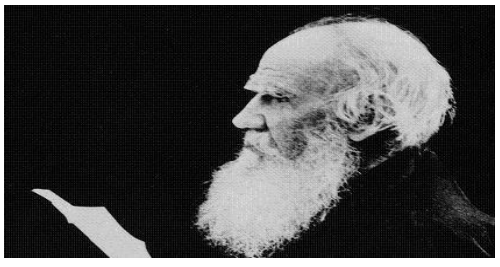
Leo Tolstoy
THE WORLD OF THE NOVEL
- In the nineteenth century, Europe entered the industrial age. Factories came up, business profits increased and the economy grew.
- The unemployed poor roamed the streets for jobs, and the homeless were forced to seek shelter in workhouses.
- Deeply critical of these developments, novelists such as Charles Dickens wrote about the terrible effects of industrialization on people’s lives and characters.
- His novel Hard Times (1854) describes Coketown, a fictitious industrial town, as a grim place full of machinery, smoking chimneys, rivers polluted purple and buildings that all looked the same.
- Here workers are known as ‘hands’, as if they had no identity other than as operators of machines.
- Dickens criticized not just the greed for profits but also the ideas that reduced human beings into simple instruments of production.
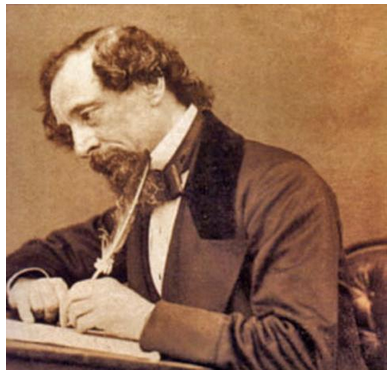
Charles Dickens
∙ Dickens focused on the terrible conditions of urban life under industrial capitalism. His Oliver Twist (1838) is the tale of a poor orphan who lived in a world of petty criminals and beggars and finally how he was adopted.
- Emile Zola’s Germinal (1885) on the life of a young miner in France explores in harsh detail the grim conditions of miners’ lives. It ends on a note of despair; the strike the hero leads fails, his co-workers turn against him, and hopes are shattered.
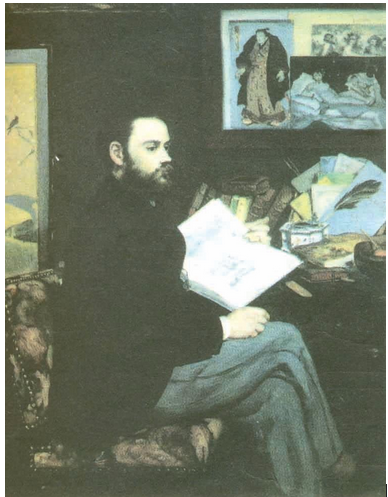
Emile Zola, painting by Edward Manet, 1868.
COMMUNITY AND SOCIETY:
The vast majority of readers of the novel lived in the city. The novel created in them a feeling of connection with the fate of rural communities. The nineteenth-century British novelist Thomas Hardy, for instance, wrote about traditional rural communities of England that were fast vanishing. This was actually a time when large farmers fenced off land, bought machines and employed labourers to produce for the market. The old rural culture with its independent farmers was dying out.
The novel uses the vernacular, the language that is spoken by common people. By coming closer to the different spoken languages of the people, the novel produces the sense of a shared world between diverse people in a nation. Novels also draw from different styles of language. A novel may take a classical language and combine it with the language of the streets and make them all a part of the vernacular that it uses. Like the nation, the novel brings together many cultures.
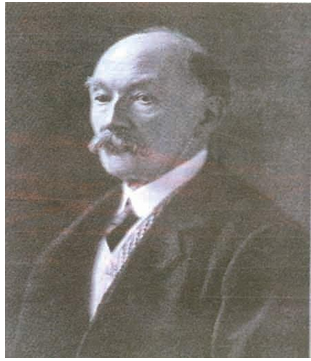
Thomas Hardy (1840-1928)
THE NEW WOMAN:
The most exciting element of the novel was the involvement of women. The eighteenth century saw the middle classes become more prosperous. Women got more leisure to read as well as write novels. And novels began exploring the world of women – their emotions and identities, their experiences and problems. Many novels were about domestic life – a theme about which women were allowed to speak with authority. They drew upon their experience, wrote about family life and earned public recognition.
(i) The novels of Jane Austen for e.g Pride and Prejudice gives us a glimpse of the world of women in general rural society in early-nineteenth-century Britain. They make us think about a society which encouraged women to look for good' marriages and fine wealthy or propertied husbands.
(ii) Women novelists did not simply popularise the domestic role of women. Often their novels dealt with women who broke established norms of society before adjusting to them. In Charlotte Bronte's Jane Eyre, published in 1874, young Jane is shown as independent and assertive.While girls of her age were expected to be quiet and well behaved, Jane at the age often protests against the hypocrisy of her elders with startling bluntness.
NOVELS FOR THE YOUNG:
- Novels for young boys idealized a new type of man: someone who was powerful, assertive, independent and daring.
- Most of these novels were full of adventure set in places remote from Europe.
- The colonizers appear heroic and honourable – confronting ‘native’ peoples and strange surroundings, adapting to native life as well as changing it, colonizing territories and then developing nations there. Books like R.L. Stevenson’s Treasure Island (1883) or Rudyard Kipling’s Jungle Book (1894) became great hits.
- G.A. Henty’s historical adventure novels for boys were also wildly popular during the height of the British empire.
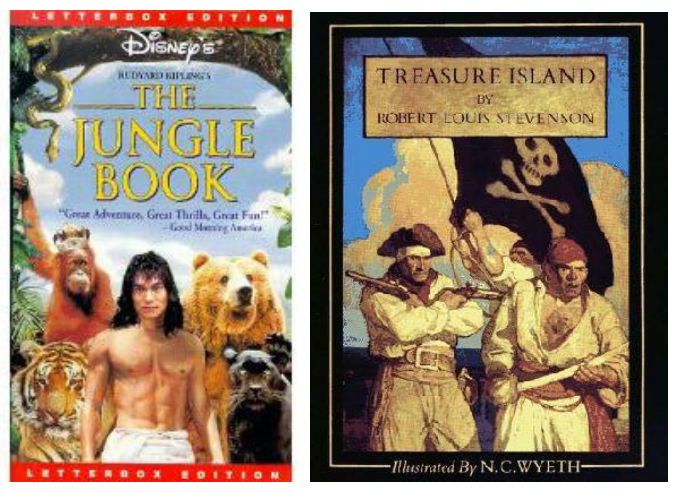
Rudyard Kipling's The Jungle Book Robert Louis Stevenson’s Treasure Island
- They aroused the excitement and adventure of conquering strange lands.
- They were set in Mexico, Alexandria, Siberia and many other countries. They were always about young boys who get involved is military action what they called English courage.
- Love stories written for adolescent girls also first became popular in this period, especially in the US, notably Ramona (1884) by Helen Hunt Jackson and a series entitled What Katy Did (1872) by Sarah Chauncey Woolsey, who wrote under the pen-name Susan Coolidge.
The Print Revolution and its Impact.
- Printing press, a new reading public emerged. Reduced the cost of books, now a reading public came into being.
- Knowledge was transferred orally. Before the age of print books were not only expensive but they could not be produced in sufficient numbers.
- But the transition was not so simple. Books could be read only by the literate and the rates of literary in most European crematories were very low, Oral culture thus entered print and printed material was orally transmitted. And the hearing public and reading public became intermingled.
RELIGIOUS DEBATES AND THE FEAR OF PRINT :
- Print created the possibility of wide circulation of ideas.
- Through the printed message, they could persuade people to think differently and introduced a new world of debate and discussion. This had significance in different sphere of life.
- Many were apprehensive of the effects that the easier access to the printed world and the wider circulation of books, could have on people’s minds.
- If that happened the authority of ‘valuable’ literature would be destroyed, expressed by religious authorities and monarchs, as well as many writers and artists, achievement of religion areas of Martin Luther.
- A new intellectual atmosphere and helped spread the new ideas that led to the reformation.
PRINT CULTURE AND THE FRENCH REVOLUTION :
- Print popularized the ideas of the enlightenment thinkers. Collectively, their writings provided a critical commentary or tradition, superstition and despotism.
- Print created a new culture of dialogue and debate. All values, forms and institutions were re-evaluated and discussed by a public that had become aware of the power of reason.
- 1780’s there was an outpouring of literature that mocked the royalty and criticised their morality. In the process, it raised questions about the existing social order.
- The print helps the spread of ideas. People did not read just one kind of literature. If they read the ideas of Voltaire and Rousseau, They were also exposed to monarchic and church propaganda.
- Print did not directly shape their minds, but it did open up the possibility of thinking differently.
THE NINETEENTH CENTURY (WOMEN):
- As primary education became compulsory from the late nineteenth century. A large numbers of new readers were especially women.
- Women became important as readers as well as writers. Penny magazines were especially meant for women, as were manuals teaching proper behaviour and housekeeping.
- In the nineteenth century, lending libraries in England, lower middle class people. Sometimes self educated working class people wrote for themselves. Women were seen as important readers. Some of the best known novelists were women : Jane Austen, the Bronte sisters, George Eliot. Their writings became important in defining a new type of woman.


