






Government Jobs for Commerce Students: Banking, SSC, UPSC & More
 Priyanka Yadav8 Jun, 2026
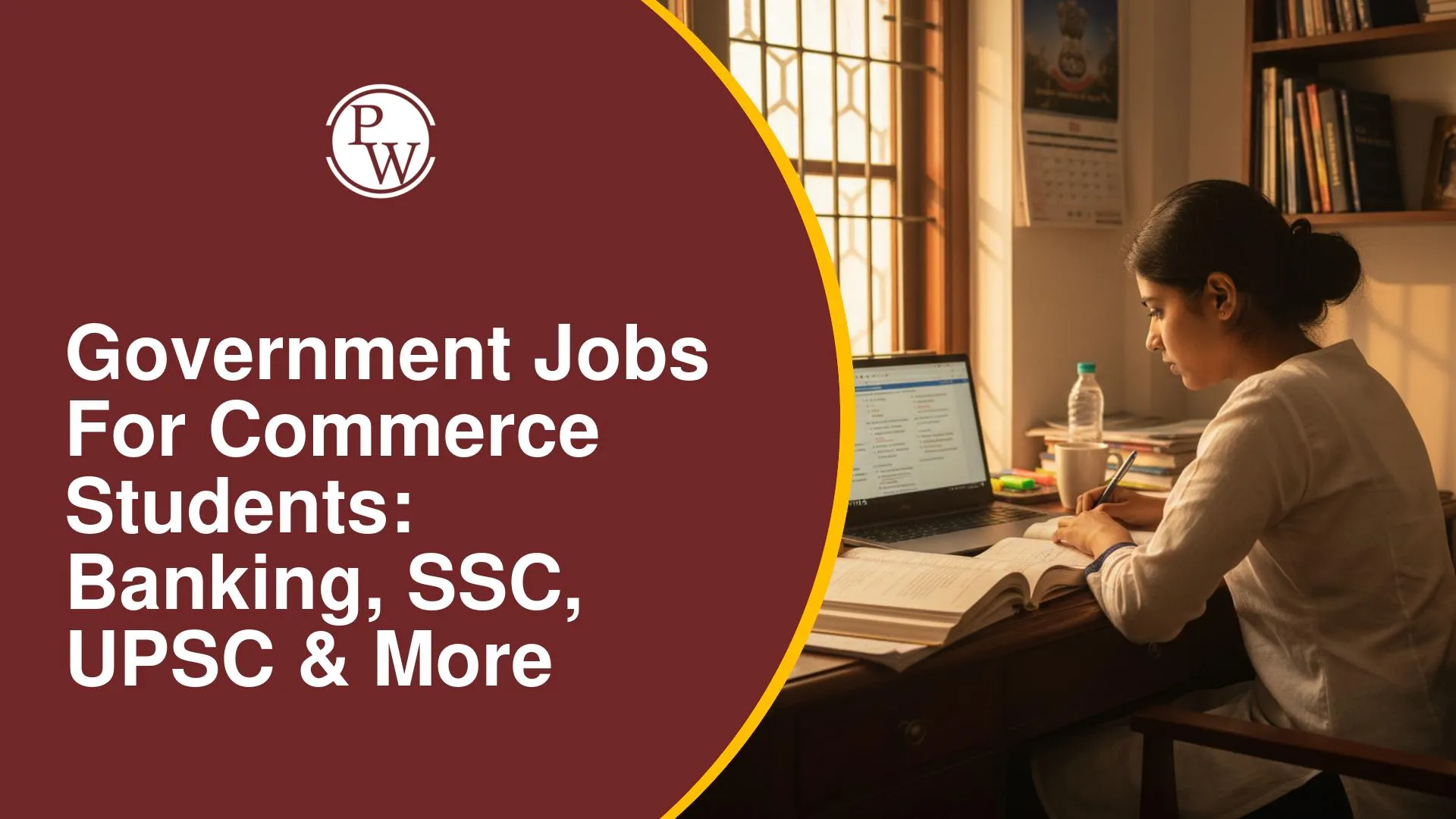
Commerce students have many excellent opportunities in the government sector. Many students think government jobs are mainly for arts or science graduates, but that is not true. Commerce students can apply for several exams in banking, SSC, UPSC, railways, insurance, defence accounts, taxation, and finance-related departments.
A commerce background gives students an advantage in areas like accounting, economics, taxation, banking, finance, business awareness, and data interpretation. These skills are useful in many government exams and job roles. Whether you are a B.Com student, a commerce graduate, or a 12th commerce student, you can plan your preparation according to your qualification and career goal.
Why Government Jobs Are Good for Commerce Students?
Government jobs offer job security, a fixed salary, career growth, social respect, and additional benefits. For commerce students, many government roles are directly connected to finance, accounts, banking, audit, taxation, and administration. Commerce students can target jobs in:
-
Banking sector
-
SSC exams
-
UPSC Civil Services
-
Railway recruitment
-
Insurance sector
-
RBI and SEBI
-
State government exams
-
Defence accounts and audit departments
-
Income Tax and GST-related posts
The best part is that many exams are open to graduates from any stream, so commerce students have a wide range of options.
Banking Jobs for Commerce Students
Banking is one of the most popular career options for commerce students. Since commerce students already study subjects like accountancy, economics, business studies, and finance, they can understand banking concepts better. Popular banking exams include:
-
IBPS PO
-
IBPS Clerk
-
SBI PO
-
SBI Clerk
-
IBPS RRB Officer Scale I
-
IBPS RRB Clerk
-
RBI Assistant
-
RBI Grade B
Banking jobs are suitable for students who are comfortable with quantitative aptitude, reasoning, English, computer awareness, and general banking awareness. Commerce students can also perform well in financial awareness because they already have basic knowledge of money, economy, banking, and markets. Common banking job roles include:
-
Probationary Officer
-
Clerk or Junior Associate
-
Assistant Manager
-
Rural Bank Officer
-
RBI Assistant
-
Specialist Officer in finance-related areas
For most officer and clerk-level banking exams, graduation is required. Students should also prepare current affairs, banking awareness, and basic computer knowledge.
SSC Jobs for Commerce Students
SSC exams are another strong option for commerce students. The Staff Selection Commission recruits candidates for various Group B and Group C posts in central government departments and ministries. Important SSC exams for commerce students include:
-
SSC CGL
-
SSC CHSL
-
SSC MTS
-
SSC Stenographer
-
SSC Selection Post
SSC CGL is especially useful for commerce graduates because it offers posts related to income tax, audit, accounts, customs, excise, and central government administration. Popular SSC CGL posts for commerce students include:
-
Assistant Accounts Officer
-
Income Tax Inspector
-
GST Inspector
-
Auditor
-
Accountant
-
Tax Assistant
-
Assistant Section Officer
Commerce students with good numerical ability can perform well in SSC exams because the syllabus includes quantitative aptitude, reasoning, English, and general awareness. For SSC CGL, graduation is generally required, while SSC CHSL is suitable for 12th-pass candidates.
UPSC Jobs for Commerce Students
Commerce students can also prepare for the UPSC Civil Services Examination. UPSC is not limited to any specific stream. Graduates from commerce, arts, science, engineering, and other fields can apply if they meet the eligibility criteria. Through UPSC CSE, candidates can enter services like:
-
IAS
-
IPS
-
IFS
-
IRS
Commerce students may find services related to revenue, audit, accounts, and finance particularly interesting. They can also choose Commerce and Accountancy as an optional subject if they have strong command over the subject.
UPSC preparation requires a deep understanding of polity, history, geography, economy, environment, ethics, essay writing, and current affairs. Commerce students often have an advantage in economy, taxation, budgeting, and financial topics.
RBI, SEBI and Finance Sector Government Jobs
Commerce students who are interested in finance, economics, and banking can target regulatory bodies like RBI and SEBI. These jobs are highly respected and offer excellent career growth.
Popular exams include:
-
RBI Grade B
-
RBI Assistant
-
SEBI Grade A
-
NABARD Grade A
-
PFRDA Assistant Manager
These exams are suitable for commerce students who have a strong interest in economics, finance, banking, agriculture finance, financial markets, and regulatory systems.
Important topics for these exams include:
-
Finance and management
-
Economic and social issues
-
Banking awareness
-
Current affairs
-
Quantitative aptitude
-
Reasoning
-
English
-
General awareness
These exams may require deeper preparation compared to basic clerical exams, but they are excellent options for serious commerce graduates.
Railway Jobs for Commerce Students
Railway jobs are also available for commerce students. The Railway Recruitment Board conducts exams for various posts where commerce students can apply based on educational qualification.
Popular railway exams include:
-
RRB NTPC
-
RRB Group D
-
RRB Ministerial and Isolated Categories
RRB NTPC is a good option for commerce students because it includes posts like clerk, accounts clerk, junior account assistant, station master, and commercial apprentice.
Commerce-related railway posts may include:
-
Accounts Clerk
-
Junior Clerk
-
Junior Account Assistant
-
Commercial Apprentice
-
Goods Guard
-
Station Master
These jobs usually test general awareness, mathematics, reasoning, and basic aptitude.
Insurance Jobs for Commerce Students
Insurance sector jobs are another good option for commerce students. Organisations like LIC, GIC, NIACL, UIIC, and other public sector insurance companies recruit candidates for administrative, assistant, and officer-level posts.
Popular insurance exams include:
-
LIC AAO
-
LIC Assistant
-
NIACL AO
-
NIACL Assistant
-
GIC Assistant Manager
Commerce students can understand insurance, finance, risk, and customer service concepts more easily because of their academic background.
Best Preparation Strategy for Commerce Students
Commerce students should first decide the type of government job they want. Banking and SSC require strong aptitude and speed. UPSC requires deep conceptual study and answer writing. RBI and SEBI require finance, economics, and current affairs. Railways and insurance need balanced preparation.
A simple preparation plan includes:
-
Choose one main exam category first
-
Understand the syllabus and pattern
-
Build basics in maths, reasoning, English, and GK
-
Read current affairs daily
-
Practise previous year papers
-
Attempt mock tests regularly
-
Revise weak areas every week
-
Improve speed and accuracy
Students should avoid preparing for too many exams at the same time. It is better to choose one primary exam and one or two backup exams with a similar syllabus.
Government Jobs for Commerce Students FAQs
1. Which government jobs are best for commerce students?
2. Can commerce students apply for banking government jobs?
3. Which SSC jobs are suitable for commerce graduates?
4. Can commerce students prepare for UPSC?




Get Free Counselling Today
and Clear up all your Doubts
 Live & recorded classes available at easeDashboard for progress trackingLakhs of practice questions

