







ABC Analysis of SBIL For CS Executive June/Dec 2026
 Ekta Rakesh Singh7 Aug, 2026
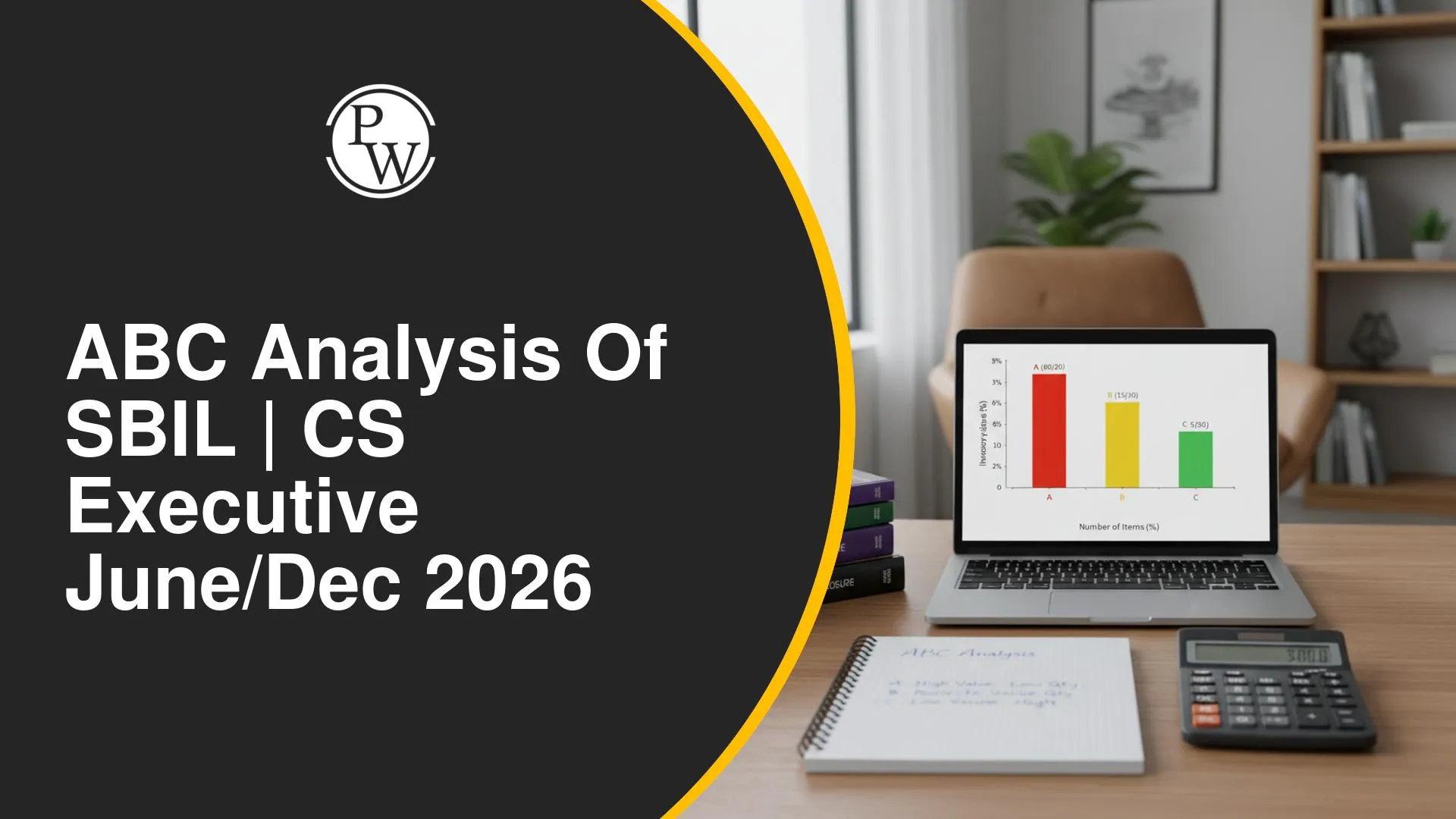
ABC analysis of SBIL for CS executive June/Dec 2026 presents a smart and organised preparation approach for the SBIL subject. It helps students understand which chapters carry higher weightage and better scoring potential in the examination.
By dividing topics into Category A, B, and C, students can plan their revision more effectively, focus on high-impact chapters first, and gradually complete moderate and quick-revision topics for balanced preparation and better scoring opportunities.
ABC Analysis of SBIL For CS Executive Overview
ABC Analysis of SBIL for CS Executive June/Dec 2026 divides chapters into Category A, B, and C based on weightage, scoring potential, and revision priority.
This approach helps students understand which topics should be covered first for better preparation planning, balanced revision, and improved score opportunities in the examination.
|
ABC Analysis of SBIL For CS Executive Overview |
|||
|
Category |
Focus Area |
Expected Marks |
Preparation Priority |
|
Category A |
High-weightage and most scoring chapters |
Around 50 Marks |
Highest Priority |
|
Category B |
Moderate and scoring chapters |
Around 35 Marks |
Second Priority |
|
Category C |
Easy and quick-revision chapters |
Around 15 Marks |
Final Revision Priority |
Also Check: CS Executive SBIL Question Papers June 2025
Category A: High Weightage / Most Scoring Chapters
This section details Category A, comprising the highest-scoring and highest-weightage chapters. These are essential and must not be skipped.
-
Characteristics: These chapters carry the highest weightage and form the foundation of the subject. It is crucial not to take risks by omitting them.
-
Expected Marks: Studying these chapters alone can contribute approximately 50 marks to the total score.
-
Recommended Chapters (by number): 17, 18, 16, 19, 13, 5, 7, 8, 2.
-
Study Sequence: It is highly recommended to begin your revision with these chapters in the specified sequence to build a strong base.
Category B: Moderate Chapters
Following the completion of Category A chapters, students should proceed to the Moderate Category (B).
-
Characteristics: These chapters are generally easy to understand and score, with a moderate length. At least one question is certain to appear from these chapters in the examination.
-
Expected Marks: These chapters collectively contribute approximately 35 marks to the exam.
-
Study Sequence: These chapters should be studied immediately after mastering Category A.
Category C: Easy & Quick Chapters
The final set of chapters to be covered falls into the Easy & Quick category (C).
-
Characteristics: These are easy and quick chapters, often spanning only a couple of pages. They are ideal for rapid revision at the end of the study cycle.
-
Expected Marks: These chapters account for approximately 15 marks.
-
Recommended Chapters: Constitutional Law, Labour Laws, Identifying Laws Outside Organised India, Setting Up of Business Outside India, Evaluation of Labour Law, Apprentices Act, Registers and Returns.
-
Total Marks: When combined, all three categories (A, B, C) comprehensively cover the entire 100-mark paper for SBIL.
Also Check: SBIL Important Amendments for December
Overall Study Strategy
The recommended study sequence is to progress systematically from Category A, then Category B, and finally Category C. This structured approach ensures that chapters with the highest weightage are prioritised first, followed by topics of moderate importance, and then quick-to-complete subjects.
Adopting this smart study approach is essential for maximising scores and achieving an exemption in SBIL. It is imperative that no chapter should be left unstudied to ensure comprehensive preparation.
ABC Analysis of SBIL FAQs
What is the primary purpose of ABC analysis for SBIL exam preparation?
Which category of chapters should be prioritised first in SBIL preparation?
How many marks can students expect from Category B chapters?
When should Category C chapters be studied, and what is their contribution to the score?
Is it acceptable to skip any chapters when following the ABC analysis strategy for SBIL?




Get Free Counselling Today
and Clear up all your Doubts
 Live & recorded classes available at easeDashboard for progress trackingLakhs of practice questions

