
CS Executive Dec 2025 Result, Agrima Jain Secures AIR 6 with 418/700 Marks, Know CS Executive Topper Strategy

Share
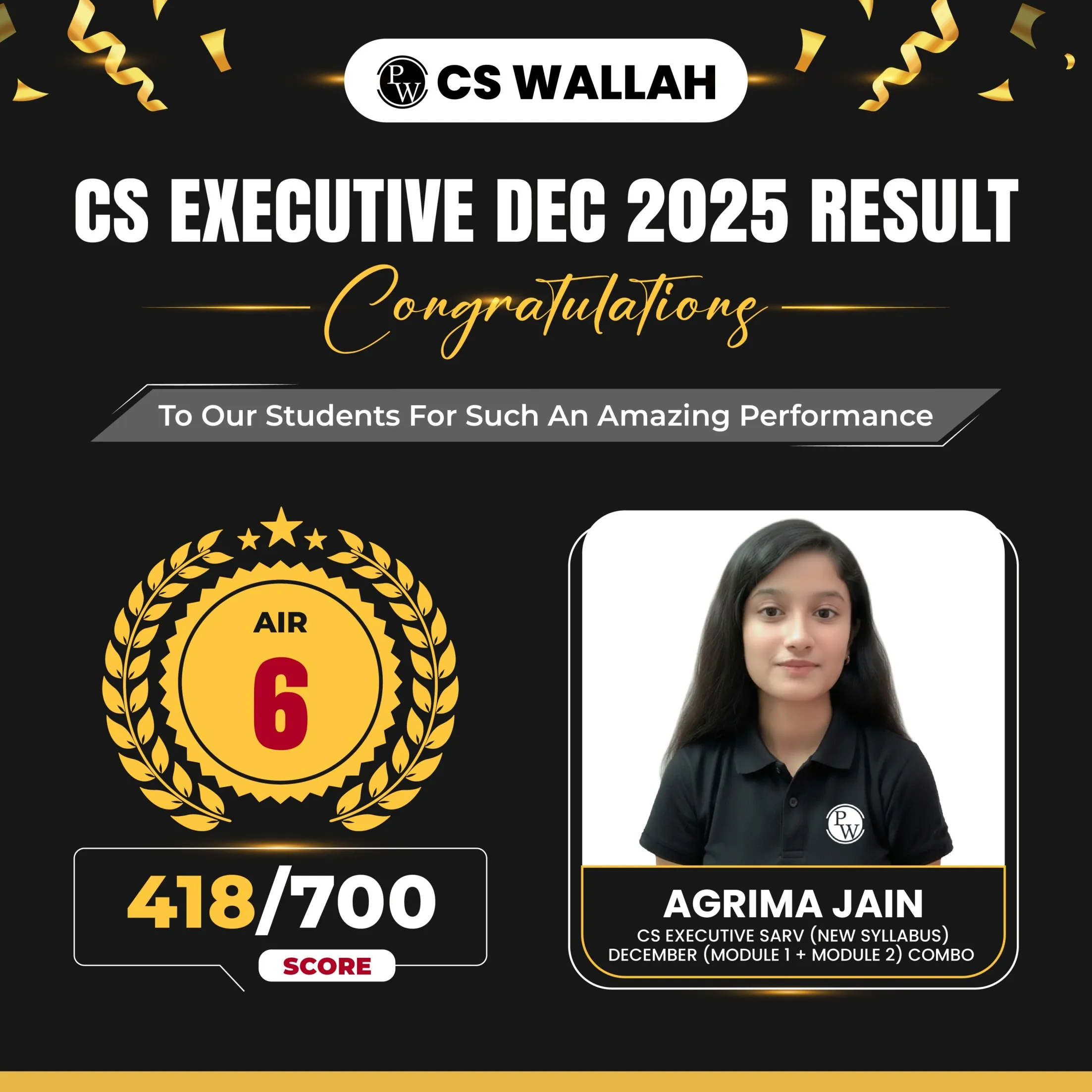
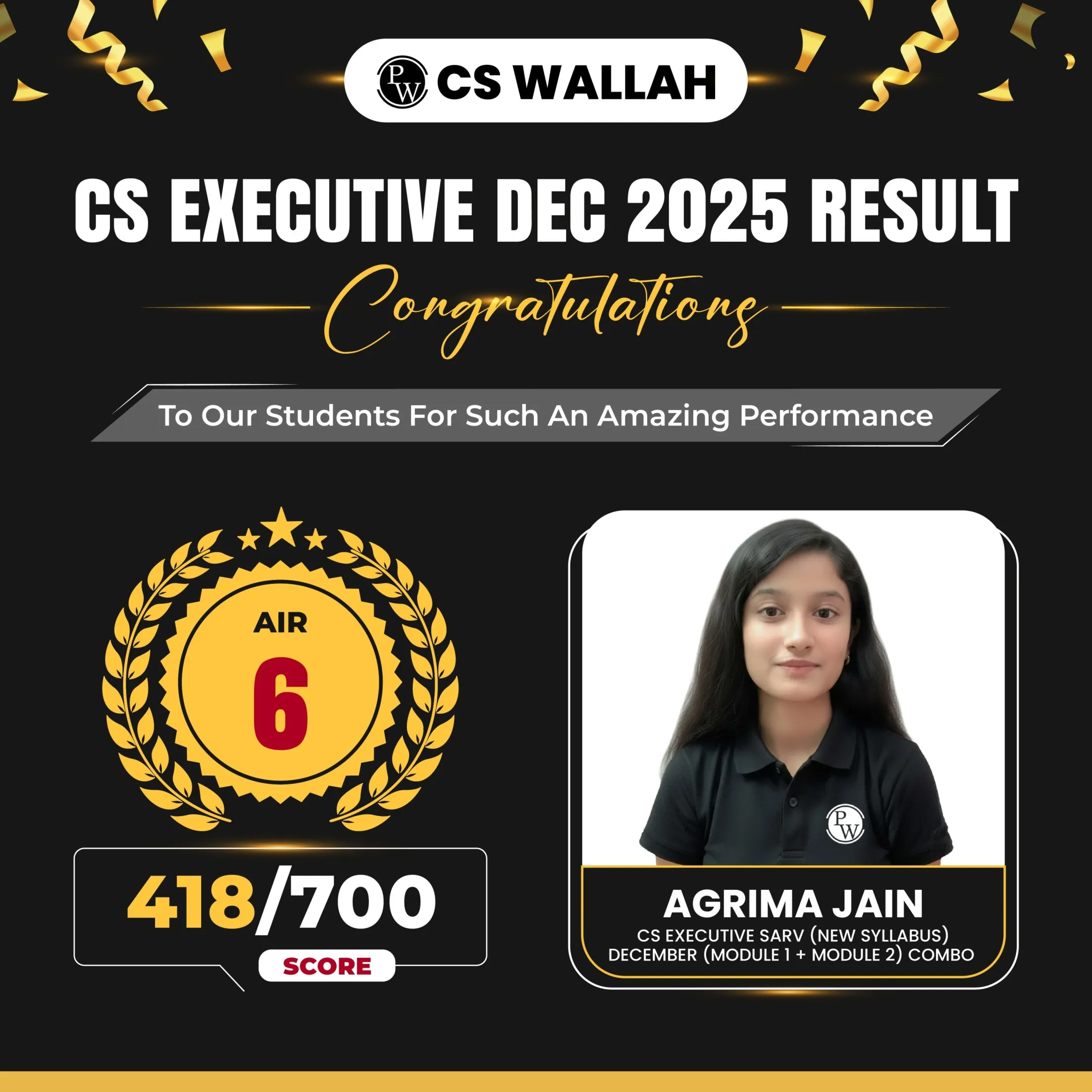
Agrima Jain secured All India Rank (AIR) 6 in the CS Executive examinations, achieving an impressive score of 418 out of 700. This blog explores her effective study methodology and subject-specific techniques, offering valuable insights into her preparation journey for competitive exams. Her approach highlights adaptability and strategic focus on challenging areas.
CS Executive AIR 6 Topper's Study Strategies
Agrima's study methodology was characterized by flexibility and discipline, primarily leveraging recorded lectures.
-
Initial Phase & Backlogs: Early in her preparation, she encountered significant backlogs, particularly in subjects like SBIL, which she had temporarily paused studying.
-
Clearing Backlogs: A critical target was to clear all backlogs by the time the batch concluded. This allowed sufficient time for comprehensive revision.
-
Lecture Format Preference: She preferred recorded lectures over live classes, as this format allowed her to study at her own pace and convenience.
-
Comprehensive Coverage: Agrima ensured she did not skip any content. She completed all classes provided in her batch and also utilized supplementary marathon sessions available on YouTube.
-
Dedicated Revision Period: After completing the entire syllabus and addressing all backlogs, she allocated one to one-and-a-half months exclusively for revision.
CS Executive Subject-wise Marks & Performance Analysis
Agrima's individual scores demonstrate strong performance across various subjects, including those often considered challenging by other students.
Group 1 Scores:
-
Jurisprudence, Interpretation and General Laws (JIGL): 62
-
Company Law: 60
-
Setting up of Business Entities and Closure (SBEC/SBIL): 61
-
Corporate & Financial Management (CFM): 69
Key Observations:
-
She achieved an exemption in SBIL despite studying it only in the last two months of her preparation.
-
In Company Law, a paper many found difficult, she scored 60 even though she did not attempt the full paper (approximately 85 marks attempted).
-
Her highest score was in CFAM (69), a numerical subject, which she found comparatively easy due to her background and strong faculty instruction.
Group 2 Scores:
-
Capital Market and Securities Laws (CMSL): 55
-
Economic, Commercial and Intellectual Property Laws (ECIPL): 54
-
Tax Laws: 57
Techniques for Managing Difficult Subjects
Agrima identified Tax Law and SBIL as her most challenging subjects initially. She developed specific, practical strategies to effectively overcome these difficulties.
Comparative Subject Difficulty:
-
Most Difficult: Tax Law (due to numerous limits and intricate provisions) and SBIL (owing to its vast theoretical content requiring significant memorization).
-
Easiest: CFAM, primarily attributed to strong faculty instruction and her personal aptitude for practical, numerical subjects.
Strategic Approaches to Tackle Difficult Subjects:
1. Strategy for Theory-Heavy Subjects (e.g., SBIL):
For subjects with extensive theoretical content requiring memorization, Agrima employed an active, repetitive listening strategy.
-
Creation of Audio Notes: She recorded her own audio notes, summarizing the theoretical content in her own words.
-
Repetitive Passive Listening: These audio recordings were then listened to repeatedly using a neckband. She would engage in passive listening while performing other tasks like household chores or during times when active studying felt challenging. She estimates listening to a single recording at least 50 times to ensure deep memorization and retention of the complex theoretical information.
2. Strategy for Technical Subjects (e.g., Tax Law):
To manage subjects with numerous technical provisions and limits, such as Tax Law, Agrima focused on visual and repeated reinforcement.
-
Use of Summary Charts: She created and extensively used specialized charts to master the extensive limits and provisions inherent in Tax Law. These visual aids were crucial for simplifying complex information, identifying patterns, and aiding quick recall during revision.
-
In-Class Repetition: She also highlighted the effectiveness of the faculty's frequent repetition of key concepts during lectures, which served as a significant reinforcement tool for memory.
FAQs
What was Agrima Jain's primary study method?
Which subjects did Agrima find most challenging and why?
How did CS Executive Topper approach technical subjects with many provisions, such as Tax Law?