







How to Score in CS Executive Company Law: Strategies for 60+ Marks
 Priyanka Yadav9 Apr, 2026
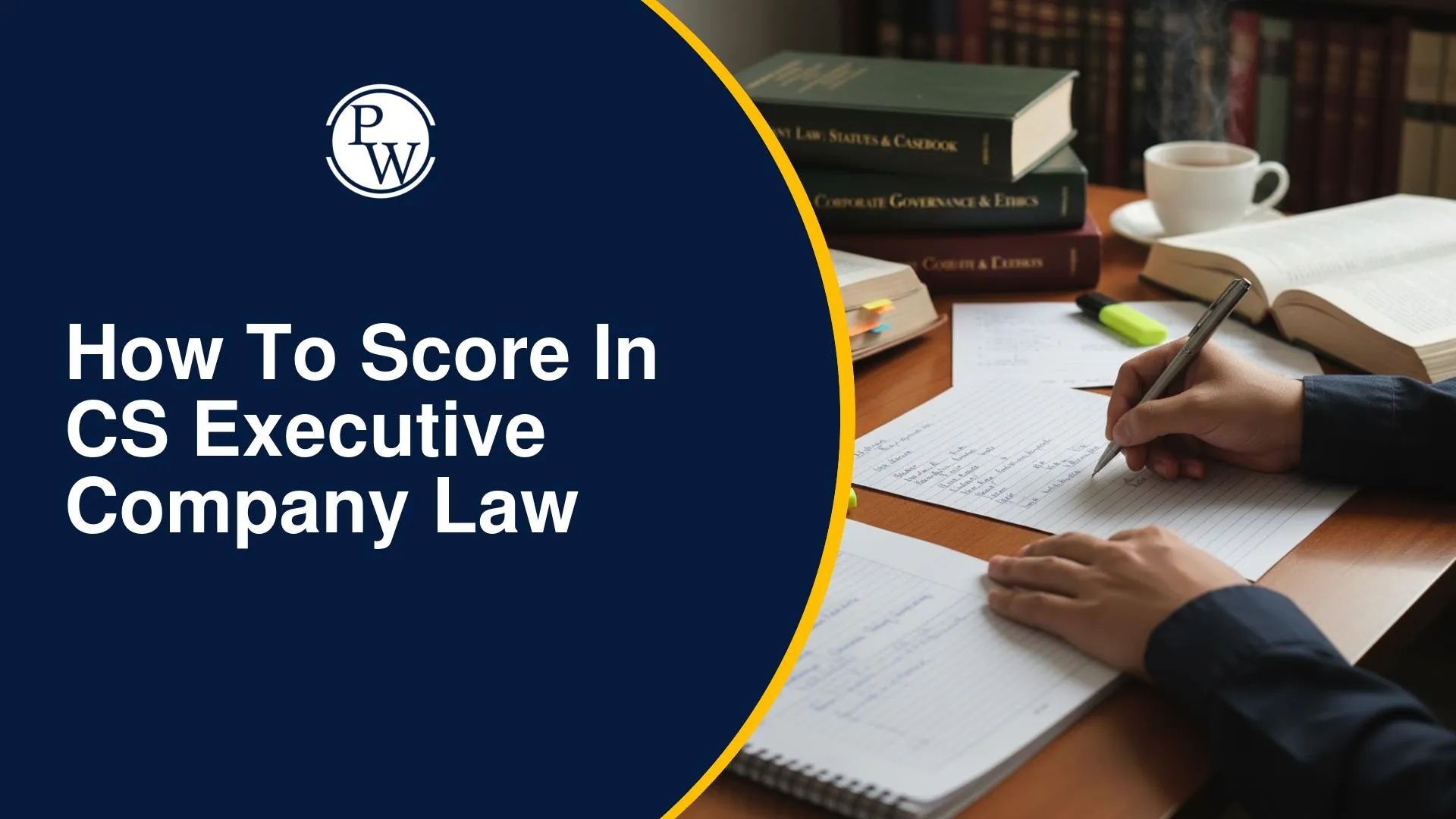
The CS Executive Company Law paper is often considered the backbone of the Company Secretary course. As the June 2026 examination session draws closer, many aspirants are feeling the pressure of the vast syllabus and technical requirements, often searching for how to score in CS Executive Company Law effectively.
Success in this paper isn't just about how much you know, but how you present that knowledge to the examiner. Whether you are appearing for the first time or looking for a Company Law marks improvement strategy, understanding the nuances of the Companies Act 2013 is essential for every aspirant.
1. Understanding the CS Exam Pattern and Weightage
Before diving into CS Executive Company Law tips, it is crucial to understand where to focus your energy. The syllabus is typically divided into parts:
-
Part A: Company Law, Principles & Concepts: Focuses on the core provisions of the Companies Act.
-
Part B: Company Administration and Meetings: Covers directors, KMP, and general meetings—high-weightage areas for scoring.
2. Essential Company Law Answer Writing Tips CS Executive
Writing a law paper is different from a general theory exam. To know how to attempt Company Law paper effectively, follow this structured approach for every answer:
-
Provisions: Start by mentioning the relevant Section of the Companies Act, 2013.
-
Facts of the Case: Briefly summarize the problem (for practical questions).
-
Analysis: Link the legal provision to the given facts.
-
Conclusion: Provide a clear, definitive answer based on your analysis.
Also, Check: CS Executive Chapter-Wise Weightage
3. Mastering the Company Law Case Law Writing Format
To understand how to score 60+ in Company Law, you must use case laws. However, don't just dump names.
-
Accuracy over Volume: Only cite a case law if you are 100% sure of the name (e.g., Salomon v. Salomon & Co. Ltd).
-
The Format: Use the law answer structure CS Executive standards by highlighting the "Ratio Decidendi" (the legal principle decided by the court).
-
Drafting: If you forget the name, use phrases like "In a decided case..." rather than providing incorrect information.
4. Key Company Law Exam Presentation Tips
Good presentation can easily fetch you 5–10 extra marks.
-
Heading Hierarchy: Use H2 and H3 structures for different parts of your answer.
-
Bullet Points: Use lists for advantages, disadvantages, or procedural steps instead of long paragraphs.
-
Keywords: Underline or highlight key legal terms like "Ultra Vires," "Indoor Management," or specific timelines (e.g., 15 days, 30 days).
-
Tables: Use tables when comparing concepts like "Member vs. Shareholder" or "Ordinary vs. Special Resolution."
5. How to Avoid Common Mistakes in the Company Law Exam?
Many students fail despite hard work due to avoidable errors:
-
Ignoring the Language: Using slang or overly simple "street" English. Stick to professional, formal legal language.
-
Section Number Errors: Quoting the wrong section is worse than not quoting one at all.
-
Time Management: Spending too much time on a 4-mark question and rushing through the 10-mark ones.
-
Physics Wallah Tip: Always verify the latest amendments. Physics Wallah (PW) recommends checking the MCA website for the most recent updates before the June 2026 attempt.
6. Revision and Practice Strategy
-
Solve Scanner: Review at least the last 5 years of question papers to understand the examiner's mindset.
-
LSI Keywords: Use terms like "Board of Directors," "Share Capital," and "Annual General Meeting" naturally in your practice sessions.
Mock Tests: Set a timer and solve a full 100-mark paper to build stamina.
How to Score in CS Executive Company Law FAQs
How can I remember all the section numbers for CS Executive Company Law?
Is it mandatory to quote case laws to score 60+?
How should I handle the latest amendments in Company Law?
What is the best law answer structure for CS Executive?


Have questions about your prep?
Our experts can answer all your questions