

Survivorship Curves and r/k Selection, The Secrets of Survival in Nature
 Abhishek Kumar25 Oct, 2023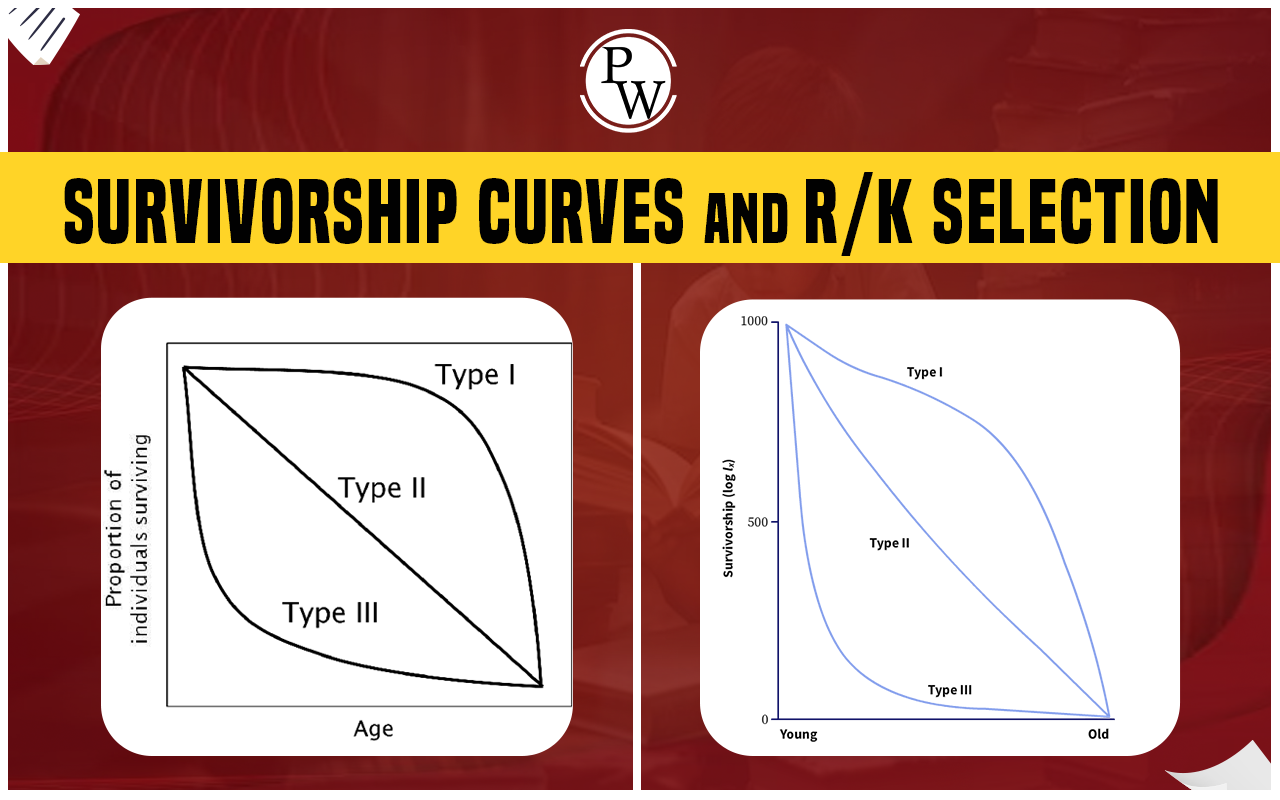
Survivorship Curves and r/k Selection: Every species in the diverse web of life on Earth uses various strategies for survival and reproduction. While some species produce many offspring with little parental care, others live long lives and make significant investments in each of their progeny. These strategies provide important insights into the dynamics of populations and their adaptations to various ecological niches due to their intricate connections to survivorship curves and the r/K selection theory.
Survivorship Curves
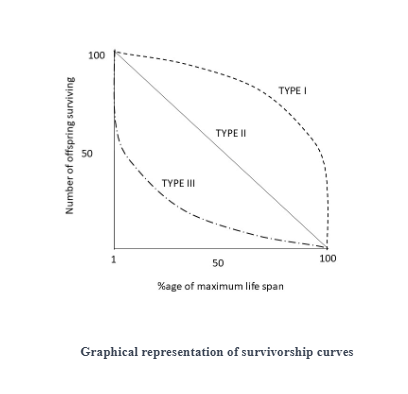
The dynamic relationship between time and mortality within populations of living organisms is intriguingly revealed by survival curves. These curves offer insightful information about the lifespan patterns and strategies for the survival of various species. Survivorship curves provide a graphical representation of mortality rates throughout an individual's lifespan by demonstrating the survival patterns of a cohort of individuals over time. Type I, Type II, and Type III survivorship curves are the three main types.
Type I survivorship curves depict populations in which organisms typically survive early and middle age and die as they get older. These organisms typically produce a small number of offspring and give those offspring a lot of parental care to ensure their survival. Human beings serve as a perfect example of Type I survivorship.
Type II survivorship curves depict populations where the proportion of deaths at each age interval is constant. These organisms typically have a small number of offspring and give them a lot of parental care, just like species that exhibit Type 1 survivorship. Examples include some bird species and certain reptiles. The curve forms a straight line, suggesting that the probability of survival is constant, regardless of age.
Type III survivorship curves demonstrate populations with high rates of young-onset mortality but relatively low rates of death among those who survive in middle and old age. These organisms typically produce a large number of young at once, but they don't give them much parental attention. Many insects and fish display Type III survivorship.
Graphical Representation of Survivorship Curves
r/K Selection Theory
The r/K selection theory, put forth by ecologists E. O. Wilson and Robert MacArthur, explores the techniques used by species to maximize their reproductive success in response to ecological conditions.
r-selected Species: In unstable and resource-rich habitats, r-selected species use a rapid reproduction (r) strategy. These animals generate a large number of offspring with little parental care, expecting to take advantage of favorable conditions when they occur. Individual offspring, on the other hand, face a higher risk of mortality due to parental disinvestment and intense competition. Examples include insects and certain small mammals.
K-selected Species: To survive and reproduce in stable and resource-limited environments, K-selected species prioritize efficiency and competitive abilities (K). These species devote an extensive amount of time and energy to each of their offspring, resulting in fewer offspring but higher chances of individual survival and successful reproduction. Large mammals, birds of prey, and long-lived trees are examples.
The Relationship Between Survival Curves and r/K Selection
The shape of survivorship curves generally matches the r/K selection strategy of a species, providing valuable insights into their life history patterns.
Type I Survivorship Curve and K-selected Species: K-selected species have a Type I survivorship curve with high survivorship throughout their lifespan. Their focus on individual offspring improves their chances of survival and successful reproduction.
Type III Survivorship Curve and r-selected Species: r-selected species have a Type III survivorship curve, with high early mortality rates and survivorship in later stages. Their strategy of producing a large number of offspring with little care increases the chances of some individuals surviving despite high early mortality rates.
Conclusion
The diverse methods used by various species for survival and reproduction are illuminated by the use of survival curves and the r/K selection theory. The r/K selection theory reveals the underlying mechanisms that allow species to thrive in their particular ecological niches, while the curves give an overview of the dynamics of mortality rates over lifespans.


Have questions about your prep?
Our experts can answer all your questions



 Live & recorded classes available at easeDashboard for progress trackingMillions of practice questions at your fingertips