






Cost Price Formula - How to Find Cost Price?
 Shivam Singh19 Jan, 2026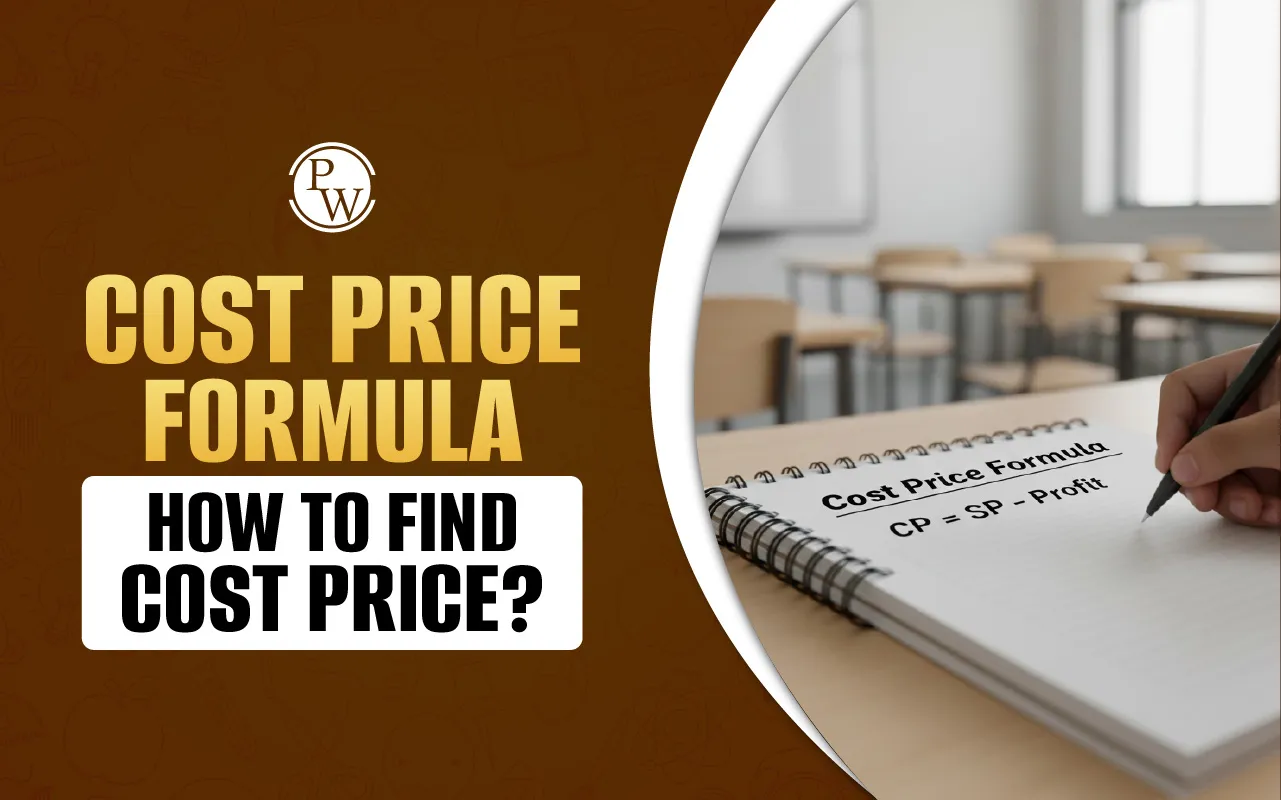
In the world of shopping and business, the Price Formula is the basic tool used to figure out the initial value of an item before it hits the shelves. Essentially, it represents the total amount a seller pays to acquire or create a product—including the purchase price and any extra costs needed to get it ready for a customer—long before a profit is ever added.
Understanding the Essentials: Cost Price and Selling Price Formula
To understand how money moves in trade, you have to look at the relationship between two specific numbers: the cost price (CP) and the selling price (SP). The cost price is what the seller pays, while the selling price is what the customer pays.
The cost price and selling price formula shifts depending on how the deal went. If the item sells for more than it cost to buy, it's a win (profit). If it sells for less, it’s a loss.
Key Terms to Know
-
Cost Price (CP): The "buying price" of an item. This includes the base price plus any "overhead expenses" like repairs, freight, or labor.
-
Selling Price (SP): The final price a customer pays for the product.
-
Profit: The extra money made when the SP is higher than the CP.
-
Loss: The money lost when the CP ends up being higher than the SP.
What is the Formula of Cost Price?
If you are looking for the formula to find cost price, the one you choose depends on what information you have in front of you. Usually, you’ll know the selling price and either the specific amount of profit/loss or the percentage of that profit/loss.
1. Finding CP Using Actual Profit or Loss Values
If you know exactly how much money was gained or lost in the transaction, how to find cost price is a simple matter of addition or subtraction:
-
When a profit is made:
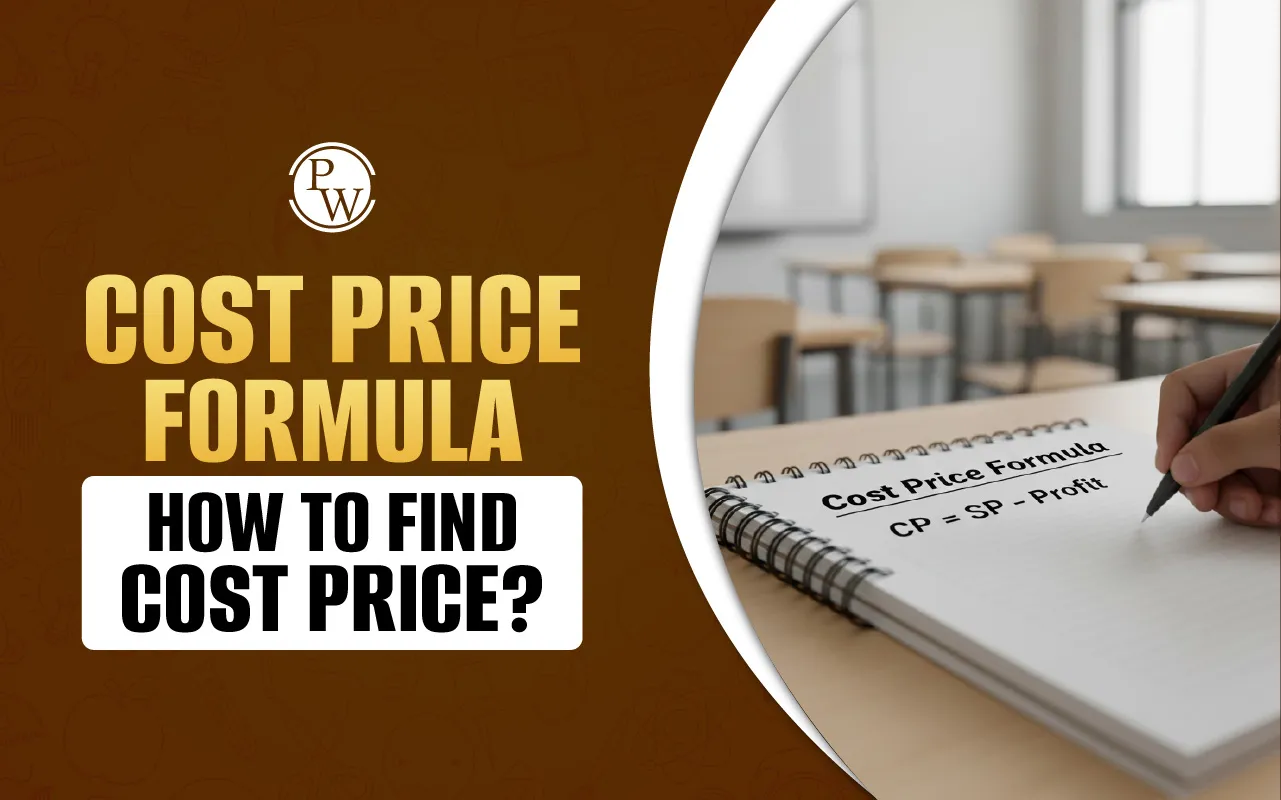
Cost Price = Selling Price - Profit
(CP = SP - Profit) -
When a loss is incurred:
Cost Price = Selling Price + Loss
(CP = SP + Loss)
2. Cost Price Formula with Profit Percentage
In many math problems or business reports, you might only know the profit or loss as a percentage. The cost price formula with profit percentage helps you work backward to the original cost:
-
Formula for Profit %:
$$CP = \left(\frac{100}{100 + \text{Profit } \%}\right) \times SP$$ -
Formula for Loss %:
$$CP = \left(\frac{100}{100 - \text{Loss } \%}\right) \times SP$$
Real-World Examples: Using the Formula to Find Cost Price
Let's look at how these formulas work in practice using some common scenarios.
Example 1: Finding CP with a Known Profit
The Scenario: A retailer sells a bicycle for 1200 and earns a profit of 150. What was the original cost?
-
The Data: SP = 1200, Profit = 150
-
The Math: 1200 - 150 = 1050
-
The Result: The cost price of the bicycle was 1050.
Example 2: Finding CP Using Loss Percentage
The Scenario: A smartphone is sold for 900 at a loss of 10%. What was the initial cost?
-
The Data: SP = 900, Loss % = 10%
-
The Math:
$$CP = \left(\frac{100}{100 - 10}\right) \times 900$$
$$CP = \left(\frac{100}{90}\right) \times 900$$
$$CP = 1.111 \times 900 = 1000$$ -
The Result: The original cost price was 1000.
Example 3: Finding CP Using Profit Percentage
The Scenario: A table is sold for 660, resulting in a 10% profit.
-
The Data: SP = 660, Profit % = 10%
-
The Math:
$$CP = \left(\frac{100}{100 + 10}\right) \times 660$$
$$CP = \left(\frac{100}{110}\right) \times 660$$
$$CP = 0.909 \times 660 = 600$$ -
The Result: The cost price was 600.The Impact of Overheads
One detail people often miss is that the cost price isn't always just the number on the wholesaler's invoice. If you have to spend extra money to get the product ready to sell, those are called "overheads."
Total Cost Price = Initial Buying Price + Overhead Expenses
Common overheads include:
-
Shipping and freight charges
-
Repairs and maintenance
-
Labor or salary costs
-
Storage or rent
For instance, if you buy a vintage camera for 500 but spend 100 on a new lens and cleaning, your actual Cost Price for that item is 600.
Practical Study Advice for Mastery
When you're practicing these problems, don't just memorize the symbols. Try to visualize the physical movement of the money. If you're calculating CP from a loss, you know the original number must be higher than the selling price. If your math gives you a smaller number, you've likely swapped a plus for a minus. This logical "sanity check" is a vital part of becoming a math expert. We've noticed that the best students always pause to ask if their answer makes sense in a real shop. It’s a simple trick, but it works every time.
Make Mental Maths Simple and Enjoyable with CuriousJr
Does your child feel confused or lose concentration while solving maths problems? Many students struggle with maths and feel stressed. With proper guidance and encouragement, maths can become easy, fun, and confidence-building.
CuriousJr’s online mental maths classes are designed to make learning interactive and relaxed. These sessions follow the school syllabus and explain concepts clearly using practical methods. Children improve speed and accuracy while developing a positive interest in maths.
Cost Price Formula FAQs
What is the basic Price Formula for calculating Cost Price?
How to find cost price when you only know the selling price and profit percentage?
Does the cost price include things like taxes and shipping?
What is the formula of cost price if the seller takes a loss?
Why does calculating the cost price matter so much?












 Live & recorded classes available at easeDashboard for progress trackingMillions of practice questions at your fingertips

