






Power of a Lieutenant vs Flying Officer vs Sub Lieutenant
 Aarti .22 May, 2026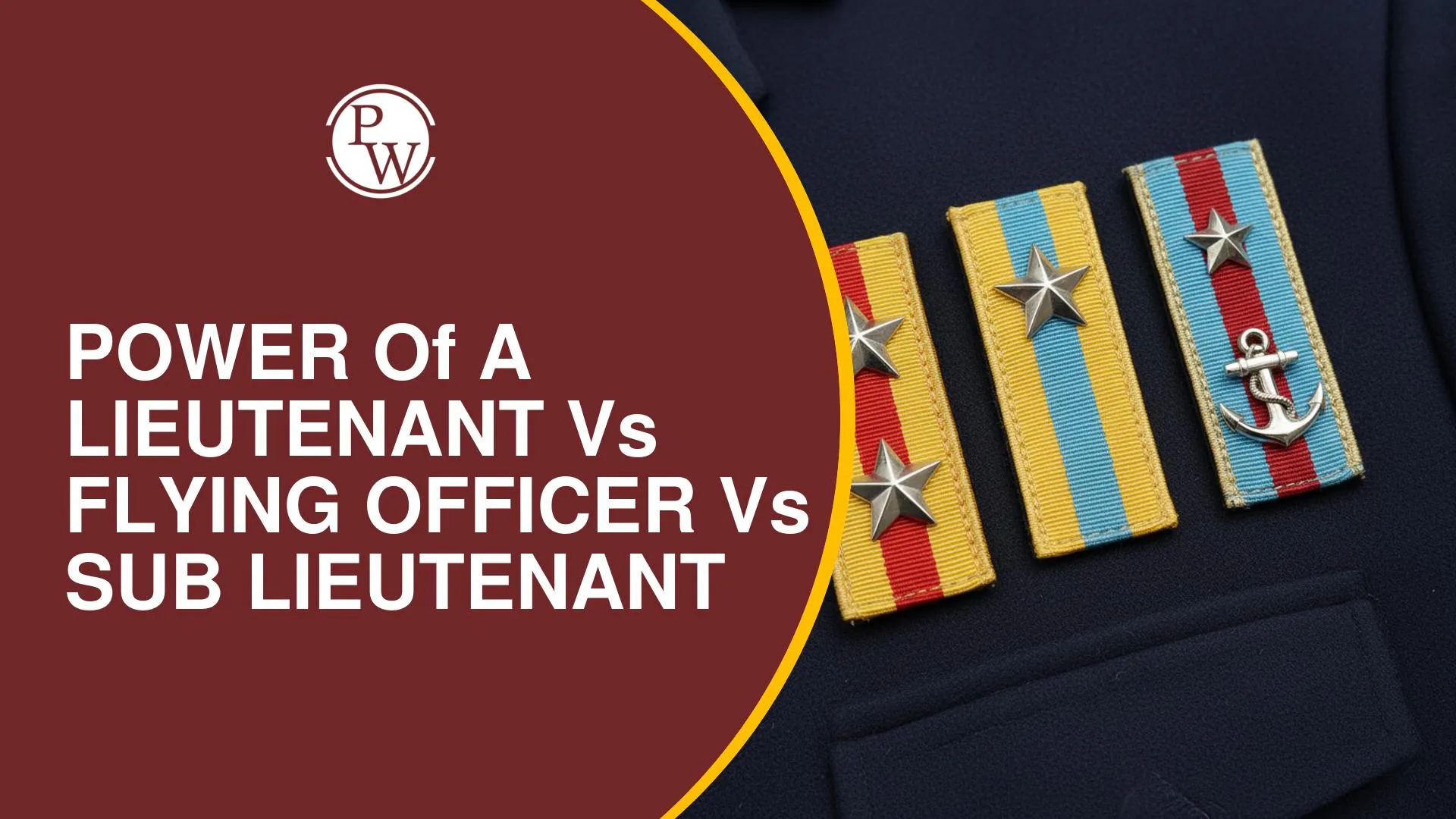
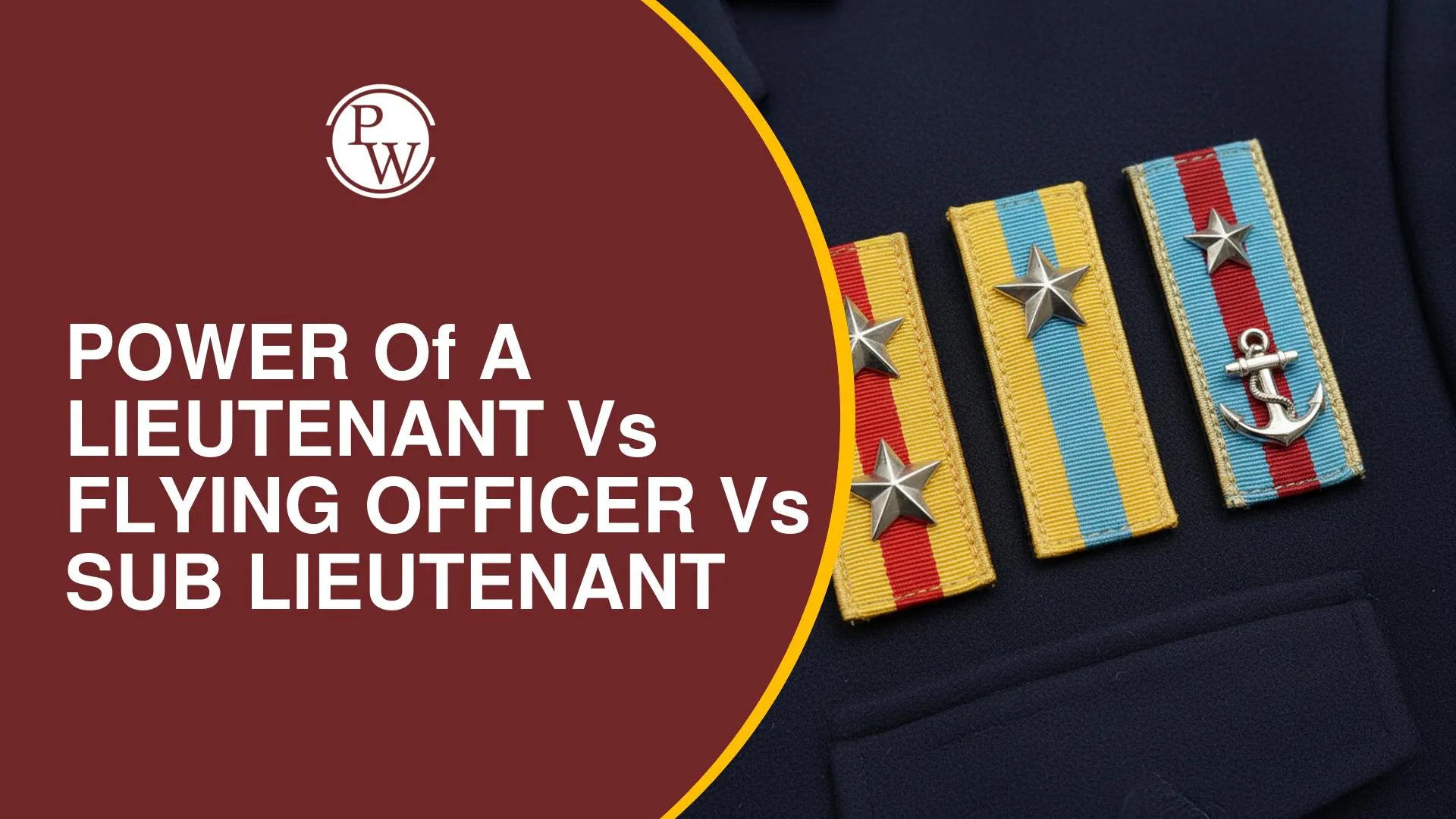
The ranks of Lieutenant, Flying Officer, and Sub Lieutenant are the first commissioned officer posts in the Indian Army, Air Force, and Navy. Many people believe that officers receive huge power immediately after joining, but in reality, these ranks focus more on learning leadership, handling responsibilities, and gaining practical experience.
Newly commissioned officers are trained to lead troops, maintain discipline, manage operations, and work closely with soldiers while preparing for higher responsibilities in the future.
A Lieutenant in the Army, a Flying Officer in the Air Force, and a Sub Lieutenant in the Navy are equivalent in status, pay, and grade, yet their operational powers differ significantly based on their environment.
Power of a Lieutenant vs Flying Officer vs Sub Lieutenant
These three ranks represent the first step into the commissioned officer cadre. They are all Grade Pay Level 10 officers, but their spheres of influence range from land and air to the high seas.
|
Power of a Lieutenant vs Flying Officer vs Sub Lieutenant Overview |
|||
|
Feature |
Lieutenant (Army) |
Flying Officer (Air Force) |
Sub Lieutenant (Navy) |
|
Service Branch |
Indian Army |
Indian Air Force |
Indian Navy |
|
Equivalent Rank |
Pay Level 10 |
Pay Level 10 |
Pay Level 10 |
|
Nature of Command |
Troops (Platoon) |
Aircraft/Ground Unit |
Ship/Shore Unit |
|
Operational Area |
Land |
Air/Technical |
Maritime |
Role and Power of a Lieutenant (Indian Army)
A Lieutenant is the starting commissioned rank in the Indian Army. The power of a Lieutenant is defined by direct leadership and ground-level tactical command.
-
Command Authority: A Lieutenant typically commands a platoon, which consists of approximately 30 to 36 soldiers.
-
Operational Power: They are responsible for the training, discipline, and tactical deployment of their men. In combat, the Lieutenant leads from the front, making real-time decisions that affect the safety and success of their unit.
-
Administrative Responsibility: Beyond combat, they manage the welfare and administrative needs of their soldiers, acting as the primary link between the troops and higher command.
Role and Power of a Flying Officer (Indian Air Force)
The Flying Officer is the first commissioned rank in the Indian Air Force (IAF). Their power is centered around high-tech assets and aerial dominance.
-
Operational Power: For those in the Flying Branch, the power lies in the authority to pilot sophisticated fighter jets, transport aircraft, or helicopters. They are responsible for the execution of sorties and aerial missions.
-
Technical Authority: In the Ground Duty (Technical) branch, a Flying Officer manages advanced radar systems, weaponry, and aircraft maintenance, ensuring the fleet's operational readiness.
-
Command: While they may not command a large number of troops initially, they hold immense responsibility for multi-crore military assets.
Role and Power of a Sub Lieutenant (Indian Navy)
The Sub Lieutenant serves as the entry-level commissioned officer in the Indian Navy. Their power is exercised in the complex maritime environment.
-
Watchkeeping Officer: A Sub Lieutenant often serves as an Officer of the Watch (OOW) on a ship, where they are responsible for the safe navigation and safety of the vessel during their watch.
-
Departmental Authority: They may lead small departments on a ship, such as Gunnery, Logistics, or Navigation, overseeing the personnel and machinery within that section.
-
Global Presence: They represent the sovereign power of the nation while on international waters, participating in anti-piracy, disaster relief, and strategic maritime operations.
Comparison of Pay and Benefits
While their operational roles vary, the lifestyle and financial benefits remain uniform across the three services:
-
Basic Pay: All three ranks start at a basic pay of ₹56,100 under the 7th Central Pay Commission (Pay Level 10).
-
Allowances: Officers receive Military Service Pay (MSP), House Rent Allowance (HRA), and specialized allowances such as Flying Allowance, Sea Area Allowance, or High Altitude Allowance, depending on their posting.
-
Perks: Access to Canteen Stores Department (CSD) facilities, comprehensive medical care through ECHS, and quality housing in military cantonments.
How to Join as a Lieutenant, Flying Officer, or Sub Lieutenant?
Aspirants looking to serve the nation can enter these ranks through several competitive entry schemes:
-
National Defence Academy (NDA): For candidates who have completed Class 12.
-
Combined Defence Services (CDS): For graduates looking to join any of the three branches.
-
Technical Entry Scheme (TES): For those with a background in engineering.
-
AFCAT: Specifically for joining the Indian Air Force in the Flying or Ground Duty branches.
Power of a Lieutenant vs Flying Officer vs Sub Lieutenant FAQs
Is a Lieutenant higher than a Flying Officer?
What is the highest rank one can reach from these positions?
Who has more power in terms of manpower command?
Do all three ranks undergo the same training?
Are women eligible for all these ranks?





Get Free Counselling Today
and Clear up all your Doubts
 Live & recorded classes available at easeDashboard for progress trackingLakhs of practice questions

