







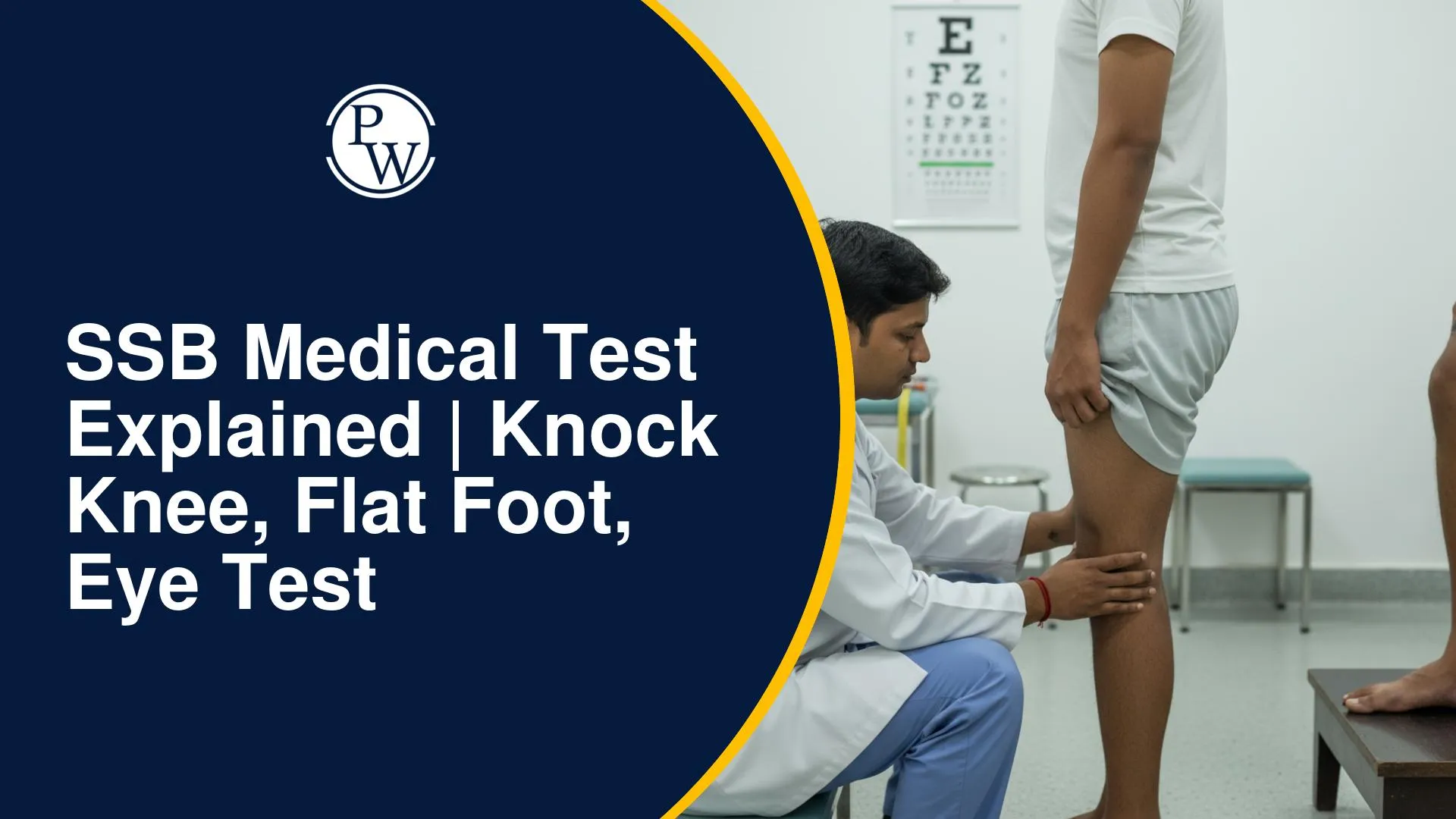
SSB Medical Test Explained: Knock Knee, Flat Foot, Eye Test, Chest & Complete Physical Criteria
 Aarti .2 Jun, 2026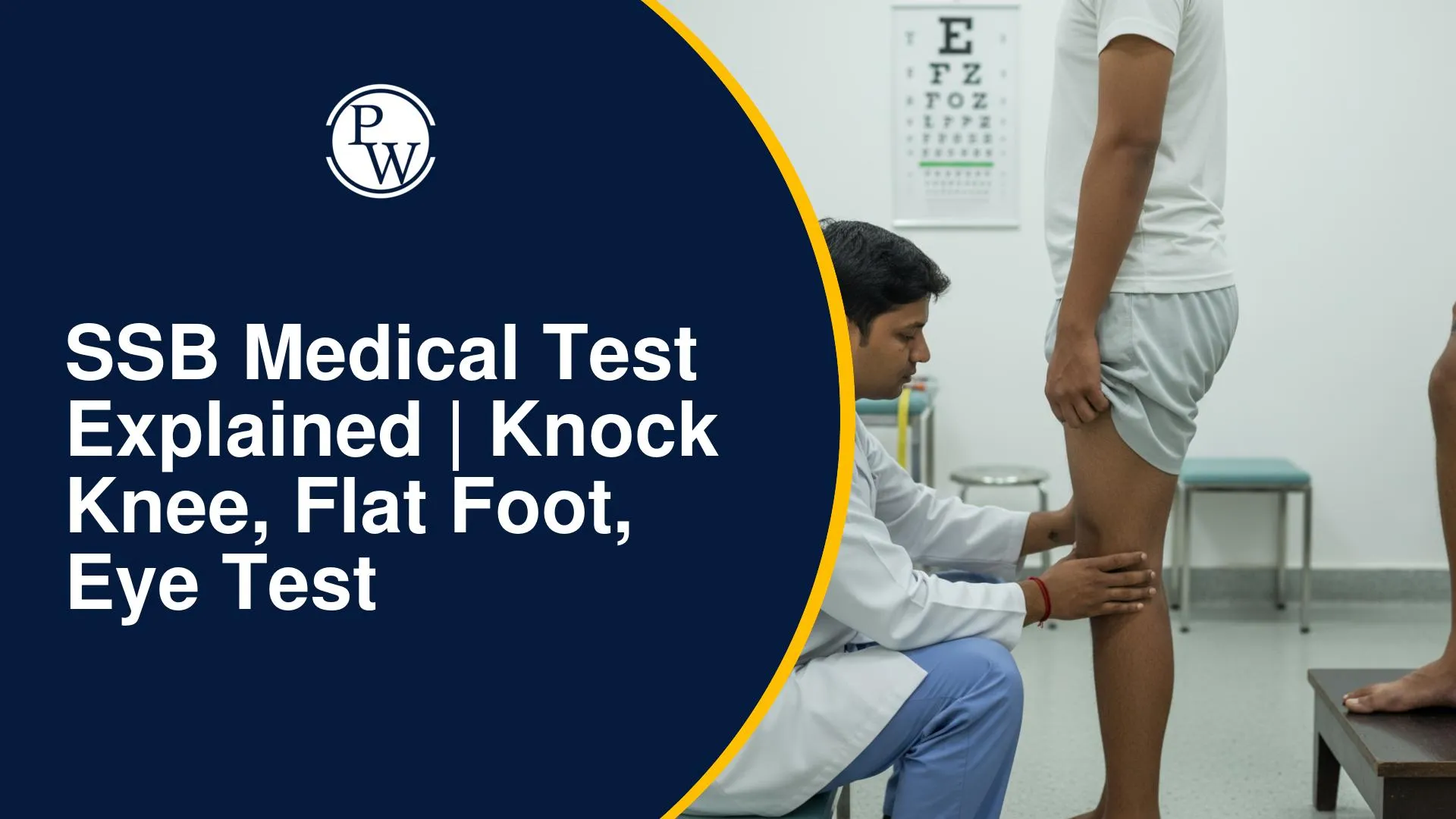
Candidates preparing for NDA, CDS, AFCAT, TES, OTA, and other defence entries often focus only on written exams and SSB interviews. However, many aspirants get rejected during the SSB Medical Test because they do not fully understand the physical and medical standards required in defence selection.
Here explains all major SSB medical checks, including knock knee, flat foot, eyesight standards, chest measurements, carrying angle, BMI, dental standards, hearing test, and LASIK surgery rules. Check the given Video for a detailed explanation of the complete Medical Test Standards.
What is the SSB Medical Test?
The SSB Medical Test is the final medical examination conducted after clearing the Services Selection Board interview. Defence doctors check whether a candidate is medically fit for military training and operational duties.
The medical process checks:
-
Height and weight
-
Chest expansion
-
Eyesight
-
Hearing ability
-
Bone and joint structure
-
Flat foot and knock knee
-
Dental health
-
Body posture
-
Previous surgeries
-
Overall physical fitness
Even small medical issues can lead to temporary or permanent rejection.
Why Candidates Get Rejected in Medicals
Many candidates fail medicals because they:
-
Ignore posture and fitness
-
Have an untreated knock knee or flat foot
-
Depend on surgeries without checking official rules
-
Ignore eyesight limitations
-
Have poor chest expansion
-
Do not maintain BMI standards
-
Have dental issues
One important point repeatedly highlighted in defence medical standards is that unauthorized or disallowed surgeries can permanently make a candidate unfit.
Height and Weight Standards
Height and weight standards are an important part of the SSB Medical Test because defence forces require candidates to maintain proper physical fitness and BMI according to their age and height. Separate height and weight criteria are defined for male and female candidates, with relaxation available for candidates from certain regions like Gorkha, Garhwal, Kumaon, and North-East India.
Female Candidates
The minimum height required for female candidates is generally 152 cm. However, candidates belonging to Gorkha, Garhwal, Kumaon, and North-East regions may get relaxation up to 148 cm.
Female weight standards depend on age, height, and BMI. As height increases, the acceptable weight range also increases.
|
Female Weight Standards Chart |
|||||
|
Height (cm) |
Minimum Weight for All Ages (kg) |
Age 17–20 Yrs Weight (kg) |
Age 20+01 Day–30 Yrs Weight (kg) |
Age 30+01 Day–40 Yrs Weight (kg) |
Above 40 Yrs Weight (kg) |
|
140 |
35.3 |
43.1 |
45.1 |
47.0 |
49.0 |
|
141 |
35.8 |
43.7 |
45.7 |
47.7 |
49.7 |
|
142 |
36.3 |
44.4 |
46.4 |
48.4 |
50.4 |
|
143 |
36.8 |
45.0 |
47.0 |
49.1 |
51.1 |
|
144 |
37.3 |
45.6 |
47.7 |
49.8 |
51.8 |
|
145 |
37.8 |
46.3 |
48.4 |
50.5 |
52.6 |
|
146 |
38.4 |
46.9 |
49.0 |
51.2 |
53.3 |
|
147 |
38.9 |
47.5 |
49.7 |
51.9 |
54.0 |
|
148 |
39.4 |
48.2 |
50.4 |
52.6 |
54.8 |
|
149 |
40.0 |
48.8 |
51.1 |
53.3 |
55.5 |
|
150 |
40.5 |
49.5 |
51.8 |
54.0 |
56.3 |
|
151 |
41.0 |
50.2 |
52.4 |
54.7 |
57.0 |
|
152 |
41.6 |
50.8 |
53.1 |
55.4 |
57.8 |
|
153 |
42.1 |
51.5 |
53.8 |
56.2 |
58.5 |
|
154 |
42.7 |
52.2 |
54.5 |
56.9 |
59.3 |
|
155 |
43.2 |
52.9 |
55.3 |
57.7 |
60.1 |
|
156 |
43.8 |
53.5 |
56.0 |
58.4 |
60.8 |
|
157 |
44.4 |
54.2 |
56.7 |
59.2 |
61.6 |
|
158 |
44.9 |
54.9 |
57.4 |
59.9 |
62.4 |
|
159 |
45.5 |
55.6 |
58.1 |
60.7 |
63.2 |
|
160 |
46.1 |
56.3 |
58.9 |
61.4 |
64.0 |
|
161 |
46.7 |
57.0 |
59.6 |
62.2 |
64.8 |
|
162 |
47.2 |
57.7 |
60.4 |
63.0 |
65.6 |
|
163 |
47.8 |
58.5 |
61.1 |
63.8 |
66.4 |
|
164 |
48.4 |
59.2 |
61.9 |
64.6 |
67.2 |
Male Candidates
The minimum height required for male candidates is 157 cm. Candidates from Gorkha, Garhwal, Kumaon, and North-East regions may receive relaxation up to 152 cm.
Male weight standards are calculated according to height, age, and BMI.
|
Male weight standard chart |
|||
|
Height (cm) |
Minimum Weight for All Ages (kg) |
Age 17–20 Yrs Weight (kg) |
Age 20+01 Day–30 Yrs Weight (kg) |
|
155 |
43.2 |
52.9 |
55.3 |
|
156 |
43.8 |
53.5 |
56.0 |
|
157 |
44.4 |
54.2 |
56.7 |
|
158 |
44.9 |
54.9 |
57.4 |
|
159 |
45.5 |
55.6 |
58.1 |
|
160 |
46.1 |
56.3 |
58.9 |
|
161 |
46.7 |
57.0 |
59.6 |
|
162 |
47.2 |
57.7 |
60.4 |
|
163 |
47.8 |
58.5 |
61.1 |
|
164 |
48.4 |
59.2 |
61.9 |
|
165 |
49.0 |
59.9 |
62.6 |
|
166 |
49.6 |
60.6 |
63.4 |
|
167 |
50.2 |
61.4 |
64.1 |
|
168 |
50.8 |
62.1 |
64.9 |
|
169 |
51.4 |
62.8 |
65.7 |
|
170 |
52.0 |
63.6 |
66.5 |
|
171 |
52.6 |
64.3 |
67.3 |
|
172 |
53.3 |
65.1 |
68.0 |
|
173 |
53.9 |
65.8 |
68.8 |
|
174 |
54.5 |
66.6 |
69.6 |
|
175 |
55.1 |
67.4 |
70.4 |
|
176 |
55.8 |
68.1 |
71.2 |
BMI and Body Structure Requirements
During the SSB medical examination, doctors also check body proportions and overall physical symmetry. Waist-to-hip ratio, posture, fat distribution, and body alignment are carefully examined.
Candidates with highly unbalanced body structures or poor posture may face problems during medical evaluation. Regular running, stretching, posture correction, and fitness training can help improve body conditioning before medicals.
Sitting Height, Leg Length & Thigh Length
These measurements are especially important for Air Force and flying branch candidates because fighter aircraft cockpits are designed with fixed dimensions.
Air Force Measurement Standards
|
Measurement |
Minimum |
Maximum |
|
Sitting Height |
81.5 cm |
96 cm |
|
Leg Length |
99 cm |
120 cm |
|
Thigh Length |
— |
64 cm |
Candidates can easily measure these values at home using a measuring tape and chair.
Knock Knee Explained
Knock knee is one of the most common reasons for rejection in defence medicals. In this condition, the knees touch each other while the ankles remain apart, creating an inward angle in the legs.
Doctors usually ask candidates to stand straight with knees and ankles together to examine the condition. Gap measurements are also checked while lying down.
According to the explained standards, males with an intermalleolar gap above 5 cm and females with a gap above 8 cm may be considered unfit.
Candidates should avoid corrective surgeries without proper medical guidance because some surgeries may permanently affect defence eligibility.
Bow Legs and Knee Hyperextension
Apart from knock knee, doctors also examine bow legs, ligament laxity, and hyperextension of the knees. Excessive backward bending of the knees or severe bow legs may lead to rejection.
Candidates who have undergone ACL reconstruction surgery may also face medical issues depending on the condition and recovery.
Carrying Angle in Elbow
The carrying angle is the outward angle formed between the arm and forearm. Normally, an angle between 5° and 10° is considered acceptable.
Doctors measure this angle using a goniometer. Excessive inward or outward bending of the elbow may be considered medically abnormal.
Flat Foot Test Explained
Flat foot means the natural arch of the foot is absent. Defence doctors carefully examine this condition because it may affect running and physical performance.
A simple home test can help identify flat foot. Candidates can wet their foot and step on cardboard or newspaper. If the footprint shows a curved “C-shaped” gap in the middle, the foot arch is normal. If the entire foot gets printed completely, it may indicate flat foot.
Candidates with severe flat foot may face rejection during medical examination.
Eye Test and Vision Standards
Eye standards differ according to defence entry type.
Vision Standards
|
Entry Type |
Uncorrected Vision |
|
NDA / 10+2 Entries |
6/36 & 6/36 |
|
CDS / OTA / Graduate Entries |
6/60 & 6/60 |
|
Technical & PG Entries |
3/60 & 3/60 |
After correction, both eyes should ideally achieve 6/6 vision.
LASIK Surgery Rules
LASIK surgery is generally not permitted for NDA candidates. However, it may be allowed in certain graduate-level entries under specific medical conditions.
Candidates should be above 20 years of age, and at least 12 months should have passed after surgery. The retina, cornea, and eye topography must also be healthy and normal.
Colour blindness, squint, and severe corneal issues are usually not acceptable in defence medical standards.
Colour Blindness Test
Candidates undergo colour perception tests using Ishihara plates, where numbers are hidden inside coloured dots. If a candidate cannot identify the numbers properly, colour blindness may be detected.
Generally, CP-II colour perception standards are required for defence entries.
Finger Hyperextension & Joint Flexibility
Doctors also check finger hyperextension, thumb flexibility, and ligament laxity. Excessive backward bending of fingers may indicate connective tissue or joint-related issues.
Severe hyperextension problems may lead to medical rejection.
Dental Standards in SSB Medical
Dental fitness is important because soldiers require proper jaw strength and chewing ability.
Doctors check mouth opening, teeth alignment, root condition, fillings, and overall dental structure. Normally, candidates should be able to open their mouths properly, and three to four fingers should comfortably fit inside.
Severely protruding teeth, missing front teeth, jaw deformities, or major untreated dental issues may lead to rejection.
Chest Measurement Criteria
The minimum chest measurement generally required is 77 cm, with at least 5 cm chest expansion after inhaling deeply.
Doctors also examine shoulder alignment, chest symmetry, spine posture, pigeon chest, sunken chest, and uneven chest development. Abnormal chest structure may become a reason for rejection.
Hearing Test in Defence Medical
Candidates must have proper hearing ability for defence services. Doctors conduct hearing tests using methods like the Weber Test or Audiometer Test.
A tuning fork or hearing machine is used to check whether both ears can hear sound equally. Poor hearing levels may lead to rejection.
Important Surgery Warning for Candidates
Many candidates think surgery can permanently solve medical problems before SSB medicals. However, defence medical standards are strict, and not every surgery is accepted.
Before undergoing any medical procedure, candidates should carefully read official UPSC or defence notifications and consult qualified doctors. Some surgeries may permanently affect defence eligibility.
Final Preparation Tips for SSB Medical
Candidates should start physical preparation early instead of waiting for the written exam results. Regular exercise, stretching, running, posture correction, weight management, eye care, and dental hygiene can help improve medical fitness.
Candidates should avoid unsafe surgeries, extreme body transformations, and ignoring posture-related problems.
.
SSB Medical Test Explained FAQs
Is knock knee allowed in SSB medical?
Is LASIK surgery allowed for NDA candidates?
How can I check flat foot at home?


Have questions about your prep?
Our experts can answer all your questions
 Live & recorded classes available at easeDashboard for progress trackingLakhs of practice questions

