







High-Tech Architecture Explained for NATA & JEE B.Arch
 Aarti .26 May, 2026
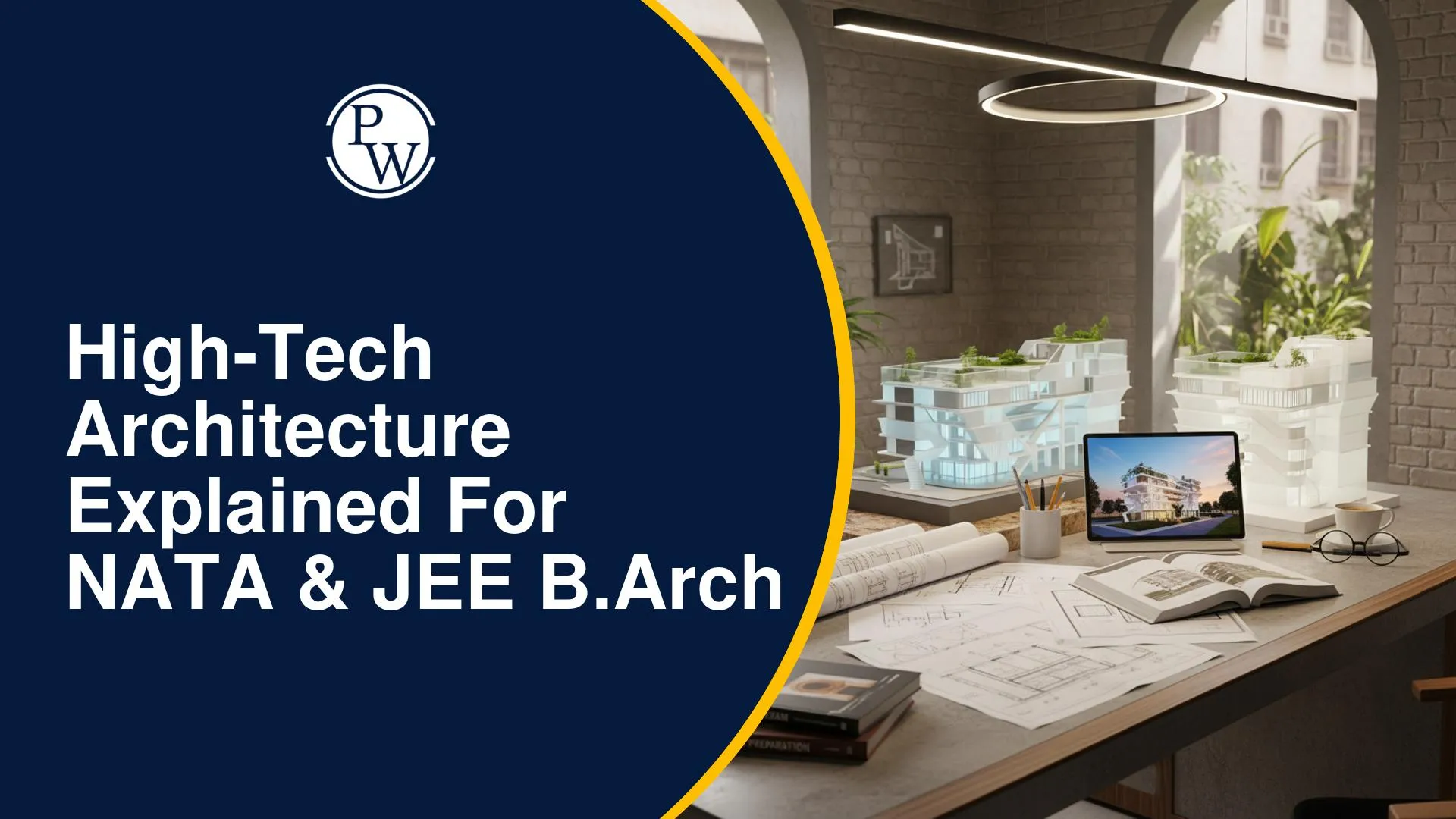
High-Tech Architecture (Structural Expressionism) focuses on exposing a building’s structure and services as part of the design. It uses steel, glass, and modern materials with visible frames, exterior pipes, and flexible, open interiors. The style creates a transparent, industrial, and technology-driven appearance.
Key architects include Richard Rogers, Renzo Piano, and Norman Foster. Examples are Centre Pompidou, Lloyd’s Building, and HSBC Building. Advantages include flexibility, easy maintenance, and a futuristic look, while disadvantages include high cost, heavy upkeep, and limited suitability for extreme climates.
What is High-Tech Architecture?
High-Tech Architecture is a style that emerged in the late 20th century, emphasizing technology, innovation, and visible building systems. It is also referred to as Structural Expressionism.
The core principle of High-Tech Architecture is to highlight the internal structure and services of a building by exposing them externally, instead of hiding pipes, ducts, and structural elements. These exposed elements are often showcased as distinct design features. Buildings in this style commonly utilize materials such as glass, Reinforced Cement Concrete (RCC), timber, and steel.
Key Features of High-Tech Architecture
High-Tech Architecture is characterized by several distinct elements:
-
Exposed Structures: Steel frames, beams, and utility conduits (often referred to as "tussles" for pipes/ducts) are intentionally left visible.
-
Exterior Services: Elements like pipes, elevators, and ducts are frequently placed on the exterior of the building. For instance, AC ducts are often located outside the main structure.
-
Use of Modern Materials: There is extensive use of materials such as glass, steel, aluminum, and their alloys.
-
Flexible Spaces: Designs often feature open floor plans and adaptable interiors to accommodate various uses.
-
Industrial Look: The overall aesthetic is frequently inspired by factories and machinery, giving a distinct industrial appearance.
-
Transparency: This quality is predominantly achieved through the widespread use of glass in the building's facade.
Key Buildings Exemplify High-Tech Architecture
Several iconic buildings around the world showcase the core principles and innovative design elements of High-Tech Architecture.
Centre Pompidou, France (Designed by Richard Rogers and Renzo Piano)
-
Features: Service pipes and escalators are conspicuously placed on the exterior. It utilizes a color-coded system for its services: blue is for air, green is for water, and other specific colors are used for additional systems.
Lloyd's Building, UK (Designed by Richard Rogers)
-
Features: Elevators, stairs, and ducts are all positioned externally as prominent design elements.
HSBC Building, Hong Kong (Designed by Norman Foster)
-
Features: Employs modular construction and boasts open interiors. Notably, its AC ducts are placed on the exterior of the building.
Advantages and Disadvantages of High-Tech Architecture
High-Tech Architecture offers both notable advantages and certain challenges:
Advantages:
-
Flexibility in Design: This style allows for significant innovation and adaptable design solutions, catering to evolving needs.
-
Easy Maintenance: With services externally accessible, maintenance tasks such as repairs and inspections are simplified.
-
Innovative and Futuristic Appearance: Buildings in this style project a distinctly modern and forward-looking aesthetic, making them iconic structures.
Disadvantages:
-
Expensive Construction: The specialized design, advanced engineering, and use of modern materials can lead to higher initial construction costs.
-
High Maintenance: Due to the exposed elements, these buildings often require significant upkeep to maintain their appearance and structural integrity, especially against the weather.
-
Not Suitable for All Climates: The extensive use of glass and exposed elements may not be ideal or energy-efficient for regions with extreme climate conditions, such as intense heat or cold.



High-Tech Architecture Explained for NATA & JEE B.Arch FAQs
What is High-Tech Architecture?
Name some key features of High-Tech Architecture.
Who are some influential architects associated with High-Tech Architecture?
What are the main advantages and disadvantages of High-Tech Architecture?

Get Free Counselling Today
and Clear up all your Doubts
 Live & recorded classes available at easeDashboard for progress trackingLakhs of practice questions

