








Memory Drawing and PYQ Solutions for NATA & JEE Paper 2A 2027

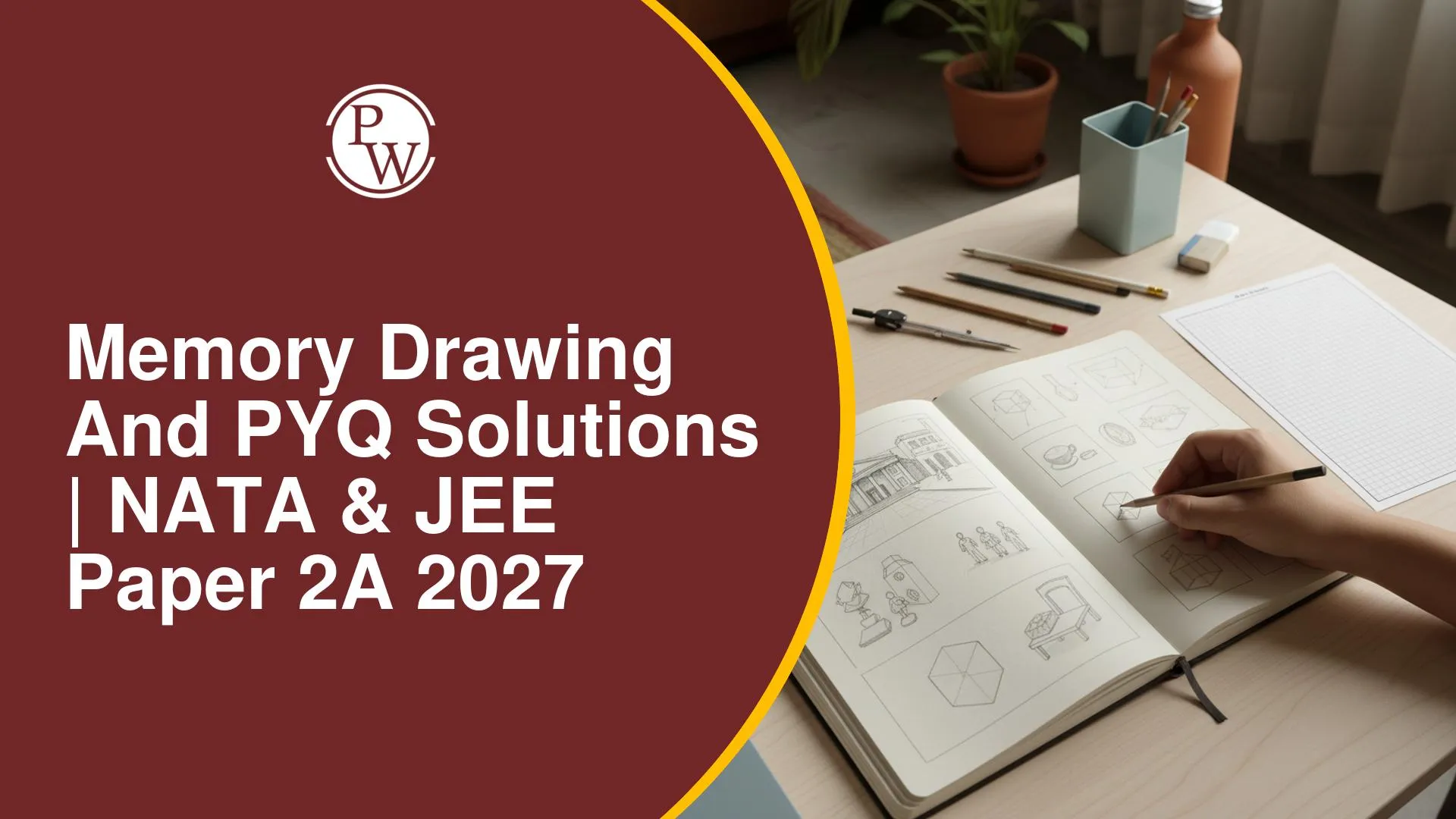
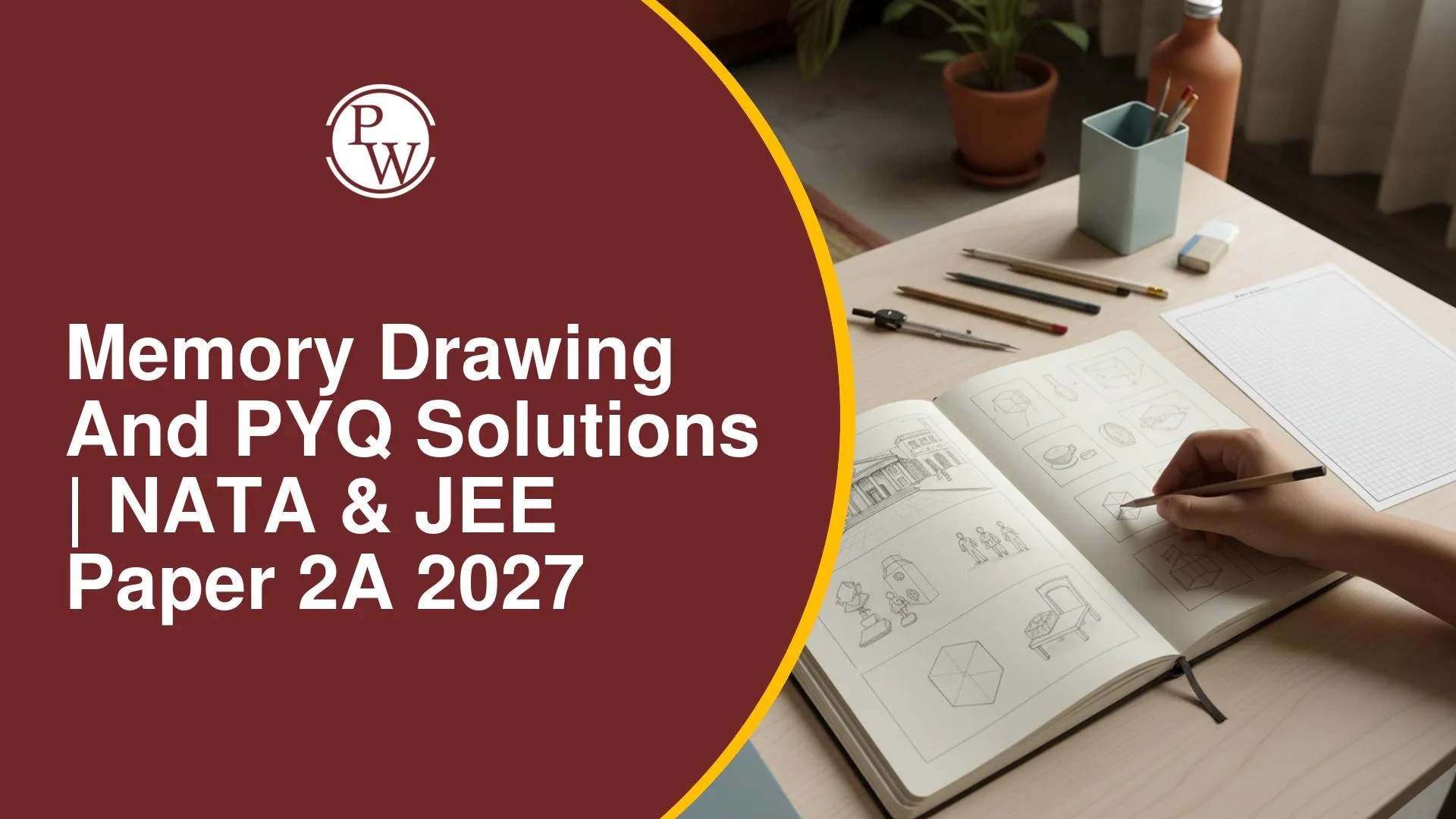
Memory Drawing and PYQ Solutions can help students understand how to approach drawing-based questions for the NATA Exam and JEE Paper 2A. These questions test how well you can visualise a situation and convert it into a clear drawing.
Drawing preparation is not limited to copying an object or practising a fixed sketch. You need to understand perspective, proportion, composition, light, shadow, human figures and the placement of objects in a scene.
The questions given in the practice session cover different types of drawing situations. They include perspective views, 3D objects, still-life composition, street scenes and an interior scene viewed from a child's perspective. Students can watch the attached video to understand how these drawings are constructed and how different elements can be placed on the sheet.
Memory Drawing and PYQ Solutions for NATA and JEE Paper 2A
The following questions can be used for drawing practice. Try to understand the situation before starting the sketch. The questions are given exactly as provided in the practice material.
Q1) Draw India Gate In Perspective By Imagining Yourself As A Bird, And You Can See India Gate As A Bird From A Corner?
This question requires you to imagine an elevated viewpoint. Before drawing, think about how India Gate would appear when viewed from above and from a corner. The structure, surrounding space, and perspective lines should match the imagined position of the viewer.
This is useful practice for perspective drawing for NATA because it requires you to visualise a familiar structure from a different viewpoint instead of drawing it as a front-facing monument.
Q2) Compose Basic Geometric Shapes Like Cone, Cylinder, And Cube In 3d Composition And Put The Light And Shadow Accordingly? In The Size Of 6 Inches By 6 Inches
This question focuses on basic 3D forms. Start by placing the cone, cylinder, and cube in a balanced composition. Then decide the direction of the light source and apply light and shadow accordingly.
The exercise is useful because simple geometric forms help you understand volume. Once you understand how light falls on a cube or cylinder, you can apply the same idea to more complicated objects.
Q3) Design A Composition In Which There Is Folded Cloth Piece Is Placed On A Surface; On Top Of It, A Spoon And An Apple Are Placed. Draw The Composition With Light And Shade. In The Size Of 7 Inches By 7 Inches
This question involves arranging everyday objects in a single composition. The folded cloth, spoon, and apple should have a clear relationship with the surface on which they are placed.
Start with the overall placement of the objects. After that, work on their shapes and proportions. Light and shade can then be added according to the selected light source.
Such exercises are useful for NATA drawing practice because they help you work with objects, composition, proportion, and shading within a fixed space.
Q4) Draw the scene in which you can see a street from the 5th floor down, where some vehicles are there along with people. Size: 7 Inch By 8 Inch.
This question requires you to imagine a street as seen from the fifth floor. The height of the viewer changes the way the street, vehicles, and people appear.
You need to think about the perspective before adding the details. Objects that are farther away should be placed according to the depth of the scene. Vehicles and people should also be shown in suitable proportions.
This type of practice is relevant to JEE Paper 2A drawing questions, where visualisation of a scene and its spatial arrangement can be important.
Q5) Imagine A 2-Year-Old Boy Is Standing At The Entrance Of A Kitchen And Observing His Mother Preparing A Meal. Draw The Scene From His Viewpoint, showing the person cooking at the kitchen counter along with the surrounding elements such as a dining table, Chairs, Refrigerator, Cabinets, Window, Utensils, And Other Household Objects. Nata Pyq
This question is different from a simple object drawing because the complete scene has to be imagined from the viewpoint of a two-year-old child.
The height of the viewer affects the composition. The kitchen counter, dining table, chairs and other objects should be placed according to the child's viewpoint. The mother preparing the meal becomes an important part of the scene, while the other household objects help establish the kitchen environment.
This is a useful example of memory drawing for NATA, where the student has to create a complete situation from a written description.
Students can first identify the main subject and then add the surrounding elements. It is not necessary to give equal detail to every object. The important part is to make the scene understandable.
Memory Drawing and PYQ Solutions
Memory Drawing and PYQ Solutions can be understood through the drawing practice video. The video explains how to approach the given questions, build the composition, use perspective, place objects correctly, and add light and shadow.
Students can watch the video to understand the step-by-step drawing process and see how each question is approached. After watching the solution, try drawing the same question on your own. This will help you practise the techniques and improve your understanding of perspective, proportion and composition.
How to Use the Drawing Practice Video
Memory Drawing and PYQ Solutions become more useful when you practise along with the video instead of only watching the final drawing.
Keep your drawing sheet ready while watching the session. Before the solution is shown, try to imagine the scene yourself. Mark the approximate position of the main objects and decide the viewpoint.
Then watch how the drawing is developed in the video. Pay attention to the initial construction, perspective, object placement, proportions, shading and finishing details.
You can follow this process:
-
Read the question carefully.
-
Identify the viewpoint.
-
Decide the main subject.
-
Make a light rough construction.
-
Place the larger objects first.
-
Add people and supporting objects.
-
Check proportions and perspective.
-
Apply light and shadow.
-
Add the smaller details at the end.
For memory drawing for JEE Paper 2A, students should also practise converting a written situation into a complete visual composition. Do not start by drawing random objects. First understand what the scene is asking you to show.
For example, in the street question, the main idea is not simply to draw vehicles and people. You have to show the street from the fifth-floor viewpoint. Similarly, in the kitchen question, the main requirement is to show the scene from the viewpoint of a two-year-old child.
What to Focus on During Practice
Memory Drawing and PYQ Solutions can be approached through a few basic drawing skills. These skills can be practised separately and then combined in a complete scene.
1. Perspective
Perspective helps you show depth and distance. Practise roads, buildings, rooms and objects from different viewpoints.
For JEE Architecture drawing preparation, try changing the position of the viewer while drawing the same scene. For example, draw a building from ground level and then imagine viewing the same building from a higher floor.
2. Proportion and Scale
Objects should have a suitable relationship with each other. A chair, table, person, and refrigerator in the same kitchen should not appear randomly sized.
Proportion is also useful when drawing people. The size of a person can help communicate the scale of a building, room, or street.
3. Light and Shadow
Decide the direction of light before adding shadows. The light falling on the cone, cylinder and cube in Question 2 should follow one consistent direction.
The same principle can be applied to the apple, spoon and folded cloth in Question 3.
4. Human Figures
People are often part of scene-based drawing questions. Practise simple figures in different positions rather than focusing only on facial details.
Human figure drawing can help you show activities such as walking, sitting, standing, cooking, or observing something.
Final Tips for NATA and JEE Paper 2A 2027
The drawing section requires regular practice. Start with basic forms and gradually move towards complete scenes.
Keep these points in mind while practising:
-
Understand the question before drawing.
-
Decide the viewpoint first.
-
Draw the main composition lightly.
-
Use basic shapes to construct objects.
-
Maintain proportion between objects.
-
Practise different perspectives.
-
Keep the light source consistent.
-
Use shading to show form and depth.
-
Practise simple human figures.
-
Add details only after completing the main structure.
-
Use the available space properly.
-
Practise with a fixed time limit.
Memory Drawing and PYQ Solutions can be used as a practical learning session for these skills. Watch the attached video to see how the questions are approached and how the drawing develops from the initial construction to the final details.
Preparation Resources
Memory Drawing and PYQ Solutions FAQs
What is memory drawing for NATA and JEE Paper 2A?
What types of drawing questions are included in the practice session?
How can students practise these drawing questions?
What should students focus on while practising memory drawing?
Is the kitchen scene a NATA PYQ?


Have questions about your prep?
Our experts can answer all your questions

 Live & recorded classes available at easeDashboard for progress trackingLakhs of practice questions

