World Heritage Sites: Famous Heritage Sites Around the World for NIFT, NID & UCEED 2027


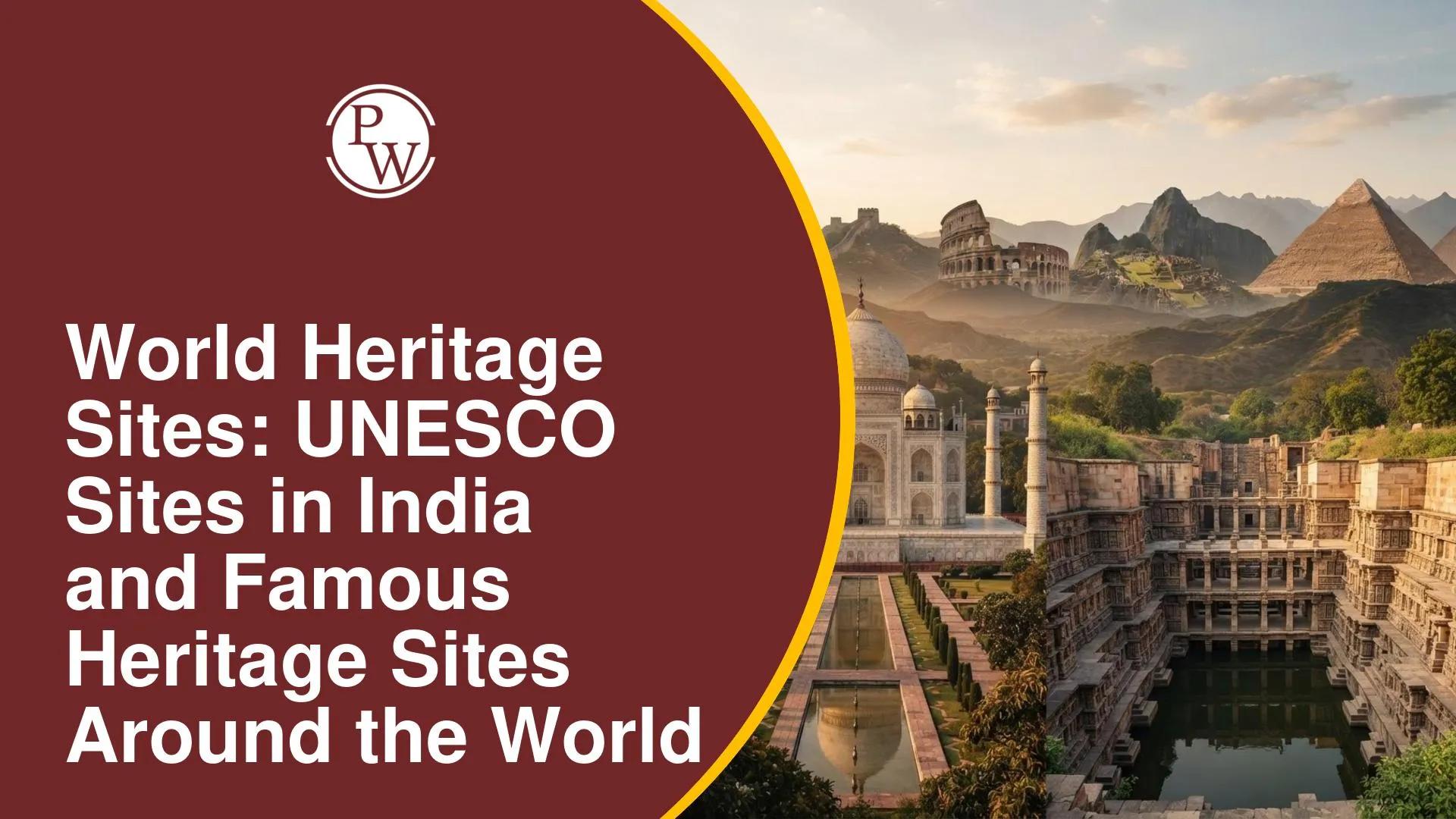
World Heritage Sites represent places that have great cultural, historical or natural importance. These places are recognised by UNESCO for their outstanding universal value. They include historical monuments, ancient cities, temples, caves, forests and national parks.
For students preparing for NIFT, NID and UCEED 2027, World Heritage Sites are an important part of General Knowledge. However, remembering their names, locations, categories and special features can be difficult. Learning about UNESCO World Heritage Sites through their history and importance can make revision easier. Let's explore important heritage sites in India and around the world.
What Are UNESCO World Heritage Sites?
UNESCO World Heritage Sites are monuments, places and natural areas recognised for their outstanding universal value. These sites have special importance for the cultural or natural heritage of the world.
UNESCO stands for the United Nations Educational, Scientific and Cultural Organisation. The World Heritage Convention was adopted in 1972 to identify and protect important cultural and natural heritage sites.
The World Heritage Committee has 21 members and follows 10 criteria for selecting sites. A country first sends nominations for its important places. These places are then evaluated against UNESCO's criteria before being included in the UNESCO World Heritage List.
India became a part of the World Heritage Convention in 1977. Its first UNESCO World Heritage Sites were recognised in 1983.
Students preparing for design entrance examinations can also explore GK Questions for Design Entrance Exams to practise important general knowledge topics.
Categories of UNESCO World Heritage Sites
UNESCO World Heritage Sites are divided into three main categories based on their importance.
|
Category |
Meaning |
Examples |
|
Cultural |
Places with historical, architectural or cultural importance |
Ajanta Caves, Taj Mahal |
|
Natural |
Places with special natural and ecological importance |
Kaziranga National Park, Western Ghats |
|
Mixed |
Places with both cultural and natural importance |
Khangchendzonga National Park |
These categories help students understand why different places receive recognition as World Heritage Sites.
World Heritage Sites in India
India has a rich cultural and natural heritage. It has 45 UNESCO World Heritage Sites, including 37 cultural sites, 7 natural sites and 1 mixed site. India ranks sixth in the world in terms of the number of World Heritage Sites.
The following are some important UNESCO Sites in India and their special features.
1. Important Cultural World Heritage Sites in India
Cultural heritage sites represent India's history, architecture, religious traditions and ancient settlements.
|
World Heritage Site |
Location |
Important Feature |
|
Ajanta Caves |
Maharashtra |
Famous for Buddhist paintings and carvings |
|
Ellora Caves |
Maharashtra |
Known for Buddhist, Hindu and Jain monuments and the Kailasa Temple |
|
Taj Mahal |
Agra, Uttar Pradesh |
An important example of Mughal architecture |
|
Agra Fort |
Agra, Uttar Pradesh |
Represents Mughal history and architecture |
|
Qutub Minar |
Delhi |
An important historical monument |
|
Group of Monuments at Hampi |
Karnataka |
Represents the ruins of the Vijayanagara Empire |
|
Great Living Chola Temples |
Tamil Nadu |
Known for their tall granite vimanas |
|
Sacred Ensembles of the Hoysalas |
Karnataka |
Famous for soapstone carvings |
|
Hill Forts of Rajasthan |
Rajasthan |
Includes six important historical forts |
|
Rani ki Vav |
Patan, Gujarat |
Also known as the Queen's Stepwell |
|
Jantar Mantar |
Jaipur, Rajasthan |
An important historical astronomical site |
|
Red Fort Complex |
Delhi |
An important monument of Mughal history |
|
Santiniketan |
West Bengal |
An important cultural heritage site |
|
Maratha Military Landscapes of India |
Maharashtra and Tamil Nadu |
Includes 12 forts |
The Maratha Military Landscapes of India received UNESCO World Heritage recognition in 2024. It includes 11 forts in Maharashtra and Gingee Fort in Tamil Nadu.
2. Important Natural World Heritage Sites in India
Natural heritage sites are recognised for their environmental, ecological and natural importance. India's important natural World Heritage Sites include:
|
World Heritage Site |
Location |
Important Feature |
|
Kaziranga National Park |
Assam |
Famous for one-horned rhinoceroses |
|
Keoladeo National Park |
Rajasthan |
Known for migratory birds and wetlands |
|
Manas Wildlife Sanctuary |
Assam |
Home to elephants, pygmy hogs and golden langurs |
|
Sundarbans National Park |
West Bengal |
Known for its large mangrove delta |
|
Nanda Devi and Valley of Flowers |
Uttarakhand |
Famous for alpine meadows and flowers |
|
Western Ghats |
Six Indian states |
Important natural region with rich biodiversity |
|
Great Himalayan National Park |
Himachal Pradesh |
An important natural heritage site |
3. India's Only Mixed World Heritage Site
Khangchendzonga National Park, located in Sikkim, is India's only mixed World Heritage Site.
It received UNESCO recognition in 2016 because of its natural and cultural importance. The region includes the world's third-highest peak, Mount Khangchendzonga.
It also has great religious and cultural importance for Tibetan Buddhists, particularly the Lepcha and Bhutia communities. The area is considered sacred by these communities.
Looking for the right course for your upcoming exam? Explore the available Design & Arch batches on PW.
Famous World Heritage Sites Around the World
The UNESCO World Heritage List also includes important places from different countries. In 1978, the first 12 World Heritage Sites were selected for recognition. These included four natural sites and eight cultural sites.
Some important examples of the first recognised sites are:
|
World Heritage Site |
Country |
Significance |
|
Galápagos Islands |
Ecuador |
Important natural heritage site |
|
Simien National Park |
Ethiopia |
Recognised natural heritage site |
|
City of Quito |
Ecuador |
Important cultural heritage site |
|
Aachen Cathedral |
Germany |
Important historical and religious monument |
|
Rock-Hewn Churches of Lalibela |
Ethiopia |
Famous for churches carved out of rock |
|
Island of Gorée |
Senegal |
Important historical heritage site |
|
Mesa Verde National Park |
United States |
Recognised cultural heritage site |
|
Historic Centre of Kraków |
Poland |
Important historical urban centre |
These sites help students understand the global importance of cultural and natural heritage.
Important Facts About World Heritage Sites for NIFT, NID & UCEED 2027
World Heritage Sites are an important topic for design entrance examinations. Students should remember the following facts about UNESCO, important dates, and India's recognised heritage sites:
-
UNESCO stands for the United Nations Educational, Scientific and Cultural Organisation.
-
The World Heritage Convention was adopted in 1972.
-
India became a member of the World Heritage Convention in 1977.
-
India's first UNESCO World Heritage Sites were recognised in 1983.
-
India's first four recognised sites were Agra Fort, Ajanta Caves, Ellora Caves and the Taj Mahal.
-
India has 45 World Heritage Sites, including 37 cultural, 7 natural and 1 mixed site.
-
India ranks sixth in the world in terms of the number of World Heritage Sites.
-
Khangchendzonga National Park is India's only mixed World Heritage Site.
-
The Maratha Military Landscapes of India received recognition in 2024.
-
The Ancient Buddhist Site of Sarnath was designated a World Heritage Site in 2026.
Students can also explore the Science and Technology GK Series to study other important general knowledge topics.
World Heritage Sites are important for understanding the history, culture, architecture and natural diversity of different countries. Learning about their locations, categories and special features helps students build their general knowledge. Important examples such as the Taj Mahal, Ajanta Caves, Kaziranga National Park and Khangchendzonga National Park are useful for revision.
For NIFT, NID and UCEED 2027 preparation, students should focus on remembering important heritage sites, their locations, categories and historical significance. Regular revision of these facts can help students prepare this topic more effectively.
World Heritage Sites FAQs
1. What are UNESCO World Heritage Sites?
2. What is the full form of UNESCO?
3. When was the World Heritage Convention adopted?
4. How many World Heritage Sites are there in India?
5. Which were India's first UNESCO World Heritage Sites?
6. Which is India's only mixed World Heritage Site?
7. Which was the first year of UNESCO World Heritage recognition around the world?