






High Weightage Chapters for JEE Main Physics 2026 (Chapter-Wise Analysis)
 Shrivastav 2 Apr, 2026
Share
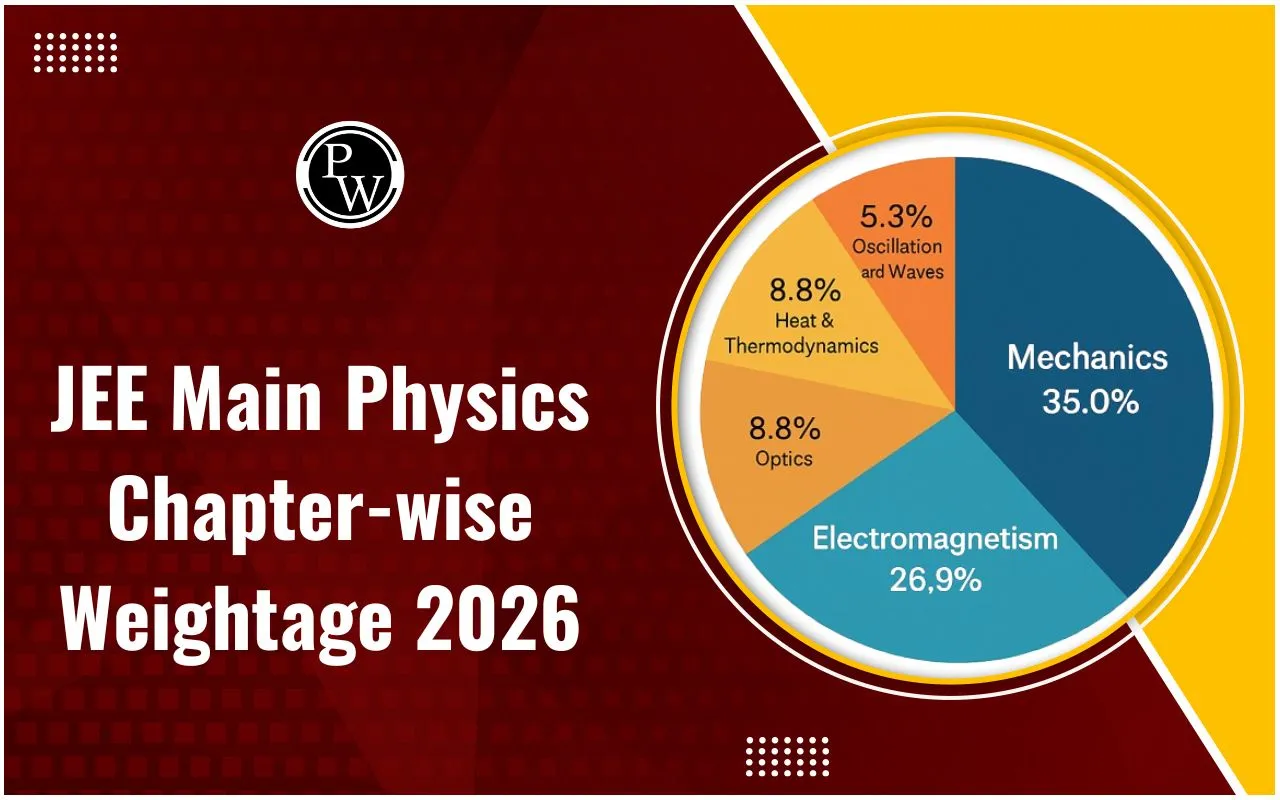
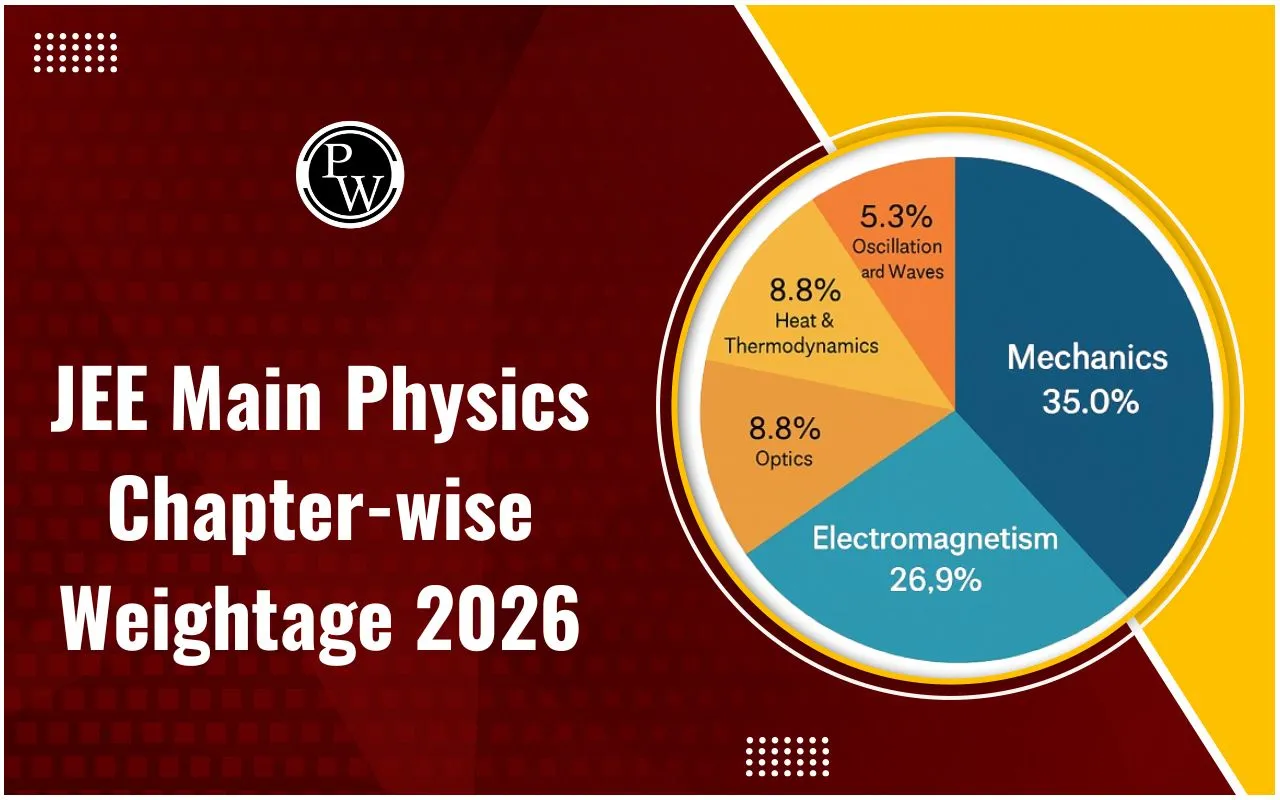
As the Joint Entrance Examination (JEE) Main 2026 Session 2 begins today, April 2 to April 8, students are entering the most critical phase of their preparation. With the city intimation slip already released, aspirants must now shift their focus toward high-yield topics to maximize their percentiles.
A strategic chapter-wise analysis of Physics shows that mastering a few high-weightage sections can significantly boost your overall score in these final days. Focusing on these high-probability chapters ensures that your revision is efficient and aligned with the latest NTA trends.
Also Check:
JEE Main Physics Syllabus 2026
Physics in JEE Main 2026 is based on Class 11 and Class 12 NCERT topics. This analysis focuses on chapter-wise weightage rather than full syllabus coverage. Knowing the units helps contextualise why certain chapters repeatedly appear in the exam. Weightage insights presented here rely on past session trends and expert analysis, guiding students to allocate study time effectively.
Also Check : JEE Main Physics Syllabus 2026
JEE Main Chapter-wise Weightage for Physics 2026
Most Physics questions come from a few high-weightage chapters. The first 8–10 chapters contribute roughly 50% of total questions, with Optics, Thermodynamics, and Electrostatics consistently dominating.
|
Chapter Name |
Question No JEE Main 2025 April session |
Question No JEE Main 2025 January session |
|
Ray Optics and Optical Instruments |
19 |
23 |
|
Units and Measurements |
13 |
20 |
|
Rotational Motion |
13 |
14 |
|
Electric Charges and Fields |
13 |
14 |
|
Fluid Mechanics |
10 |
16 |
|
Moving Charges and Magnetism |
12 |
12 |
|
Thermodynamics |
9 |
13 |
|
Electrostatic Potential and Capacitance |
12 |
9 |
|
Wave Optics |
9 |
10 |
|
Dual Nature of Radiation and Matter |
7 |
12 |
|
Semiconductor Electronics |
9 |
10 |
|
Current Electricity |
8 |
9 |
|
Work, Power and Energy |
4 |
11 |
|
Gravitation |
6 |
8 |
|
Electromagnetic Waves |
5 |
9 |
|
Thermal Properties of Matter |
5 |
8 |
|
Waves |
10 |
3 |
|
Alternating Current |
6 |
7 |
|
Kinetic Theory of Gases |
7 |
5 |
|
Atoms |
7 |
5 |
|
Newton’s Laws of Motion |
8 |
3 |
|
Motion in a Plane |
6 |
4 |
|
Motion in a Straight Line |
5 |
4 |
|
Simple Harmonic Motion |
4 |
5 |
|
System of Particles and Centre of Mass |
3 |
5 |
|
Nuclei |
5 |
3 |
|
Mechanical Properties of Solids |
6 |
1 |
|
Electromagnetic Induction |
1 |
6 |
|
Magnetism and Matter |
3 |
0 |
|
Vector and Calculus |
0 |
1 |
High-weightage chapters like Mechanics, Modern Physics, and Electrostatics should be prioritised for maximum marks. Chapters with fewer questions can be revised quickly once the core units are strong.
Summary: Focus on the top 5 chapters first; they contribute to more than half of the Physics section in JEE Main.
Also Check : JEE Main Syllabus 2026
Physics Sub-Discipline Question Trends
Mechanics carries the highest share of questions because it forms the basis of many concepts, from Kinematics to Rotational Dynamics. Questions are often formula-driven, making it a scoring unit for well-prepared students.
Modern Physics includes fewer chapters but is highly scoring due to predictable formula application and numerical problems. Candidates who master photoelectric effect, atomic models, and nuclear physics can gain quick marks.
Electromagnetism (EM) questions are spread across multiple chapters like Electrostatics, Current Electricity, and Magnetic Effects of Current. Understanding EM fundamentals allows solving repeated concept-based questions.
Thermodynamics and Optics are smaller units but often appear in JEE Main with 3–5 questions each. These chapters reward conceptual clarity and frequent revision.
JEE Main 2026 – Class-Wise Distribution of Physics Questions
-
Class 12 dominance: The majority of questions are from Class 12 chapters, so they need more focused preparation.
-
Class 11 relevance: High-weightage chapters like Mechanics, Gravitation, and Oscillations cannot be ignored.
-
Balanced strategy: Allocate 60% time to Class 12 and 40% to Class 11 to cover all essential concepts.
|
Year |
Attempt |
Class XI |
Class XII |
|
2024 |
January |
141 |
159 |
|
April |
143 |
157 |
|
|
2025 |
January |
121 |
129 |
|
April |
109 |
116 |
Study Strategy Using High Weightage Chapters for JEE Main Physics 2026
Maximise your JEE Main Physics score in 2026 by focusing on high-weightage chapters and smart preparation strategies
-
Prioritise high-return chapters: Start with Modern Physics, Thermodynamics & KTG, Optics, and Electrostatics.
-
Formula-based approach: Focus on chapters where numerical application is frequent, improving speed and accuracy
-
Revision schedule: Mechanics and EM should be revised multiple times due to question frequency.
-
Class-wise balance: Follow the 60–40 split to cover Class 12 thoroughly while keeping Class 11 chapters strong.
Practice & mock tests: Apply concepts from high-weightage chapters in previous JEE Main papers for effective learning.
|
Study Material For JEE 2026 |