






Small Village to UPSC AIR 2, Topper's Blueprint to Crack GATE | ESE | PSUs | BARC | ISRO Exam
Achieving top ranks in competitive exams like ESE requires a structured approach. Key elements include cultivating a strong support system, effectively overcoming initial failures and self-doubt, adopting a 'no excuses' mindset, and implementing disciplined time management strategies tailored to individual circumstances, particularly for working professionals. Success is attainable through unwavering dedication and strategic planning.

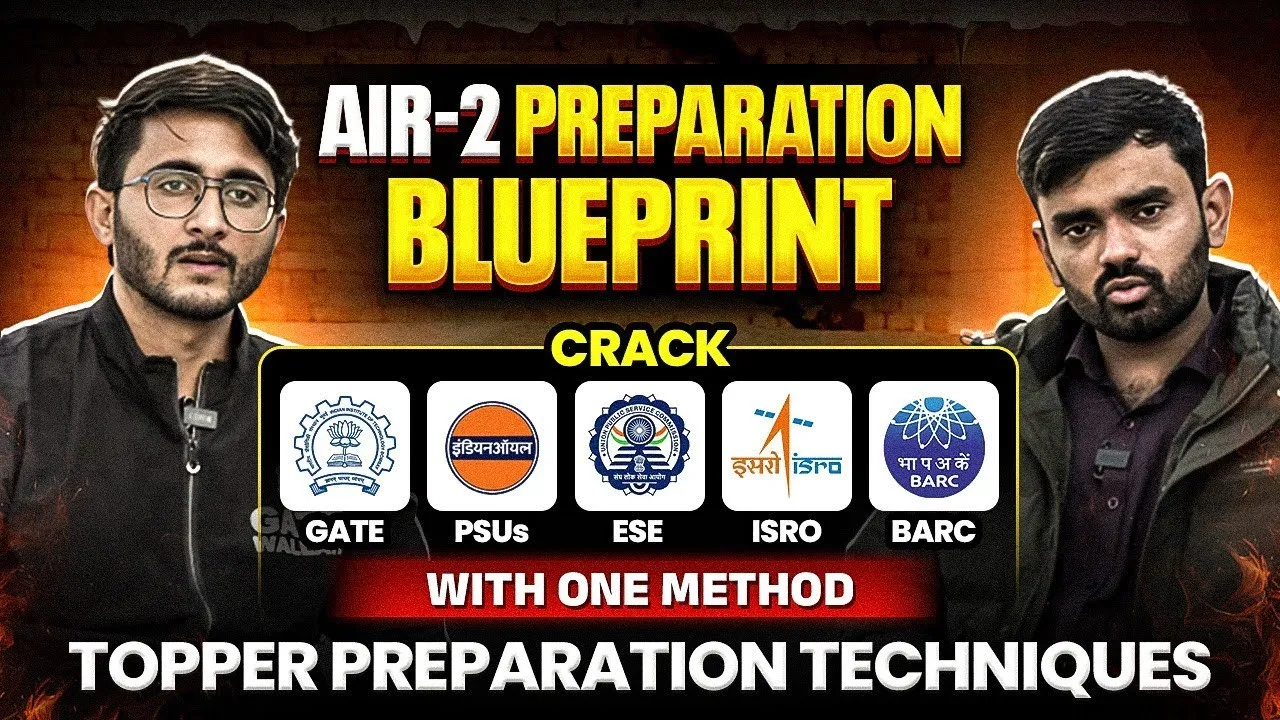
Topper's Blueprint to Crack GATE: Achieving top ranks in exams like UPSC, GATE, ESE, and PSUs requires not only hard work but also strong emotional support, discipline, and a clear goal. The journey of Ashok Kumar (UPSC Engineering Services AIR 2) shows how a student from a small village balanced a job, family duties, and exam pressure with a strict routine and a no-excuses mindset, even facing early failures.
His success highlights the power of consistent effort, smart time management, and support from a like-minded partner who also cleared competitive exams. Whether you are a working professional or a full-time aspirant, focused planning, resilience, and daily discipline can help you achieve top ranks and long-term career goals.
Role of a Support System in Competitive Exam Preparation
A robust support system is crucial for aspirants navigating the rigors of competitive examinations. This network can comprise family, friends, or a partner. For instance, a partner who also understands the pressures of competitive exams, perhaps having cleared significant tests like IIT JAM and pursuing higher education, can provide mutual understanding.
During phases of low performance, such as scoring poorly in test series, emotional support becomes vital.
Having someone to discuss these setbacks with, who offers encouragement, significantly aids in managing stress and maintaining motivation. It is essential to have at least one person—be it a friend, family member, or partner—who genuinely understands the demanding journey and can offer consistent support. A stable and understanding support system contributes significantly to an aspirant's growth and eventual success.
Overcoming Failure and Self-Doubt
Dealing with initial failures is often a defining phase in an aspirant's journey. Many candidates face initial setbacks, such as failing to clear the cutoff in multiple exams, including PSU exams, GATE, and ESE. This series of unsuccessful attempts can lead to intense self-doubt, causing individuals to question their capabilities.
However, the key to overcoming this phase is often a realization of having no other viable option. The powerful thought, "If not this, then what?" becomes a primary motivator. This mindset eliminates the possibility of giving up and compels continuous hard work. It underscores that even if one does not achieve entry into top-tier institutions after schooling, competitive exams like GATE and ESE offer significant second chances to attain high levels of career success and personal achievement.
Mindset of a Successful Aspirant: No Excuses
A successful aspirant maintains unwavering focus on their goal and actively avoids making excuses. It is common for individuals to attribute failures to external factors, such as perceived lack of resources or advantages of others.
However, a fundamental principle highlights that:
A person who does not want to work will find a thousand reasons not to. In contrast, a person determined to achieve a goal may face a thousand obstacles, but that one single reason to succeed is sufficient to drive them forward.
This emphasizes the importance of concentrating energy on the hard work required to reach the target, rather than dwelling on blame or external circumstances. A focus on action, not blame, defines the approach of a successful individual.
Time Management Strategies for Exam Preparation
The optimal study schedule varies significantly based on an aspirant's individual situation and commitments. Aspirants can generally be categorized into three main groups:
Classification of Aspirants
-
Working Professionals: Individuals balancing full-time employment with exam preparation.
-
Full-Time Aspirants: Those dedicating 100% of their time solely to preparation.
-
College-Going Students: Students preparing concurrently with their academic studies.
Detailed Study Schedule for Working Professionals
For individuals engaged in a standard 9-to-6 job, effective time management is paramount. A structured approach can facilitate significant progress:
-
Morning Study Session: Dedicate 4:00 AM to 8:00 AM (4 hours) for focused study before the workday begins. This period often offers minimal distractions.
-
Evening Study Session: Upon returning from the office, typically around 6:00 PM, resume studying around 7:00 PM. Aim for approximately 3 hours of dedicated study.
-
Sleep: Maintain a consistent sleep schedule with 6 hours of sleep, considered more than sufficient for effective functioning and retention.
-
Weekend Strategy: Utilize Saturdays and Sundays for intensive study sessions. Weekends can accommodate up to 16 to 17 hours of study, allowing for comprehensive syllabus coverage and compensation for weekday time constraints.
This structured approach demonstrates that success is attainable regardless of life's complexities, such as a job, family responsibilities, or other personal commitments. By eliminating excuses, maintaining clear goals, and managing time effectively, any aspirant can achieve their objectives.
Elevate your GATE readiness with Physics Wallah’s GATE Online Courses. PW GATE Online Coaching offers comprehensive live sessions tailored to the syllabus, invaluable study materials, practice tests, and much more.