How PW’s Recorded Classes Helped Himmat Lal Gayari Secure AIR 12 in IIT JAM 2026

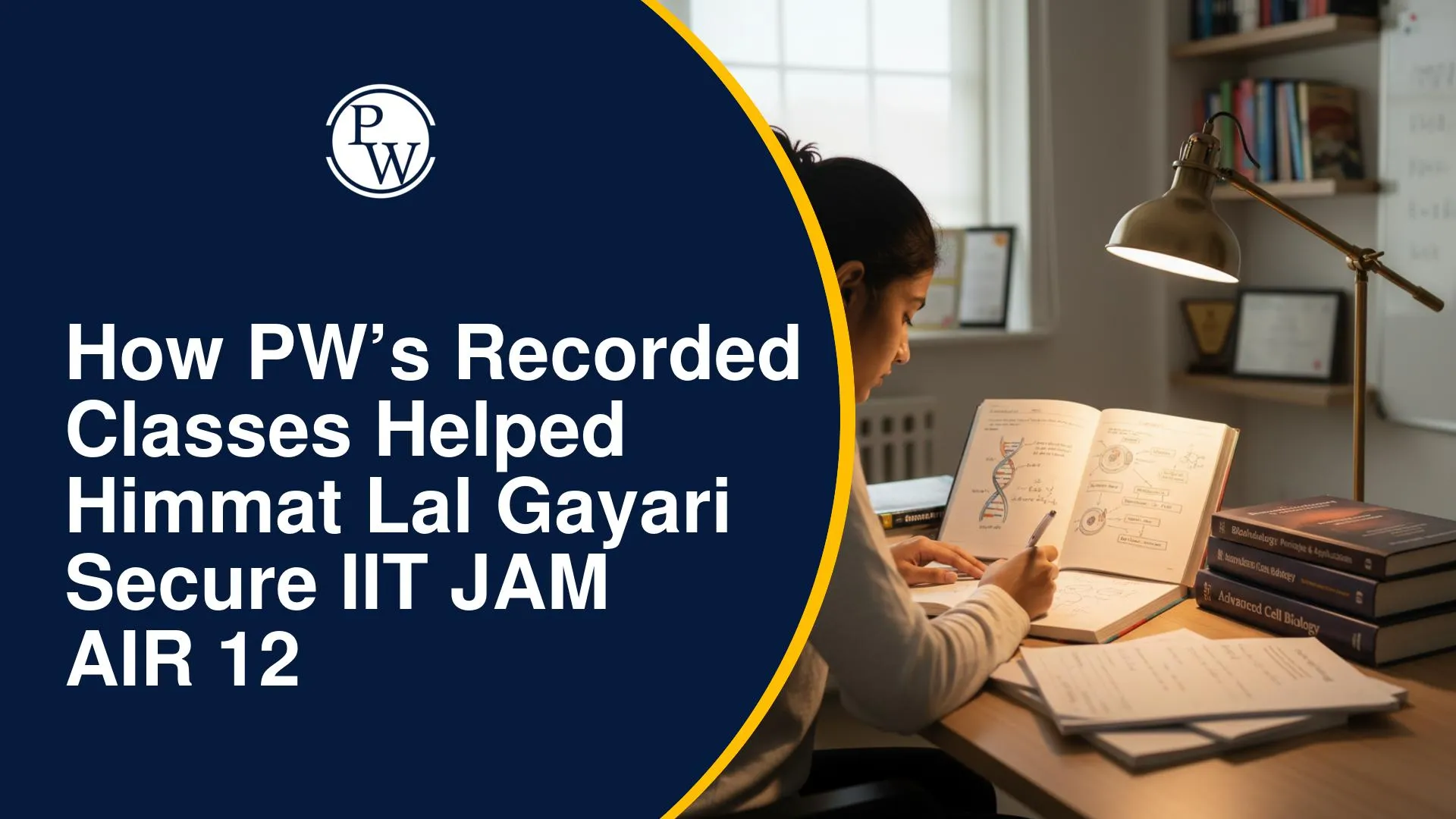
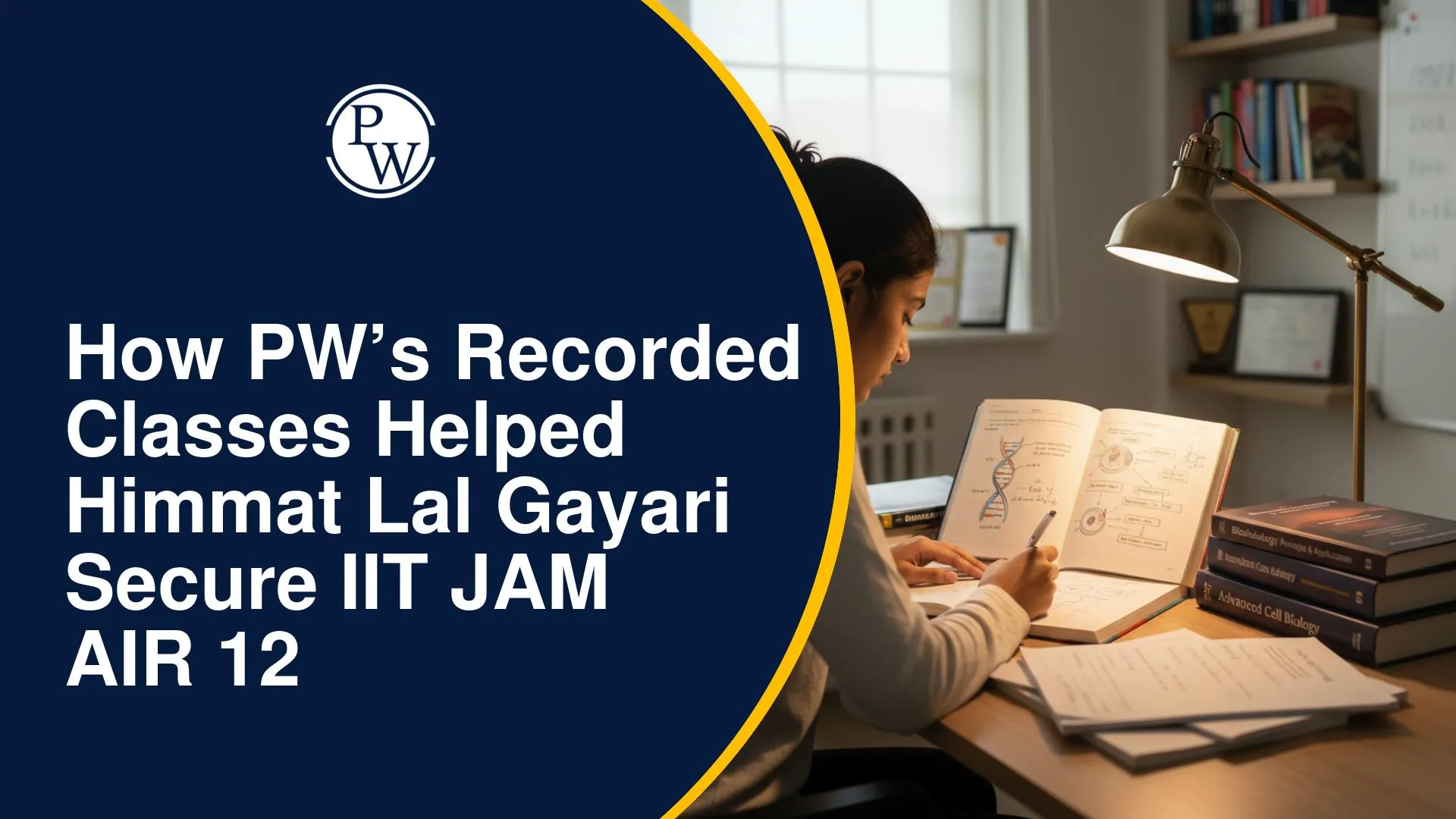
For a BSc Biology student without Mathematics in Class 12, preparing for IIT JAM Biotechnology meant taking on a paper that also included Physics, Chemistry, and Mathematics. Himmat Lal Gayari, who belongs to Rajsamand, Rajasthan, chose to work around this gap rather than let it limit his preparation. Alongside college, he built a routine around self-study and gradually strengthened the subjects he was less familiar with.
His preparation eventually resulted in AIR 12 in IIT JAM 2026, placing him among the top rankers in the exam.
How Himmat Lal Gayari Started His IIT JAM Preparation
Himmat’s preparation began with a clear academic goal. During his BSc in Biology, with Zoology, Botany, and Chemistry as his subjects, he wanted to pursue his MSc from a good college or IIT. This became the internal motivation behind his entrance preparation.
“Merko starting se hi BSc ke baad kisi achhe IIT ya achhe college se karna tha, toh wahi ek main motivation, target tha. Internal motivation tha pehle se”
Because his college schedule also had to be managed, Himmat understood that preparation would require a planned routine rather than waiting for large blocks of free time. He divided his study around college hours and kept track of what needed to be completed each day.
“Aur har din ka jo plan hai, woh ek din pehle se hi bana ke rakhta tha, taaki time manage kar paun agle din.”
This approach allowed him to continue his college studies while steadily working towards IIT JAM.
How Himmat Lal Gayari Managed the Maths Challenge
One of the biggest challenges in Himmat’s preparation was Mathematics. His Class 12 background did not include Maths, while IIT JAM Biotechnology required preparation across Physics, Chemistry, Mathematics, and Biology. Instead of leaving Mathematics completely, he used previous-year questions to become familiar with the type of questions asked.
“Nahi sir, aisa toh nahi, par main Biology mein thoda strong tha. Aur achhi rank ke liye phir PCM ko bhi saath mein leke chalna tha. Toh ismein do subjects thode strong kiye the, Physics aur Chemistry. Aur phir Maths ka thoda yeh raha ki maine previous year ke questions solve kiye, toh usse thoda benefit ho gaya.”
His PYQ-based approach also helped him encounter concepts that appeared directly in previous papers. One such example was a question related to limits, which he had already seen while practising PYQs.
“Jaise ki limiting, limit wala jo question tha, toh woh PYQ mein exact de rakha tha 2024 mein, toh usse thoda benefit mila tha.”
Rather than treating the absence of a Maths background as a reason to skip the subject, Himmat focused on attempting manageable questions and using PYQs to improve his familiarity with the section.
How PW’s Recorded Classes Helped Himmat Lal Gayari Prepare for IIT JAM
Himmat prepared alongside college and largely relied on self-study. He joined PW’s Saakaar Pro batch and used recorded classes instead of depending heavily on live sessions. This gave him flexibility to fit lectures into his college schedule.
“Nahi sir, live toh bahut hi kam attend kar paya, lekin recorded classes liya toh usmein 1.5 ya 2x mein leta tha class.”
The recorded format also helped him save time, which he could then use for other parts of his preparation. His study routine was built around daily targets, with adjustments whenever he could not complete the planned work on a particular day.
“Mera 4 se 5 ghante ka, matlab kabhi paanch, kabhi ek-do ghante ho jaate hain, toh usko agle din phir manage karna hota hai. Aur mera jo main focus tha, woh topic par tha ki topic karna hai, cover karna hai. Toh uska main poora ek din pehle hi plan bana ke rakhta tha ki ye-ye topics karne hain.”
This combination of recorded learning, self-study, and topic-based planning helped Himmat balance entrance preparation with his BSc.
Himmat Lal Gayari’s Strategy for Revision and IIT JAM 2027 Aspirants
As the exam approached, Himmat relied on self-made notes for revision. He prepared notes for each unit and kept space for PYQs and areas where he needed improvement. This gave him a concise revision source for the final stage of preparation.
“Bilkul sir. Self notes mere har ek unit ke bana rakhe hain maine, aur last time pe woh kaafi faydemand aur helpful hue.”
His advice for future aspirants was to begin early, stay in touch with every subject, and focus on the quality of study rather than simply counting hours. For IIT JAM Biotechnology, he particularly highlighted the importance of keeping Biology strong while also preparing Physics, Chemistry, and Mathematics.
“Sir, agar starting se hi kar rahe ho, toh thoda time jitna jaldi start kar paaye, utna achha hai. Phir apne ko har ek subject karna hai, jaise PCM ka bhi bada role hota hai. Aur Biology pe toh pakad rakhni hai.”
Himmat’s AIR 12 result reflects how a student without a Class 12 Maths background can still prepare for a multidisciplinary entrance exam by identifying the challenge early, using PYQs, maintaining a structured routine, and staying consistent alongside college.
For aspirants preparing for IIT JAM Biotechnology, his journey offers a practical lesson: a weaker starting point in one subject does not necessarily have to define the outcome. What matters is recognising the gap, working on it steadily, and making the available study time count.