IIT JAM 2026 AIR 15 Mathematics Topper Dhruv Verma’s Strategy and Success Story with PW
For many students preparing for IIT JAM, the path to a top rank requires more than completing the syllabus. Consistent question practice, solving PYQs, analysing tests, and working on weaker areas can make preparation more focused.
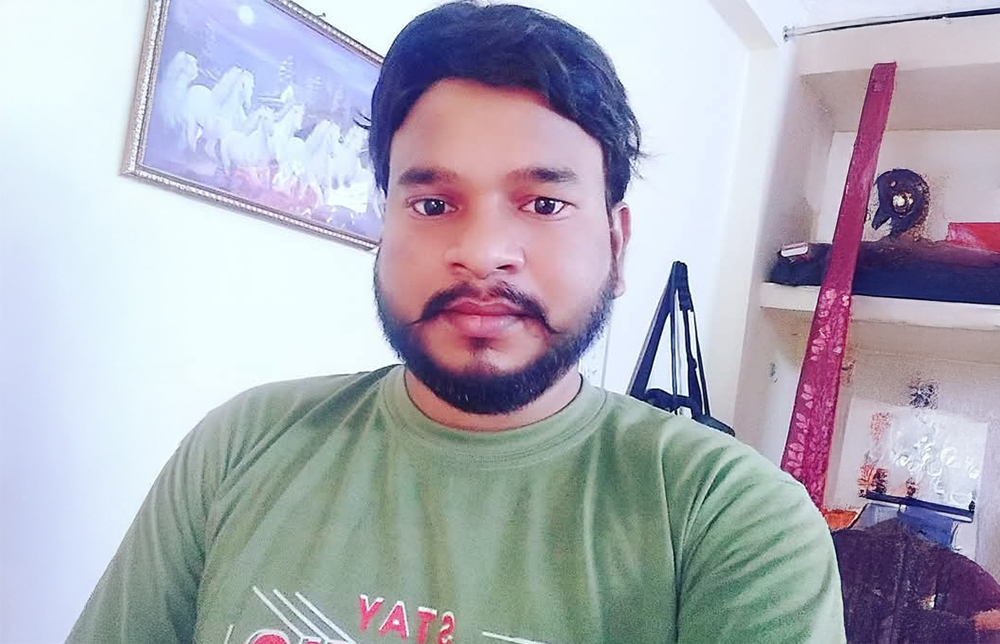
Dhruv Verma’s journey reflects this approach. As a final-semester CMI student, he secured AIR 15 in IIT JAM 2026 with 57.33 marks. His preparation involved focused practice, strengthening key topics, and carefully analysing his performance.
How Dhruv Verma Started His IIT JAM Preparation
Dhruv had purchased the PW batch around July but said that he started preparing seriously in December. His major focus areas were Differential Equations and Group Theory, while he continued practising other topics as well.
He also identified a difference between his existing mathematical understanding and the computational approach required in IIT JAM. While he was comfortable with proofs and the abstract side of mathematics, the PYQs showed him the importance of computational practice.
“Maine PW ki saari sheets and jitne bhi question the vo saari solve kiye.”
This approach helped him focus more on solving questions rather than relying only on conceptual familiarity.
Dhruv Verma Focused on Questions, PYQs and Practice
As his preparation progressed, question solving became an important part of Dhruv’s strategy. He said he learnt a lot through solving questions and practised the previous-year questions almost twice. He also completed the DPPs and the questions available through his preparation.
“So sir main main bahut saara question solving se seekhne ki koshish karta hoon.”
For Differential Equations, Dhruv relied on the notes rather than using another book, describing the notes as self-sufficient. For other areas such as Linear Algebra and Calculus, he focused on question practice through lectures.
His approach also meant that he did not wait until the entire syllabus was completed before practising questions. Question solving remained connected with his learning process.
Dhruv Verma Used Test Analysis to Improve His Preparation
Dhruv attempted around six to seven tests during his preparation. However, the number of tests was not his only focus. He maintained a record of mistakes from every test and reviewed them before attempting the next one.
“Maine around six to seven test diye the. ... But haan maine har ek test ko achchhe se analyse kar like har ek test ka mere paas ek paper hai jisme maine apni cheez note kar rakhi hai ki isme ye galti hui ye cheez hui.”
He also attempted the tests within the same time frame in which IIT JAM would be conducted and analysed them immediately afterwards. This allowed him to identify mistakes and work on avoiding their repetition.
How PW Supported Dhruv Verma’s IIT JAM Preparation
Dhruv’s preparation included the PW Saakaar 2.0 batch with its lectures, sheets, DPPs, notes, and question practice. He specifically mentioned solving the available PW sheets and questions.
When discussing how students beginning their preparation could approach a PW batch, Dhruv highlighted the importance of making notes and starting with sheets for basic understanding.
“So first of all recommend ki har ek ke notes banane chahiye. Like notes are very much needed. And uske baad question practice mein main first of all kahunga sheets for basic understanding bahut achchi hai.”
He also used the Dhurandhar YouTube test series for additional question practice during the final week of his preparation.
Dhruv Verma’s IIT JAM Strategy: Notes, PYQs and Repeated Patterns
Dhruv recommended maintaining proper notes, particularly for important concepts and useful tricks encountered while solving questions. He did not note every question but recorded concepts or approaches that he found useful.
He also observed recurring patterns while solving PYQs and said that several questions were based on concepts that appeared repeatedly. His strategy was therefore to identify such patterns and practise those concepts multiple times.
Another important change he identified in his preparation was giving greater attention to post-test analysis. According to Dhruv, analysing a test after attempting it was more important than simply increasing the number of tests.
Dhruv Verma’s Result and What He Plans Next
Dhruv secured 57.33 marks and AIR 15 in IIT JAM 2026 Mathematics. At the time of the interview, he was in the final semester at CMI. He said that he was targeting IIT Bombay and was also considering the Integrated PhD option in Operations Research.
When asked about his preference between research and placements, Dhruv said that he was more interested in placements.
For students preparing for IIT JAM, Dhruv’s journey highlights a focused approach built around question solving, PYQs, notes, tests, and detailed test analysis. His experience also shows the importance of working on specific areas that need improvement instead of measuring preparation only by how early the syllabus is completed.