PW Student Diya’s Success Story: How She Got AIR 6 in IIT JAM
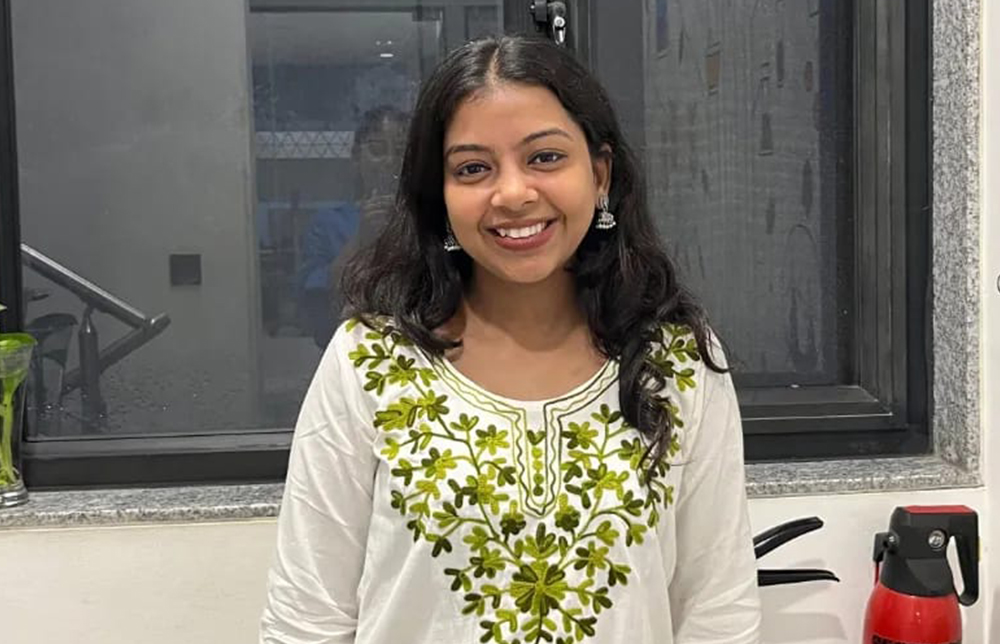


Securing AIR 6 in IIT JAM 2026 can be a major milestone, especially when the preparation journey does not begin with years of focused exam preparation. For Diya, who is currently pursuing her BSc with Zoology, Botany, and Chemistry, the journey began with uncertainty about her academic direction and limited preparation during college.
Diya joined the PW Saakaar 2.0 batch around February or March and followed it consistently, apart from a short break during her second-year exams. With lectures, PYQs, repeated revision, and guidance from her teachers, she not only secured AIR 6 in IIT JAM 2026 with 83.33 marks, but also achieved AIR 22 in GATE XL.
How Diya Started Preparing for IIT JAM
Diya's preparation did not begin with a fixed goal of securing a particular rank. After exploring different options during her BSc journey, she learned about IIT JAM through her aunt and decided to give the exam a try.
She was also preparing from a relatively different academic background. According to Diya, she had not studied her bachelor's subjects extensively in college, which made structured preparation particularly important. She decided to use the IIT JAM preparation as an opportunity to build her fundamentals while preparing for the entrance exam.
Diya Followed a Consistent Strategy Instead of Changing Plans
Once she joined the PW Saakaar 2.0 batch, Diya focused on following the classes instead of repeatedly changing her preparation strategy. She also emphasised paying close attention to what teachers explained during class, including points that were discussed verbally.
"Starting mein ek strategy bana lo, hai na, pehle baar-baar mein aisa mat karo ki ek mahina kar liya phir wapas kuch nayi strategy bana rahe ho, aisa nahi — continuously padhte jaana hai."
Her approach was straightforward: attend the lectures attentively, follow the guidance given by teachers, make proper notes, and revise them repeatedly. She also highlighted the importance of PYQs as a part of her preparation.
This consistency helped her build preparation over several months rather than relying on last-minute study. She also studied for around 7–8 hours a day, depending on her needs.
How PW Helped Diya Build Her Preparation From the Basics
For Diya, the PW batch played an important role because she had not developed strong academic preparation during her BSc. She says that most of what she studied for her bachelor's subjects came through the Saakaar 2.0 batch itself.
"Maine jo bhi padha hai pura bachelor's ka wo isi batch se padha tha. To maine jo bhi kara tha wo ye batch se hi kara tha, aur isi ke basis pe matlab mujhe GATE mein bhi — abhi GATE XL mein bhi 22 rank aayi hai."
Her preparation primarily involved lectures and PYQs, without relying heavily on additional resources. She also received doubt support during her preparation and specifically acknowledged the help of Deepesh Joshi Sir in resolving her questions.
The combination of structured lectures, notes, doubt support, and PYQ practice gave her a clear preparation path instead of requiring her to search for multiple sources.
Diya Turned Repeated Revision Into Her Biggest Strategy
As her preparation progressed, Diya focused on revising the same material multiple times. She did not treat the different exams she appeared for as unrelated attempts. Instead, she prepared seriously for each one, which allowed her to revise the syllabus repeatedly.
"To aise karke phir jaise ki pehle TIFR ke time pe ek baar puri preparation ke saath diya, phir GATE XL aaya to puri preparation ke saath diya — ek bhi exam ko aise nahi socha ki ye to matlab aise for granted le liya."
By the time she appeared for IIT JAM, she had already gone through the syllabus several times while preparing for other examinations. She believes this repeated preparation helped her retain concepts and approach the final exam with greater familiarity.
She also followed a similar approach for GATE XL by solving 15 years of PYQs for Biochemistry and Zoology and adding new concepts or terms to her existing notes wherever required.
Diya's IIT JAM 2026 Result and the Road Ahead
Diya secured AIR 6 in IIT JAM 2026 with 83.33 marks. Her preparation also resulted in AIR 22 in GATE XL, showing how a well-planned preparation strategy can support multiple examinations with overlapping requirements.
Her next goal is to pursue a master's degree. She is considering institutes such as IIT Bombay and IISc Bengaluru, while keeping her future research plans open until she gains more exposure during her master's.
Diya's journey shows that a strong academic starting point is not the only factor that determines performance in a competitive examination.
Her experience highlights the value of consistent preparation, attentive learning, repeated revision, proper notes, and PYQ practice. For IIT JAM aspirants, her story is a reminder that following a structured approach over time can make preparation more manageable and open opportunities beyond a single examination.