JEE Advanced 2026 Exam Day Instructions: Dress Code, Reporting Time & Checklist
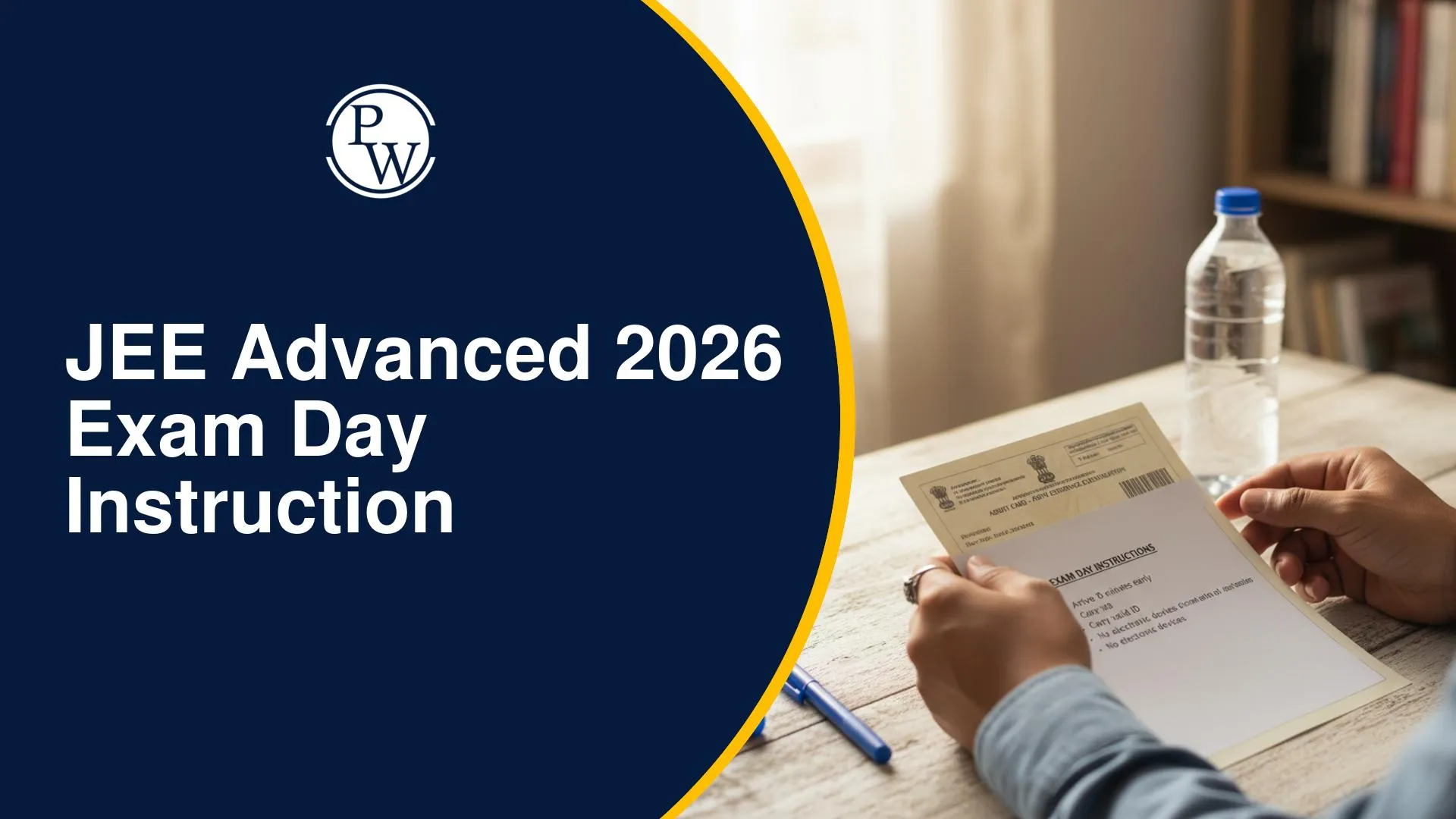
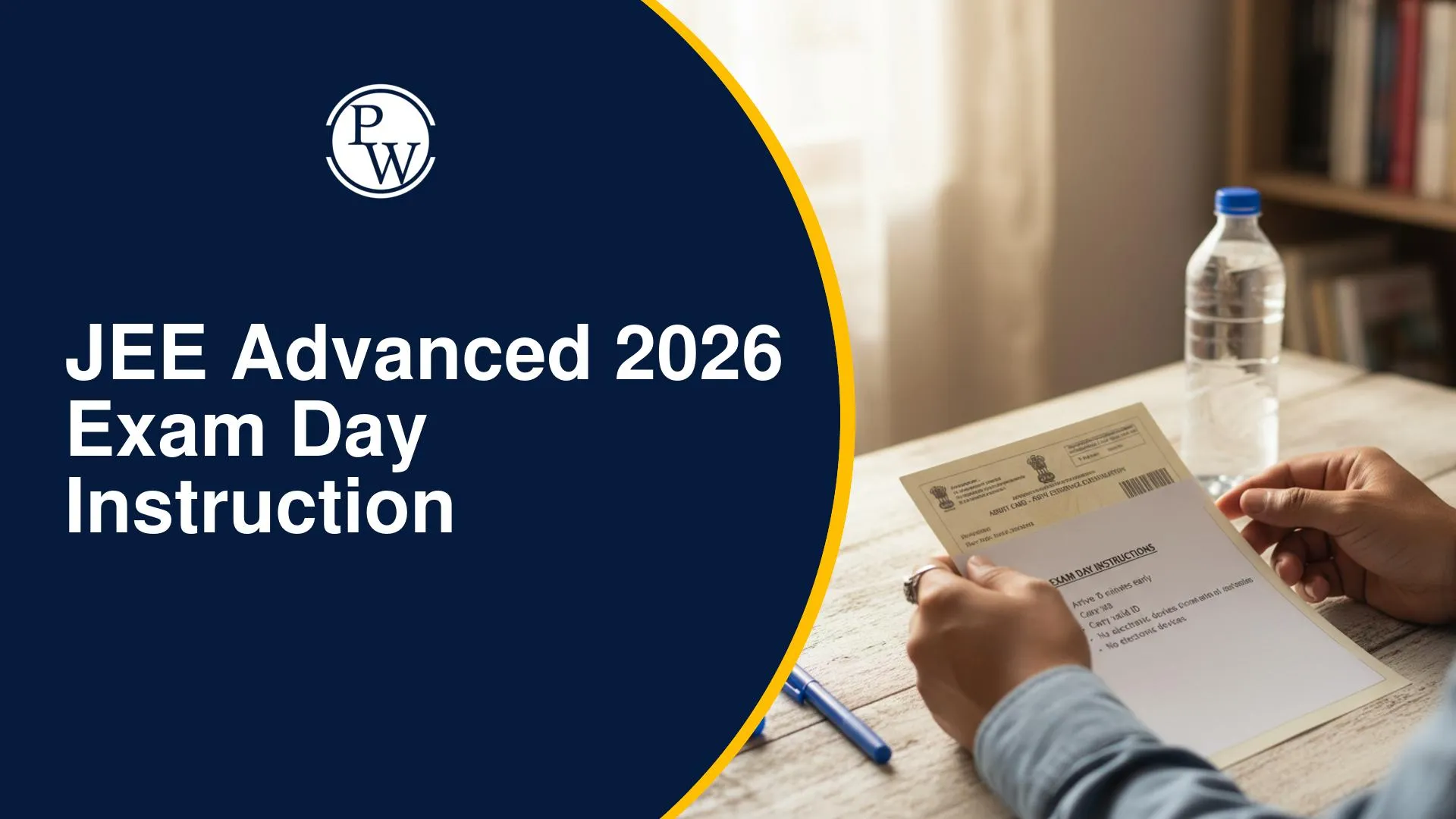
With the JEE Advanced 2026 exam scheduled for 17 May 2026, aspirants must now shift their focus from preparation to exam-day readiness and execution strategy.
Comprehensive knowledge of all exam day instructions is essential for a smooth experience, as these guidelines help avoid disqualification and reduce last-minute stress at the examination centre. With the exam now almost here, following the official rules carefully becomes even more important.
By internalising these instructions, candidates can enter the testing centre with confidence, manage pressure effectively during the 6-hour assessment, and ensure their performance reflects their true preparation rather than avoidable errors or panic.
JEE Advanced Exam Overview
The Joint Entrance Examination (Advanced) is a competitive exam for admission to undergraduate engineering programs. It leads to the prestigious Indian Institutes of Technology (IITs).
|
JEE Advanced 2026 Exam Overview |
|
|
Category |
Details |
|
Conducting Body |
IIT Roorkee (Organizing Institute for 2026) |
|
Official Exam Date |
May 17, 2026 (Sunday) |
|
Registration Period |
April 23, 2026, to May 02, 2026 |
|
Admit Card Release |
May 11, 2026 (Available until exam day) |
|
Exam Level |
National Level |
|
Purpose |
Admission to 23 IITs, IISc Bengaluru, and other premier institutes |
|
Eligibility |
Top 2,50,000 qualifiers of JEE Main 2026 |
|
Mode of Exam |
Computer-Based Test (CBT) |
|
Exam Stages |
Two compulsory papers: Paper 1 (9:00 AM) & Paper 2 (2:30 PM) |
|
Major Subjects |
Physics, Chemistry, Mathematics |
|
Result Date |
June 01, 2026 (Expected) |
|
Official Website |
@jeeadv.ac.in |
Key JEE Advanced 2026 Exam Day Instructions
Following precise instructions on exam day is essential for a fair testing environment. These JEE Advanced exam guidelines 2026 cover important aspects.
-
Schedule Adherence: Paper 1 runs from 9:00 AM to 12:00 PM. Paper 2 is from 2:30 PM to 5:30 PM. Both papers are mandatory. Arrive at the exam centre well before the time.
-
Documents to Carry: Bring your printed JEE Advanced 2026 admit card. Also, carry an original, valid photo ID. Acceptable IDs include Aadhaar, Passport, Voter ID, PAN card, or School/College ID.
-
Reporting Time: Reach the exam centre 30-60 minutes before the scheduled entry time. This allows for security checks without rush.
-
Allowed Items: You can carry a simple analogue watch and a transparent water bottle. Pens and pencils are also permitted.
-
Prohibited Items: Electronic gadgets are not allowed. This includes phones, smartwatches, and Bluetooth devices. Bags and metallic items are also prohibited.
-
Dress Code: Wear simple, light-colored clothes. Avoid large buttons or heavy embroidery. Open footwear, like slippers or sandals, is preferred. Shoes are generally not permitted.
Managing the JEE Advanced 6-Hour Marathon
JEE Advanced requires not just knowledge but sustained concentration. This 6-hour marathon demands a strategic approach to maintain focus.
Managing Paper 1 to Paper 2 Break
Many candidates review Paper 1 during the break. This can increase stress. Instead, apply the "Forget and Forgive" rule. Paper 1 is over; focus shifts to Paper 2. Do not discuss questions or compare answers. This keeps your mind fresh for the next paper.
Strategic Refuelling
Physical exhaustion impacts mental clarity. Maintain stable glucose levels. Sip water frequently to prevent dehydration. Dehydration can reduce attention span. Consume light nutrition. A piece of fruit or curd can stabilize blood sugar effectively.
Mental Decompression
Your brain works hard for three hours. Give it proper rest, not distractions. Find a quiet, stress-free spot. Close your eyes and regulate your breathing. Visualize Paper 2 as a fresh start. Avoid looking at screens; this can hinder refocusing.
New Day Mentality
Paper 2 can often be more challenging. Enter the exam hall for Paper 2 with a "new day" mindset. Leave behind any thoughts or feelings from Paper 1. Approach Paper 2 as if it were a brand new examination. Focus on earning points in the next three hours.
JEE Advanced 2026 Exam Day Schedule
A clear understanding of the exam day schedule helps candidates manage their time. Being punctual is a key JEE Advanced exam day rule.
|
JEE Advanced 2026 Exam Day Schedule |
||
|---|---|---|
|
Event |
Morning Session (Paper 1) |
Afternoon Session (Paper 2)
|
|
JEE Advanced Timings |
9:00 AM - 12:00 PM |
2:30 PM - 5:30 PM |
|
Exam Duration |
3 Hours |
3 Hours |
|
Entry Time |
7:30 AM - 8:30 AM |
1:00 PM - 2:00 PM |
|
Invigilator's Instruction |
8:30 AM - 8:50 AM |
2:00 PM - 2:20 PM |
|
Exam Start Time |
9:00 AM |
2:30 PM |
|
Exam End Time |
12:00 PM |
5:30 PM |
Common Mistakes to Avoid on Exam Day
Avoiding common pitfalls can greatly improve your performance. Awareness of these mistakes helps candidates focus better.
-
Forgetting Documents: Not carrying the JEE Advanced admit card or valid photo ID can lead to denial of entry. Always make a JEE Advanced exam day checklist.
-
Ignoring Dress Code: Wearing prohibited clothing, like full sleeves or elaborate attire, may cause delays during frisking. Adhere to the JEE Advanced dress code 2026.
-
Carrying Prohibited Items: Bringing electronic gadgets, bags, or any unauthorized items is a serious violation. This can lead to disqualification.
-
Late Reporting: Arriving late means less time for formalities and can cause unnecessary anxiety. Follow the JEE Advanced reporting time rules.
-
Mid-Break Stress: Re-evaluating Paper 1 during the break is counterproductive. This drains mental energy needed for Paper 2.
-
Lack of Hydration/Nutrition: Neglecting proper intake of water and light food can affect concentration during the long exam.
Additional JEE Advanced 2026 Guidelines
To ensure you are fully prepared, here is a detailed breakdown of the logistical requirements and conduct expected at the test centre.
Essential JEE Advanced Admit Card Instructions
Your admit card is the most important document for entry. Carefully read the JEE Advanced admit card instructions printed on the back of the ticket. Ensure that your photograph and signature are clearly visible. If there is any discrepancy in your personal details, contact the organizing IIT Roorkee immediately. It is advisable to print at least two copies—one to use on the day and one as a backup.
JEE Advanced Exam Centre Instructions
Upon arriving at the venue, you must adhere to all JEE Advanced exam centre instructions provided by the security staff and invigilators.
-
Biometric Verification: Candidates will undergo mandatory biometric data collection (fingerprints and iris scans) before entering the lab.
-
Seating Arrangement: Check the notice board for your roll number and assigned lab. Do not change your seat without permission, as this can lead to disqualification under JEE Advanced exam day rules.
-
Lab Conduct: Once inside, you are not permitted to leave the hall until the full three hours of the paper are complete, even if you finish early.
What to Carry in JEE Advanced Exam Essentials
Knowing exactly what to carry for the JEE Advanced exam will save you from last-minute panic at the gate. Here is the list of items allowed in JEE Advanced exam. You should strictly limit your belongings to:
-
The physical printout of your admit card.
-
An original government-issued photo ID.
-
A simple transparent ballpoint pen.
-
A transparent water bottle (no labels).
Verification of Items Allowed in JEE Advanced Exam
The list of items allowed in the JEE Advanced exam is very restrictive to maintain the integrity of the test. Apart from your ID and admit card, you may only have a simple, non-programmable analog watch. If you have a specific medical condition (like diabetes), you may be allowed to carry necessary medicines or snacks, but only with prior medical certification and approval from the center head.
Prohibited Items: JEE Advanced Exam Safety
To avoid any "Unfair Means" (UFM) charges, stay clear of all prohibited items in the JEE Advanced exam.
-
Electronics: No calculators, log tables, health bands, or digital watches.
-
Stationery: No geometry boxes, pouches, or pieces of paper.
-
Personal Gear: Large wallets, belts with massive buckles, and goggles are generally not allowed inside the testing room.