JEE Main 2026 Session 2: How Negative Marking Affects Your Score
 Avisha Das26 Mar, 2026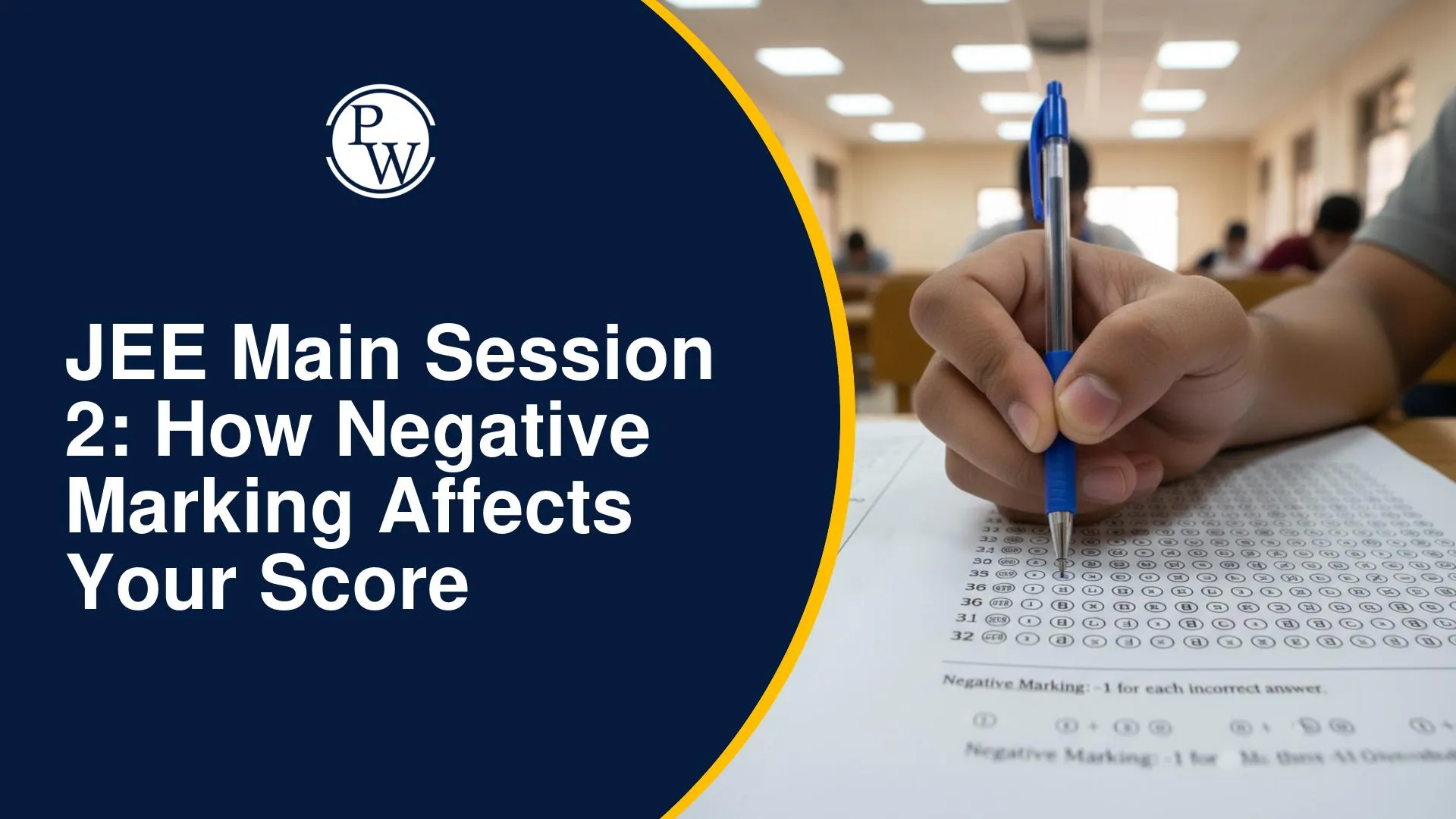
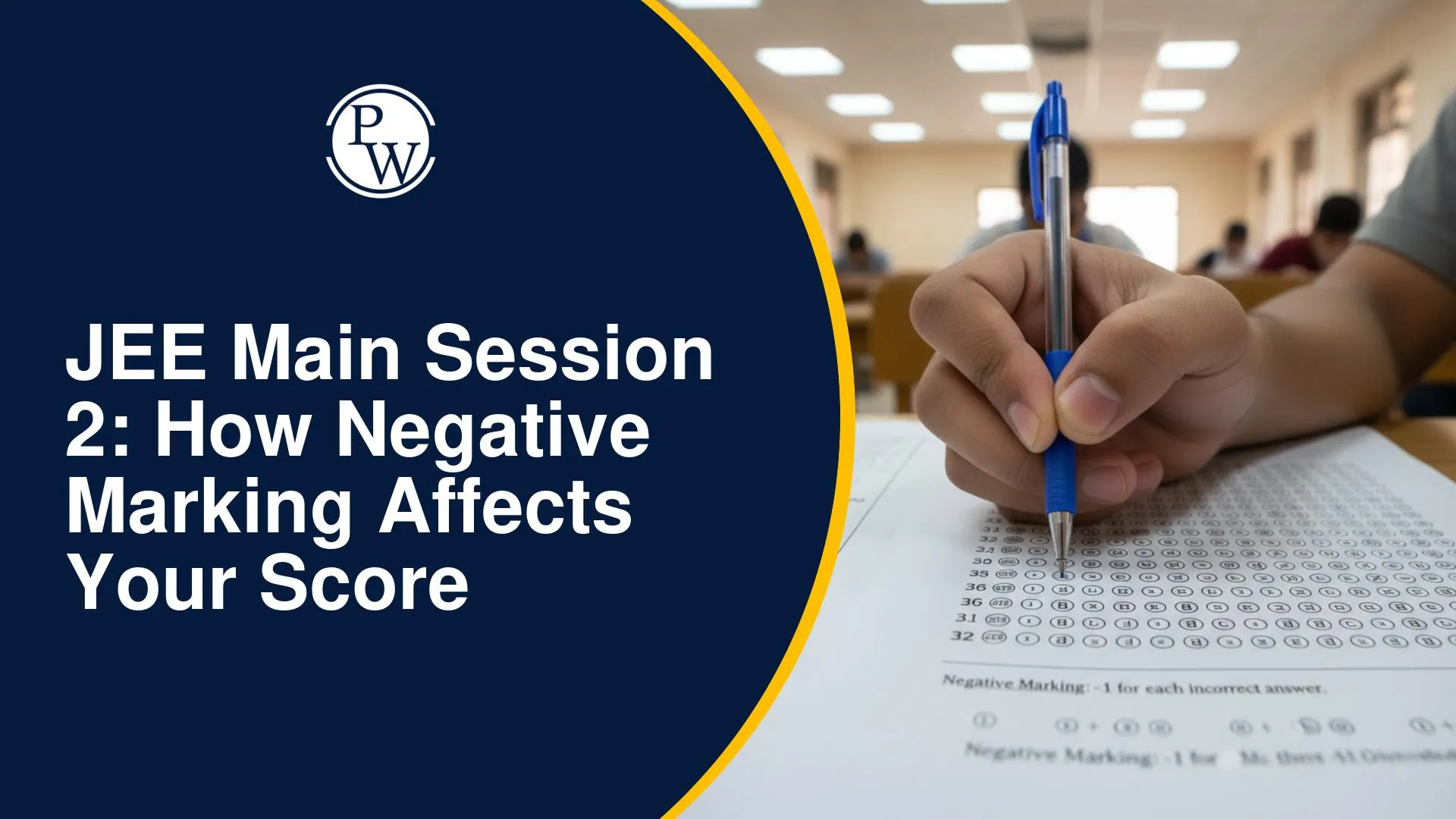
JEE Main Session 2 2026 is scheduled from April 2 to April 8, 2026, making it a crucial opportunity for candidates to improve their scores. One key factor that can significantly impact your performance is negative marking, where incorrect answers lead to mark deductions. Understanding how negative marking works and adopting a smart attempt strategy can help you avoid unnecessary losses, improve accuracy, and maximise your final score in the exam.
JEE Main Session 2 Negative Marking Scheme Explained
Understanding the marking pattern is the first step to avoiding unnecessary deductions. JEE Main follows a fixed scoring system for both correct and incorrect responses.
-
Correct Answer – +4 marks are awarded for each correct response.
-
Incorrect Answer (MCQ) – 1 mark is deducted for every wrong answer.
-
Unattempted Questions – No marks are awarded or deducted.
-
Numerical Questions – Negative marking applies if answered incorrectly.
This means accuracy matters more than the number of attempts. Even a few incorrect guesses can reduce your total score significantly.

How Negative Marking Impacts Your Final Score
Negative marking can lower your percentile even if you attempt many questions. Candidates often overlook how small deductions accumulate.
-
Attempting 10 wrong questions leads to a deduction of 10 marks.
-
If you answer 15 correctly and 10 incorrectly, your score becomes 60 − 10 = 50.
-
Over-attempting reduces accuracy and increases risk.
-
High accuracy with fewer attempts often gives a better rank.
This shows that controlled attempts are more beneficial than attempting every question.
When Should You Attempt or Skip a Question in JEE Main Session 2
A careful approach during the exam helps minimise negative marking. Instead of attempting every question, candidates should focus on accuracy and smart decision-making. Knowing when to attempt and when to skip plays a major role in protecting your score.
-
Attempt easy questions first to secure marks quickly.
-
Attempt when you are 70–80% confident about the answer.
-
Use logical elimination if you can remove at least two options.
-
Skip questions that are lengthy or time-consuming.
-
Mark doubtful questions for review instead of rushing.
-
Avoid blind guessing, especially in numerical questions.
-
Do not change answers unless you are completely sure.
Final Tips to Manage Negative Marking in JEE Main Session 2
A calm and strategic mindset helps candidates control mistakes during the exam.
-
Focus on accuracy over attempts.
-
Keep track of attempted questions.
-
Review marked questions in the final minutes.
-
Do not panic if you skip difficult questions.
-
Maintain a steady speed and avoid random guessing.
Managing negative marking effectively can significantly improve your JEE Main Session 2 score. By prioritising accuracy, selecting questions carefully, and avoiding blind guesses, candidates can protect their marks and perform more confidently in the exam.