








Physics Rotational Motion JEE Mind Maps by Physics Wallah
 Avisha Das19 Jun, 2026
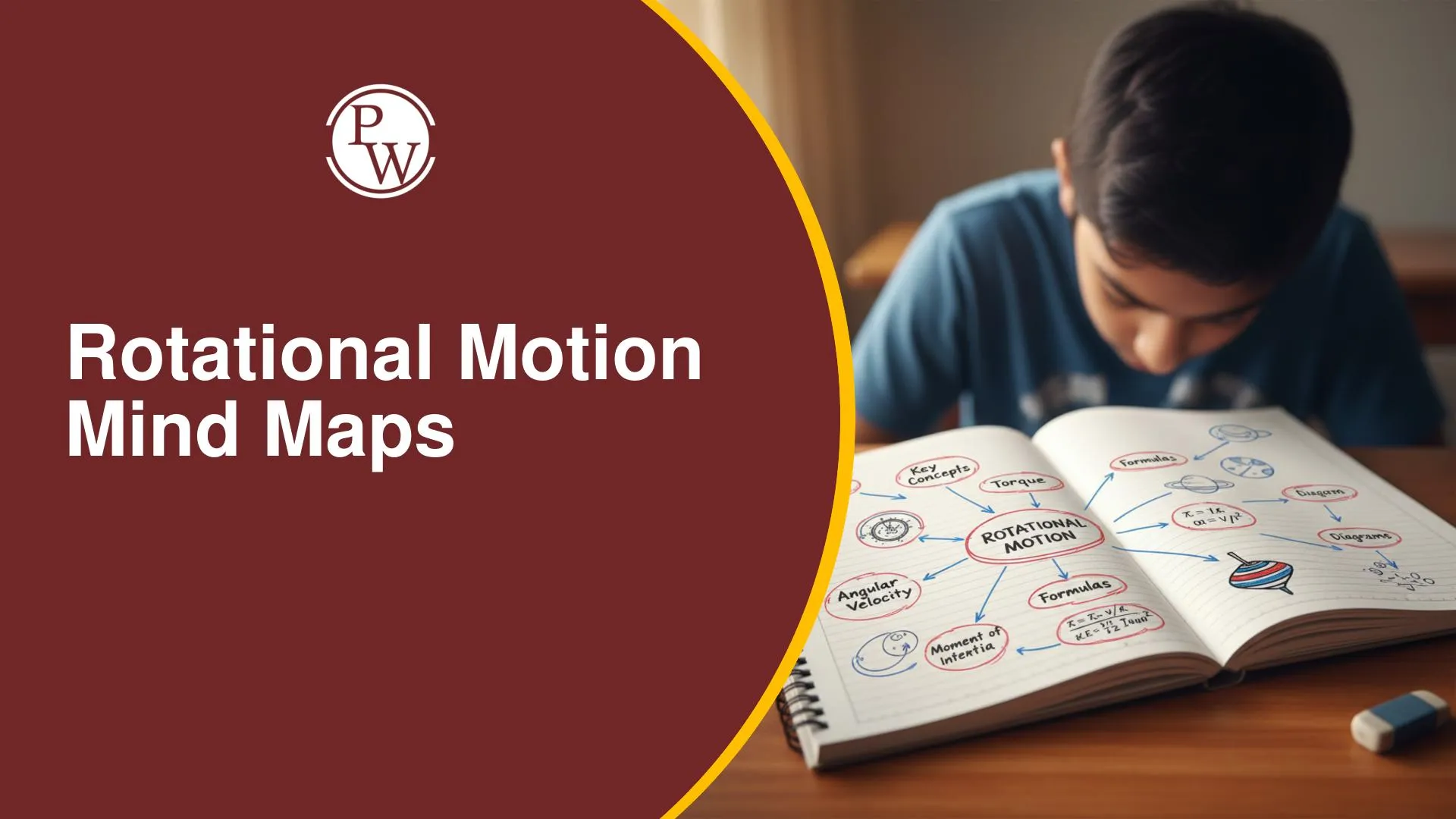
A spinning wheel, a rotating fan, and a gymnast performing a flip may appear very different, yet all of them follow the same fundamental laws of rotational dynamics. Rotational Motion explores how objects behave when they turn about an axis and explains why mass distribution can be just as important as mass itself.
For many JEE aspirants, this is one of the most challenging topics in mechanics because it combines geometry, dynamics, and energy concepts into a single framework. The good news is that most questions are built around a limited set of core ideas that become much easier to apply once their relationships are understood. Physics Wallah provides Rotational Motion JEE mind maps that help you connect these ideas visually and approach revision with greater confidence.
Rotational Motion JEE Mind Maps PDF
Rotational Motion contains numerous concepts that are linked together, from torque and angular acceleration to conservation laws and rolling motion. Revising them through a visual resource helps you recognise these connections and solve problems more systematically.
Download the Rotational Motion JEE mind maps PDF below and use it to strengthen your understanding before practice sessions, mock tests, and examinations
Rotational Motion JEE Mind Maps PDF
Why Use PW Rotational Motion JEE Mind Maps?
Rotational Motion often appears difficult because students try to memorise formulas without understanding how the concepts fit together. Mind maps help create those connections and make revision more meaningful.
1. Helps You Tackle High-Weightage JEE Questions
Rotational Motion regularly contributes to challenging mechanics questions in JEE. A focused revision resource helps you revisit the most frequently tested concepts efficiently.
2. Encourages Faster Concept Linking
Many mechanics questions require you to connect multiple ideas before arriving at a solution. Mind maps help you see these relationships at a glance, making revision more efficient and improving conceptual recall during examinations.
3. Improves Application of Rotational Dynamics
Many students know the formulas but struggle to identify when to use them. Visual revision helps you connect physical situations with the correct concepts.
4. Supports Better Multi-Concept Problem Solving
JEE questions frequently combine torque, energy, angular momentum, and rolling motion in a single problem. Mind maps help you learn these connections more effectively.
5. Helps During Last-Minute Mechanics Revision
Instead of revisiting lengthy notes, you can quickly refresh important rotational concepts and relationships before a test or examination.
Rotational Motion JEE Mind Maps FAQS
Why is the moment of inertia often called rotational inertia?
Why is angular momentum important in Rotational Motion?
What is rolling motion, and why is it important?
Does Physics Wallah provide other resources for this topic?





Have questions about your prep?
Our experts can answer all your questions
 Live & recorded classes available at easeDashboard for progress trackingLakhs of practice questions

