








Purification and Characterisation of Organic Compounds Mind Map
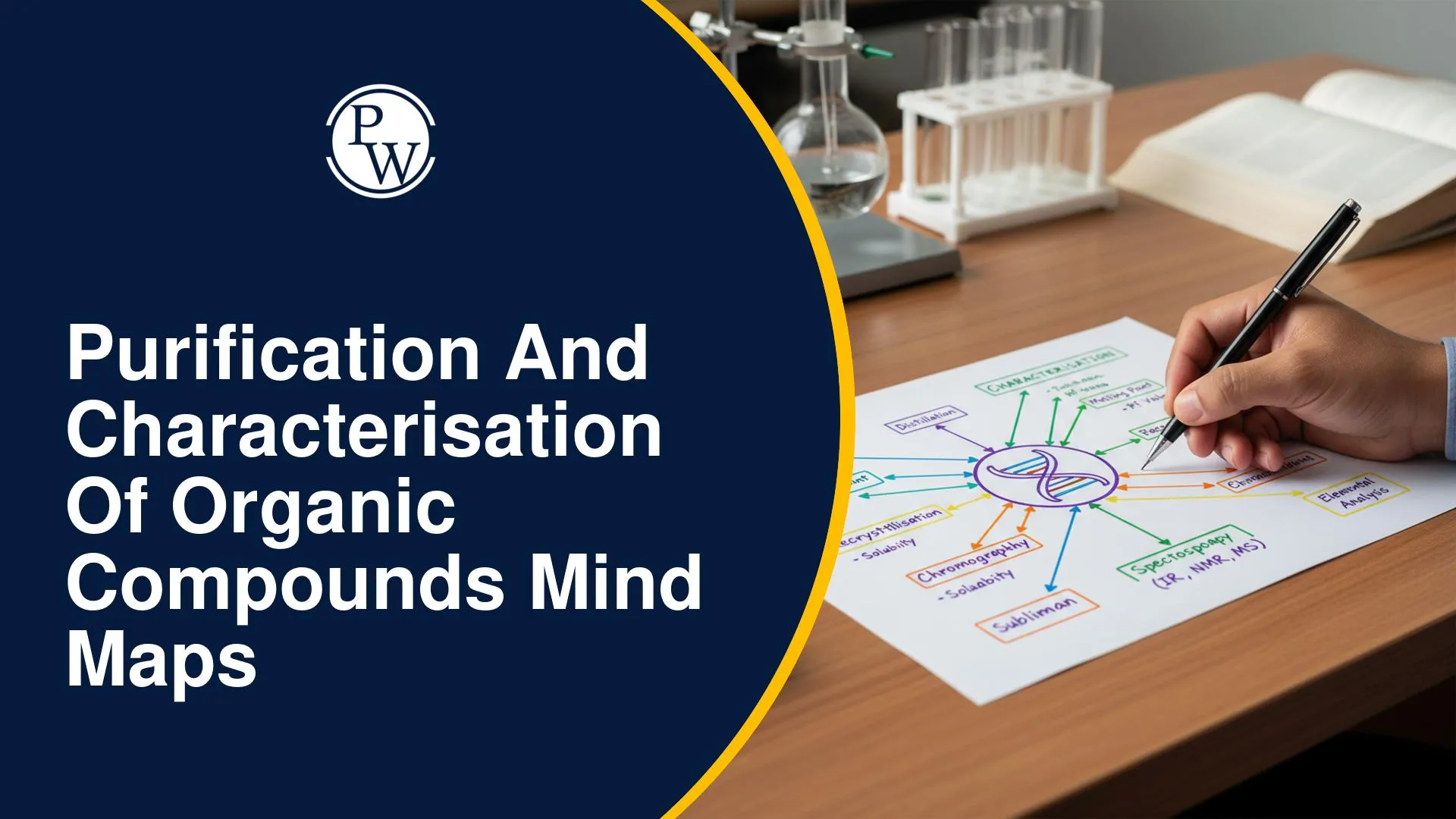
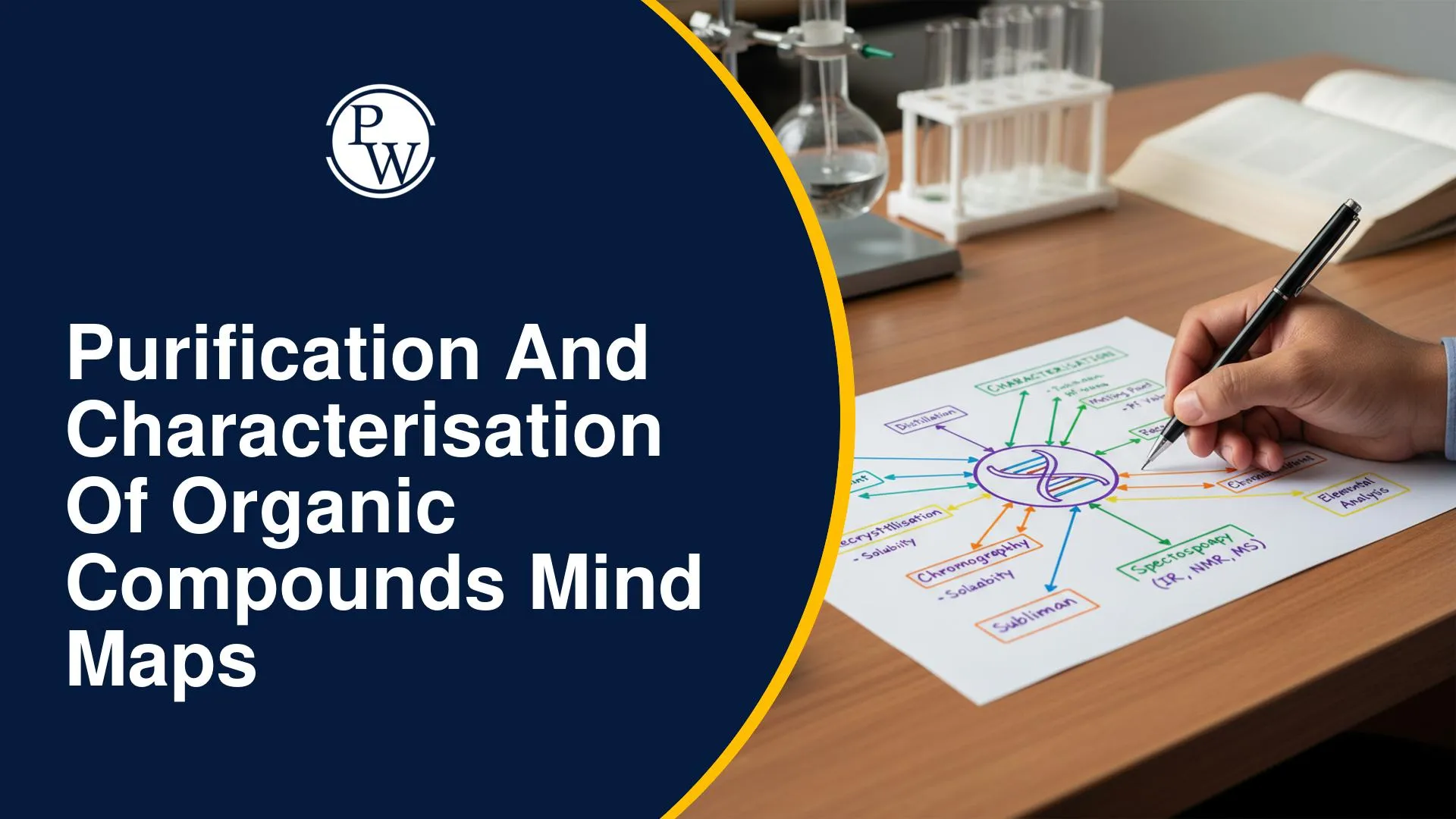
Purification and Characterisation of Organic Compounds is an important chapter in Organic Chemistry that introduces techniques for separating, purifying, and identifying organic substances. Questions from this chapter often test conceptual understanding of purification methods, chromatographic techniques, and the principles behind separation processes.
Since the chapter includes multiple techniques, principles, and applications, revision can sometimes feel scattered. Purification and Characterisation of Organic Compounds Mind Maps help organize these concepts into a connected visual structure, making it easier to revise important methods, compare techniques, and recall key points before JEE 2027.
Methods of Purification of Organic Compounds
The Purification and Characterisation of Organic Compounds Mind Maps cover the major purification and separation techniques included in the JEE syllabus. These methods are organised in a visual format to help students understand their principles, applications, and differences more efficiently. PW Purification and Characterisation of Organic Compounds Mind Map include:
Crystallisation
Revision of the crystallisation process, suitable solvent characteristics, and the principle of purification based on differences in solubility.
Sublimation
Overview of substances that undergo sublimation and the use of this technique for separating volatile solids from non-volatile impurities.
Distillation
Coverage of important distillation methods, including simple distillation, fractional distillation, vacuum distillation, and steam distillation, along with their common applications.
Differential Extraction
Key concepts related to separation using immiscible solvents, distribution of compounds between layers, and the role of separating funnels.
Chromatography
Summary of chromatographic techniques, separation principles, stationary and mobile phases, and commonly used methods such as TLC, column chromatography, and paper chromatography.
Thin Layer Chromatography (TLC) and Rf Value
Important concepts related to TLC, identification of compounds, purity checks, and interpretation of Rf values for analytical purposes.
Partition and Adsorption Chromatography
Quick revision of the principles governing partition-based and adsorption-based separation techniques and their applications in organic chemistry.
Purification and Characterisation of Organic Compounds Mind Maps PDF
The Purification and Characterisation of Organic Compounds Mind Maps PDF provides a visual summary of important purification methods and chromatographic techniques covered in the chapter. Concepts are arranged through flowcharts, diagrams, and linked points to make revision more efficient.
Students can use these mind maps while revising the chapter, strengthening conceptual clarity, or reviewing important JEE topics before mock tests and examinations.
Purification and Characterisation of Organic Compounds Mind Maps PDF
How PW Mind Maps Are Helpful for JEE Preparation?
PW Purification and Characterisation of Organic Compounds Mind Maps help JEE aspirants revise multiple purification and separation techniques in a comprehensive visual format.
-
Simplify Complex Separation Techniques
Methods such as crystallisation, sublimation, distillation, differential extraction, and chromatography are presented through flow-based diagrams, helping students understand their principles and applications more effectively.
-
Improve Concept Retention
Visual learning helps in remembering important concepts such as stationary phase, mobile phase, adsorption, partition, and Rf value for a longer period, which is useful during JEE revision.
-
Strengthen Conceptual Understanding
JEE tests the logic behind purification methods rather than simple definitions. Mind maps help students compare techniques and understand why a particular method is suitable for a specific type of compound or mixture.
-
Support Quick Revision Before Tests
Students can use mind maps to review important concepts, formulas, principles, and classifications in a shorter time before mock tests and examinations.
-
Help in Solving Application-Based Questions
Many JEE questions are based on selecting appropriate purification techniques or interpreting chromatographic results. Mind maps help students connect theoretical concepts with practical applications.
FAQs
What are Purification and Characterisation of Organic Compounds Mind Maps?
Which purification methods are covered in the chapter?
What is the importance of chromatography in JEE?
What is the Rf value in Thin Layer Chromatography?





Have questions about your prep?
Our experts can answer all your questions
 Live & recorded classes available at easeDashboard for progress trackingLakhs of practice questions

