







Toughest Shift of JEE Main 2026 Session 2 Exam, Check Details Below
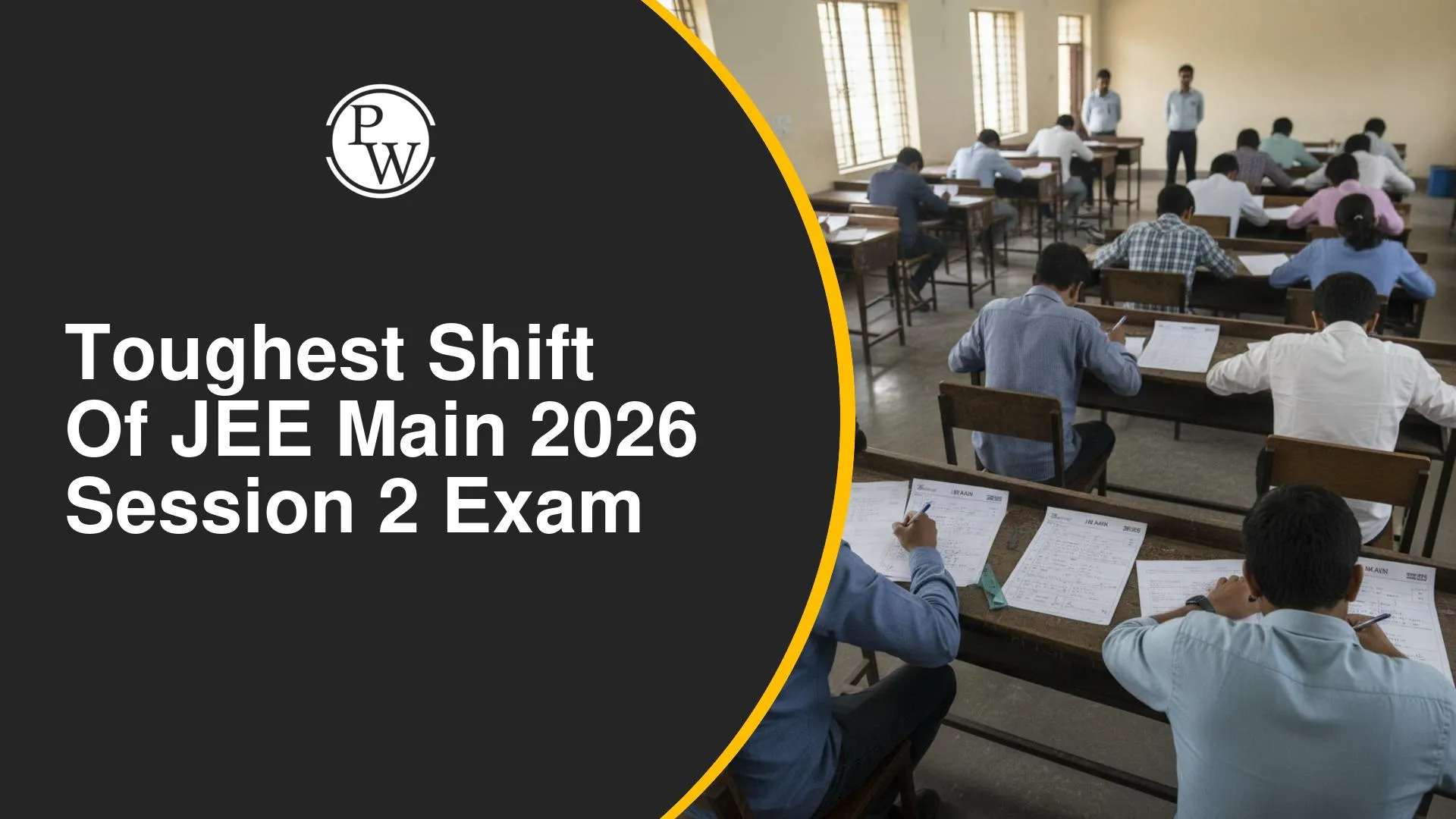
Toughest shift in JEE Main 2026 Session 2 helps candidates prepare for score normalization. While specific shift difficulties are determined after the exam, this analysis explains how such shifts are identified, their implications for percentile calculations, and how the National Testing Agency (NTA) ensures fairness across varying paper difficulties.

Toughest Shift of JEE Main 2026 Session 2 Exam FAQs
Which was the toughest shift in JEE Main 2026 Session 2?
The toughest shift for JEE Main 2026 Session 2 will be identified after all exam shifts are completed and analyzed, based on student feedback, expert reviews, and overall question complexity.
Does getting a tougher shift affect my JEE Main percentile negatively?
No, candidates in tougher shifts are not at a disadvantage. The NTA's normalization process adjusts scores to ensure fair percentile calculation across all shifts, balancing any variations in difficulty.
How does NTA ensure fairness despite different shift difficulties?
The NTA uses a scientific normalization procedure that considers the relative difficulty of each shift and the performance of candidates within those shifts, aiming for equal opportunity.
What factors make a JEE Main shift considered tough?
A shift is generally considered tough if it features higher conceptual complexity, lengthy Mathematics questions, tricky Physics numericals, and a trend of lower overall attempts by students.
Should I worry if my JEE Main 2026 Session 2 shift feels tough?
There's no need to worry. The normalization process is designed to account for varying difficulty levels. Focus on performing your best; your raw score will be adjusted fairly against other shifts.

Free Learning Resources
PW Books
Notes (Class 10-12)
PW Study Materials
Notes (Class 6-9)
Ncert Solutions
Govt Exams
Our Other Websites
Class 6th to 12th Online Courses
Govt Job Exams Courses
UPSC Coaching
Defence Exam Coaching
Gate Exam Coaching
Other Exams
Know about Physics Wallah
Physics Wallah is an Indian edtech platform that provides accessible & comprehensive learning experiences to students from Class 6th to postgraduate level. We also provide extensive NCERT solutions, sample paper, NEET, JEE Mains, BITSAT previous year papers & more such resources to students. Physics Wallah also caters to over 3.5 million registered students and over 78 lakh+ Youtube subscribers with 4.8 rating on its app.
We Stand Out because
We provide students with intensive courses with India’s qualified & experienced faculties & mentors. PW strives to make the learning experience comprehensive and accessible for students of all sections of society. We believe in empowering every single student who couldn't dream of a good career in engineering and medical field earlier.
Our Key Focus Areas
Physics Wallah's main focus is to make the learning experience as economical as possible for all students. With our affordable courses like Lakshya, Udaan and Arjuna and many others, we have been able to provide a platform for lakhs of aspirants. From providing Chemistry, Maths, Physics formula to giving e-books of eminent authors like RD Sharma, RS Aggarwal and Lakhmir Singh, PW focuses on every single student's need for preparation.
What Makes Us Different
Physics Wallah strives to develop a comprehensive pedagogical structure for students, where they get a state-of-the-art learning experience with study material and resources. Apart from catering students preparing for JEE Mains and NEET, PW also provides study material for each state board like Uttar Pradesh, Bihar, and others
Copyright © 2026 Physicswallah Limited All rights reserved.