







How Arannya Converted to IIM Bodh Gaya IPM 2026-31 With PW: From PCB Background to IIM
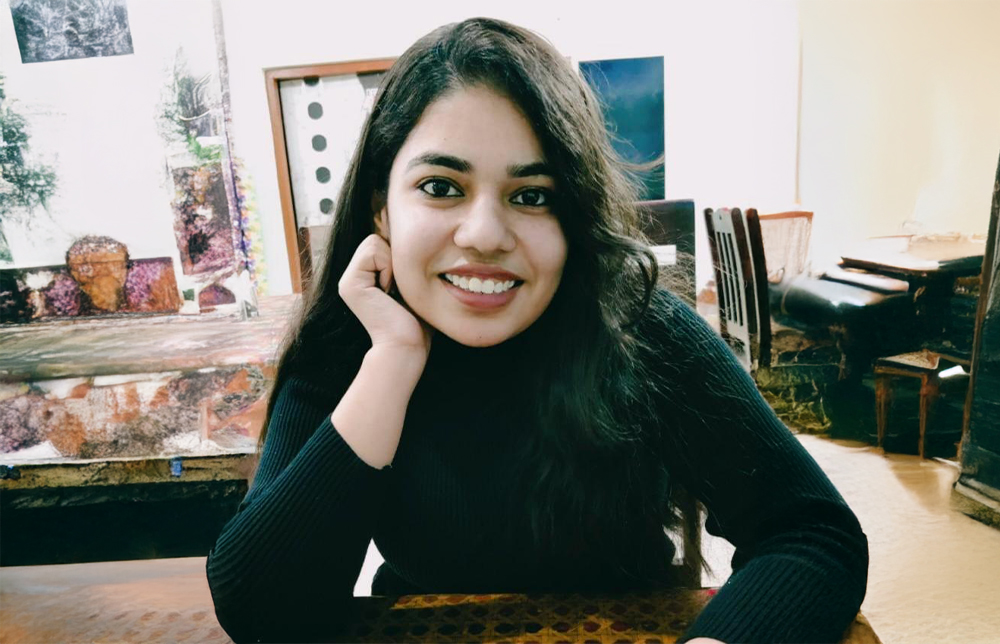


Arannya’s journey to IIM Bodh Gaya was far from straightforward. Coming from a PCB, non-Maths background, she initially had a different academic path in mind. After completing Class 12, she took a drop year and began preparing for IPMAT with a clear goal of giving her best without leaving room for regret.
As a student of PW’s Foundation Batch, Arannya worked consistently on her weaker areas, particularly Quantitative Aptitude, while building her reading habit, practising mocks and analysing her mistakes. Her efforts eventually helped her secure admission to the IIM Bodh Gaya IPM 2026-31 programme.
From a PCB Background to Choosing IPMAT: Arannya’s Change in Direction
Arannya’s academic background was different from what many IPMAT aspirants might expect. She had studied PCB in Classes 11 and 12 and did not have Mathematics as a subject during those years.
For students from a PCB background, conventional choices often revolve around medical or engineering-related entrance examinations. Arannya, however, consciously decided that she did not want to pursue that route.
“Being from a PCB background, generally students NEET ki taraf jaate hain ya phir JEE ki taraf jaate hain.”
Instead, she chose IPMAT because management was a field she genuinely wanted to explore. The decision was not driven by external pressure, making the goal a personal one for her.
“But I chose not to go in that profession because I never wanted to.”
This also meant that she had to accept the challenge of preparing for an exam that required Quantitative Aptitude despite not having studied Maths in Classes 11 and 12.
Arannya Used Her Own Decision as Motivation During Low Phases
Arannya’s preparation had its share of highs and lows. The initial motivation eventually gave way to moments when she wondered whether she would actually be able to convert her preparation into a result.
Coming from a non-Maths background made those difficult phases more challenging, but she focused on one thing: giving her best effort.
“No matter what would be the result, but I will try my best ki result ke baad mereko regret na rahe ki haan, main kar sakti thi isse better but reh gaya because of myself.”
Whenever she reached a low point, she went back to the reason she had started preparing in the first place. Since IPMAT was a choice she had made for herself, remembering that decision helped her regain motivation.
“Bhot low point aate the toh I used to think ki why did I start it? Ki maine start kyun kara tha yeh prepare karna?”
This mindset allowed her to continue moving forward even when the final result was uncertain.
Arannya Turned Quantitative Aptitude From a Weakness Into an Area of Improvement
Quantitative Aptitude was one of the biggest challenges in Arannya’s preparation. The difficulty came largely from the fact that she had not studied Maths in Classes 11 and 12.
Instead of treating this as a reason to avoid Quant, she recognised that her weak area would require additional time and effort.
“It was not like mereko Maths se dar tha, but maine Maths nahi li thi 11 12 mein.”
She consciously allocated more time to Quant and worked on the concepts she had missed earlier. The improvement was gradual rather than immediate.
“Maine usmein zyada time diya, zyada effort diya because mereko pata hai woh mera weak hai, mereko zyada effort dene padenge.”
By consistently investing effort into the section, she began seeing improvement over time. Her experience showed her that a weak section can become manageable when it receives focused and sustained practice.
PW’s Foundation Batch Supported Arannya’s IPMAT Preparation
Arannya was a student of PW’s Foundation Batch, which formed part of her organised IPMAT preparation. With sufficient preparation time available during her drop year, she divided her study schedule across Quant, DILR and VARC.
She followed a planned routine rather than preparing randomly, giving herself specific targets for different stages of preparation.
“Mere paas enough time tha to prepare karne ke liye. Toh maine time ko achhe se manage kara. Maine matlab mere paas jitna bhi time milta tha main usko divide kar deti thi Quant, DILR and for VARC.”
This approach helped her maintain balance across the sections while also giving additional attention to Quant, which she knew required more effort.
“Maine time ko achhe se manage kara.”
The well-planned preparation helped her work systematically through the syllabus and maintain consistency across the different areas.
Daily Reading Became Arannya’s Strategy for VARC
For VARC, Arannya focused heavily on building a daily reading habit. She did not particularly enjoy reading newspapers, so she chose articles as a more practical alternative.
She made reading part of her morning routine and spent around 30–45 minutes reading regularly.
“Main morning mein uth ke sabse pehle main read karti thi koi article because newspaper mere se padha nahi jaata tha.”
Along with improving reading speed, she found that this habit helped her build vocabulary and understand words through context.
“Main morning mein at least 30–45 minutes mein reading karti thi.”
Whenever she came across difficult or unfamiliar words, she noted them down and revised them from time to time. This allowed her to develop vocabulary without depending entirely on rote memorisation.
For Arannya, daily reading therefore became a consistent part of VARC preparation rather than a last-minute activity.
Arannya Started Mocks Early and Spent More Time Analysing Them
Mock tests became another important part of Arannya’s preparation. However, she did not treat mock-taking as the end of the process. For her, the analysis after the mock was equally important.
In fact, she often spent significantly more time analysing a mock than actually attempting it.
“Mereko mock dene mein two hours lagte the. Aur usko analyse karne mein mereko three hours ya usse zyada lag jaate the.”
During analysis, she separated incorrect questions from questions that had taken too much time. This helped her identify not only conceptual mistakes but also problems with time management.
“Kaun se questions mere incorrect hue, kaun se question mein mereko zyada time laga, usko main differentiate karke saare questions ko phir se dekhti thi.”
The objective was to understand the reason behind every mistake so that the same pattern would not repeat in the next mock.
Consistency Helped Arannya Keep Her Preparation on Track
For Arannya, consistency was one of the most important lessons from her preparation. She acknowledged that while the word sounds simple, maintaining consistency every day is much harder in practice.
She believed that aspirants need to keep showing up even when there are minor disruptions or motivation is low.
“Consistency jitna bolne mein easy lagta hai utna easy nahi hota hai.”
Her approach was to continue putting in effort every day instead of waiting for the perfect circumstances to study.
“You have to show up every day, every single day no matter aapki health thodi theek nahi hai, kuch festivals aa gaye.”
She understood that consistent effort may not always produce immediate visible results. However, over time, those efforts compound and begin reflecting in performance.
From a Non-Maths Background to IIM Bodh Gaya
Arannya’s journey demonstrates that an aspirant’s academic background does not have to define the limits of their goals.
Coming from a PCB background without Mathematics in Classes 11 and 12, she knew that Quant would require additional effort. Instead of avoiding the challenge, she identified it as a weak area and consistently worked on it.
Her preparation combined PW’s Foundation Batch, organised weekly and monthly goals, daily reading, mock tests, and detailed mock analysis.
Most importantly, she remained committed to a path she had chosen for herself.
Her conversion to the IIM Bodh Gaya IPM 2026-31 programme is ultimately a reflection of that commitment: identify the challenge, put in the required effort, stay consistent and keep moving forward even during the low phases.





Get Free Counselling Today
and Clear up all your Doubts
 Live & recorded classes available at easeDashboard for progress trackingLakhs of practice questions

