







Consumer Protection in Banking, Law, Discriminatory Practices
Retail banking, also known as consumer banking or private banking, is the provision of banking services to the public by companies, associations or other banks..
 Priyanka Dahima9 May, 2026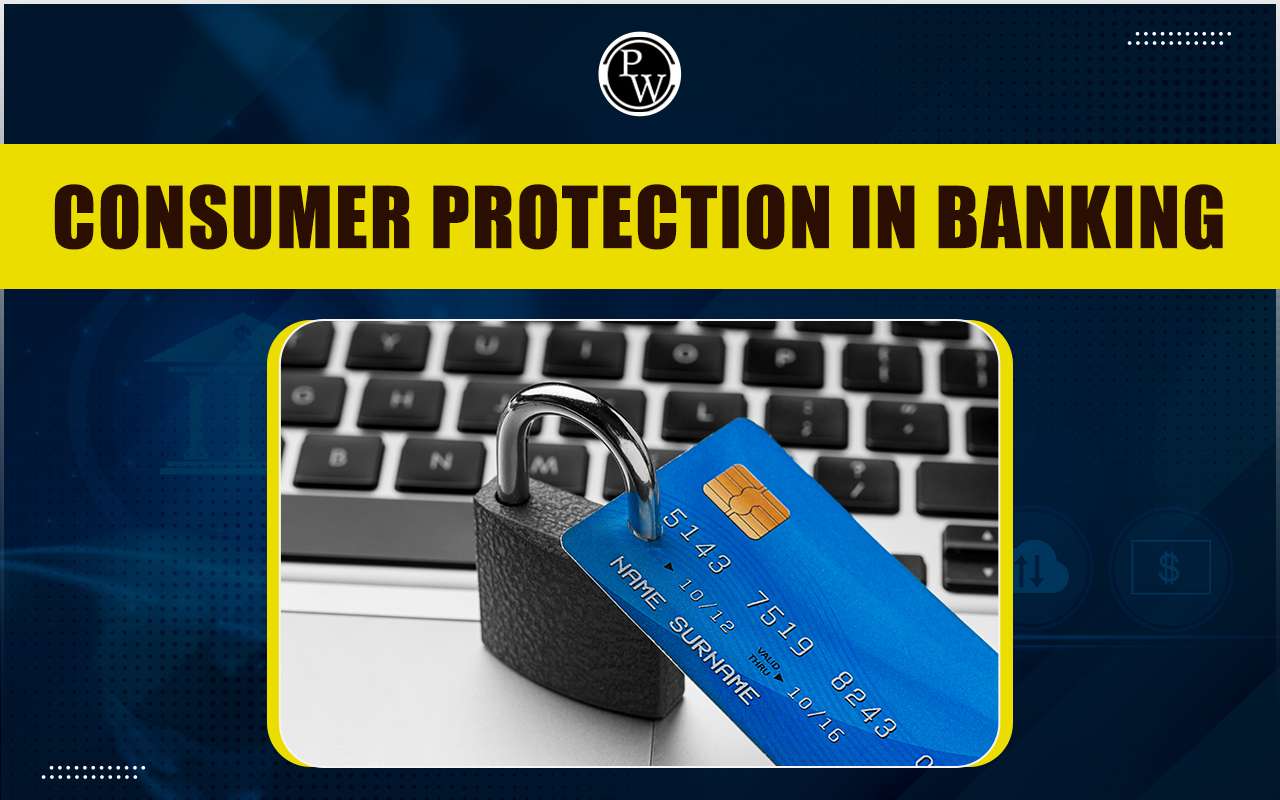
Consumer Protection in Banking: In today's busy world, banking plays a vital role in our lives. It is important to be aware of your rights as a consumer consumer and understand the laws and regulations governing the Indian banking industry. The purpose of this article is to provide you with a thorough understanding of Consumer Protection in Banking and consumer rights and protection to protect your interests.
Consumer Protection in Banking
The Indian banking sector operates under a strong regulatory framework that ensures stability, transparency, and efficiency in the financial system. The Reserve Bank of India (RBI) is the central regulatory authority responsible for the supervision and regulation of banks and other financial institutions in the country. The five basic rights of Consumers in Banking are -- Right to Fair Treatment
- Right to Transparency
- Fair and Honest Dealing
- Right to Suitability
- Right to Privacy
- Right to Grievance Redress and Compensation
Consumer Protection in Indian Banking Law
As a consumer of banking services, you have specific rights and protections under Indian law. The following laws and regulations are designed for Consumer Protection in Indian Banking Law and ensure fair treatment by banks and financial institutions.Banking Ombudsman Scheme:
RBI has set up the Banking Ombudsman Scheme to provide an accessible and effective grievance mechanism to bank customers. The system allows customers to file complaints about deficiencies in banking services, such as non-cashing or late payment of checks, unauthorized electronic funds transfers, and violations of fair practice rules. The banking ombudsman has the authority to investigate and resolve these complaints and impose sanctions on the banks if necessary.Consumer Protection Act, 2019:
The Consumer Protection Act is a comprehensive piece of legislation that protects consumers in various sectors, including banking. It affirms consumer rights such as the right to information, the right to choose, the right to claim compensation, and the right to consumer education. According to this law, the consumer has the right to submit a complaint to the consumer forums and demand compensation for damages caused by the negligence or inadequacy of the banking services.Code of Fair Practices for Banks:
The RBI has issued guidelines known as the Code of Fair Practices, which requires banks to follow fair and transparent practices in dealing with customers. The Code ensures that banks provide accurate and timely information to customers, keep customer information confidential, deal with customer complaints promptly, and avoid inappropriate practices such as charging excessive fees or charging hidden costs.Know Your Customer (KYC) Guidelines:
Banks must follow KYC guidelines to verify the identity and address of their customers. These guidelines help prevent money laundering, fraud, and terrorist financing. As a customer, you have the right to be informed about the documents and information required for. KYC compliance. Banks must also treat your personal data confidentially and not disclose it to third parties without your consent, except in cases prescribed by law.Promote Fair Lending and Protect Consumers from Discriminatory Practices
Fair lending practices are essential to ensure equal access to credit and protect consumers from discriminatory practices by banks and financial institutions. The following laws and regulations are in place to promote fair lending and protect consumer rights:Equal Credit Opportunity Act (ECOA):
ECOA prohibits lenders from discriminating against credit applicants based on things like race, color, religion, or national origin. , gender, marital status, age, or access to the public for help. It ensures that all people have equal access to credit and loans, without facing unfair prejudice or discrimination.Reserve Bank of India (RBI) Guidelines:
RBI has issued guidelines to banks and financial institutions to prevent discriminatory lending practices. These guidelines emphasize that banks must treat all loan applicants fairly without discriminating on the basis of personal characteristics or characteristics. Banks must establish transparent and objective criteria for evaluating loan applications and ensure that loan decisions are based on the applicant's creditworthiness and ability to repay.Credit Information Companies (Regulation) Act, 2005:
The Credit Information Companies Act regulates the operation of credit agencies or credit information companies (CIC) in India. CICs collect and maintain personal credit information and issue credit reports to banks and financial institutions. This law ensures that credit decisions are based on correct and objective information, which reduces the risk of discriminatory lending practices.Consumer Protection in Banking 2024
Q1. What is Consumer Protection in Banking?
Ans. Retail banking, also known as consumer banking or private banking, is the provision of banking services to the public by companies, associations or other banks..
Q2. What are the rights of Consumers in Banking?
Ans. The five basic rights of Consumer in Banking are -
Right to Fair Treatment
Right to Transparency
Fair and Honest Dealing
Right to Suitability
Right to Privacy
Right to Grievance Redress and Compensation
Q3. What is Banking Ombudsman Scheme?
Ans. RBI has set up the Banking Ombudsman Scheme to provide an accessible and effective grievance mechanism to bank customers.
Q4. What is KYC?
Ans. Banks must follow KYC guidelines to verify the identity and address of their customers. These guidelines help prevent money laundering, fraud and terrorist financing. As a customer, you have the right to be informed about the documents and information required for.
KYC compliance. Banks must also treat your personal data confidentially and not disclose it to third parties without your consent, except in cases prescribed by law.


Have questions about your prep?
Our experts can answer all your questions
Join 15 Million students on the app today!
 Live & recorded classes available at easeDashboard for progress trackingLakhs of practice questions


Free Learning Resources
PW Books
Notes (Class 10-12)
PW Study Materials
Notes (Class 6-9)
Ncert Solutions
Govt Exams
Our Other Websites
Class 6th to 12th Online Courses
Govt Job Exams Courses
UPSC Coaching
Defence Exam Coaching
Gate Exam Coaching
Other Exams
Know about Physics Wallah
Physics Wallah is an Indian edtech platform that provides accessible & comprehensive learning experiences to students from Class 6th to postgraduate level. We also provide extensive NCERT solutions, sample paper, NEET, JEE Mains, BITSAT previous year papers & more such resources to students. Physics Wallah also caters to over 3.5 million registered students and over 78 lakh+ Youtube subscribers with 4.8 rating on its app.
We Stand Out because
We provide students with intensive courses with India’s qualified & experienced faculties & mentors. PW strives to make the learning experience comprehensive and accessible for students of all sections of society. We believe in empowering every single student who couldn't dream of a good career in engineering and medical field earlier.
Our Key Focus Areas
Physics Wallah's main focus is to make the learning experience as economical as possible for all students. With our affordable courses like Lakshya, Udaan and Arjuna and many others, we have been able to provide a platform for lakhs of aspirants. From providing Chemistry, Maths, Physics formula to giving e-books of eminent authors like RD Sharma, RS Aggarwal and Lakhmir Singh, PW focuses on every single student's need for preparation.
What Makes Us Different
Physics Wallah strives to develop a comprehensive pedagogical structure for students, where they get a state-of-the-art learning experience with study material and resources. Apart from catering students preparing for JEE Mains and NEET, PW also provides study material for each state board like Uttar Pradesh, Bihar, and others
Copyright © 2026 Physicswallah Limited All rights reserved.