








Contract Drafting: Meaning, Process, Skills
Contract drafting is the process of writing a legally enforceable agreement that clearly defines the terms between two or more parties. It requires legal knowledge, attention to detail, and communication skills for creating a clear, compliant document with the law, and minimizes potential risks.

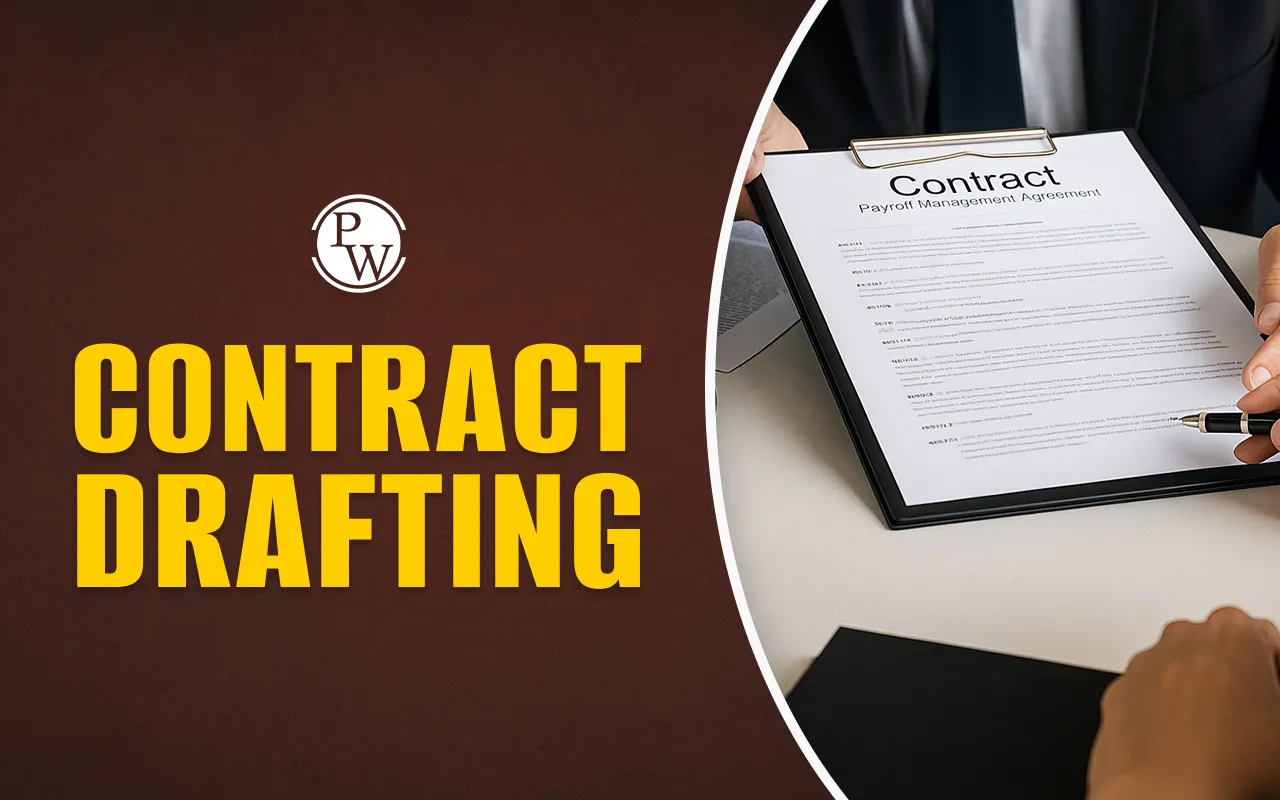
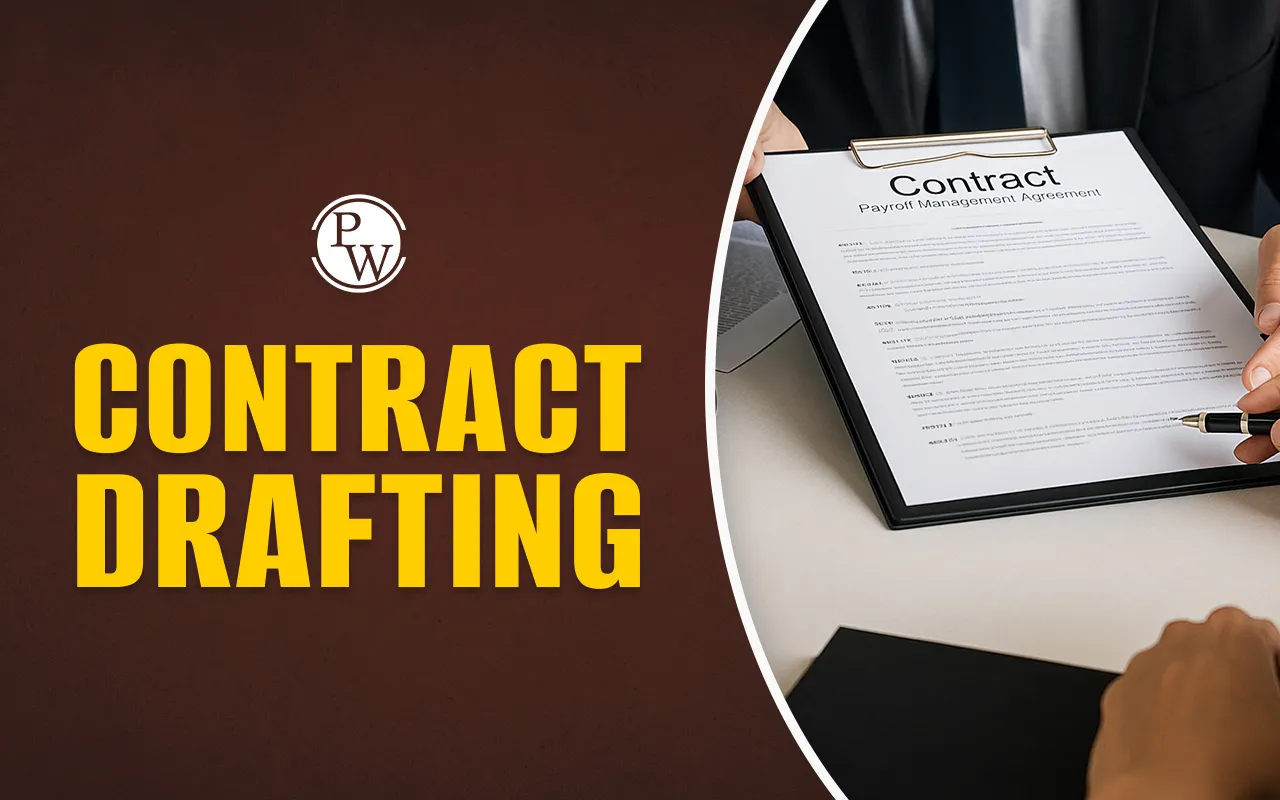
Contract drafting is the process of creating a written document to establish a legally binding agreement between parties. It is important for students and professionals in the legal field to become experts in this skill. A properly drafted contract works as the baseline for personal, professional, and commercial relationships. Also, it provides a clear roadmap of expectations and responsibilities. It turns a verbal understanding into a legally valid document. This helps reduce ambiguity and prevents potential future conflicts.
What is Contract Drafting in Law?
Contract drafting is the technical process of creating a document that outlines the terms that are agreed upon by the involved parties.It involves much more than just writing. It requires a thorough understanding of the subject matter, relevant laws, and the ability to anticipate potential issues. A properly drafted contract ensures every aspect of the agreement is clearly stated and there is no room for misinterpretation and disputes. At its core, a contract is a legally binding agreement. It clearly defines the rights, duties, and obligations of each party and is enforceable by law.
Contract Drafting Objectives
Contract drafting serves as a foundation for strong business relationships. It works as a great medium to stop misunderstandings between two parties. Also, it provides a legal safety net and ensures parties are protected in the event of a dispute. A well-drafted contracts contribute to making strong operations and increasing trust in the long term. The primary goal of contract drafting is to create a clear and protective agreement that is legally efficient.
The main objectives include:
|
Contract Drafting Objectives |
|
|
Objective |
Description |
|
Clarity |
To clearly define the rights, responsibilities, and expectations of all parties in precise terms. |
|
Risk Management |
To identify and reduce risks by including clauses that address foreseeable challenges. |
|
Legal Compliance |
To ensure all terms and conditions of the contract adhere to applicable laws and regulations. |
|
Conflict Avoidance |
To minimize the chance of disputes by using clear language and establish clear resolution mechanisms. |
|
Enforceability |
To create a legally binding document that will hold up in court if a dispute arises. |
How to Draft Contract?
The process of drafting a contract is systematic and includes different stages. Following these steps helps candidates create a final document that is clear and effective. Drafting a contract is not only about putting terms on paper. It also builds a clear and enforceable agreement. Each step in the process has a clear purpose. It helps reduce ambiguity and protects all parties involved. A thoughtful approach can make the contract clearer and more effective.
-
Understand the Purpose: One should start by clearly defining the objective of the contract. Whether it’s for a sale, a service, or employment, the purpose will guide the overall structure and content of the document.
-
Research Legal Requirements: You should familiarise yourself with the relevant laws. For example, an employment contract must follow labour laws, while a commercial lease is governed by different legal requirements.
-
Identify the Parties: One should clearly and accurately state the full legal names of all parties involved. Also, one should include identifiers such as company registration numbers where applicable.
-
Outline Key Terms: One should draft the essential elements of the agreement, such as obligations, payment terms, timelines, confidentiality clauses, and the governing law.
-
Use Clear Language: You should avoid legal jargon and vague phrasing. A well-drafted contract uses simple language so that all parties can easily understand the terms.
-
Review and Revise: You should proofread the draft multiple times to ensure it is accurate and consistent. It is also beneficial to have another person, such as a legal professional, review the document.
-
Execution: After finalization, the contract must be signed by all authorized parties. In order to make it legally acceptable, a witness or notary might be required, based on the contract.
Elements of Good Draft Contract
A properly structured contract contains various important elements that make it strong. These components work together to bring clarity and make it legally valid. Having knowledge of these important elements is important to draft agreements that protect all parties. Each element plays a specific role in shaping a clear, fair, contract. Also, neglecting even one component of the contract can open the doors to disputes.
|
Elements of Good Draft Contract |
|
|
Element |
Description |
|
Identifiable Parties |
Clearly mentions the legal names and roles of all individuals or entities that are involved. |
|
Offer and Acceptance |
Includes the initial proposal by one party, and the clear acceptance of those terms by the other. |
|
Consideration |
Defines the value being exchanged, which can be money, goods, services, or a promise to act. |
|
Terms and Conditions |
Details the specific obligations, timelines, deliverables, and consequences for non-compliance. |
|
Termination Clause |
Outlines the specific conditions under which the contract can be ended, including required notice periods. |
|
Dispute Resolution |
Specifies the process for handling disagreements, such as mediation, arbitration, or litigation. |
|
Signatures and Dates |
Contains the signatures of all parties, with the date of signing the contract |
Essential Skills for Contract Drafting
Drafting an effective contract requires a combination of legal knowledge, analytical ability, and communication skills. Developing these skills is important for anyone who is involved in the process of drafting a contract and negotiation.
-
Legal Knowledge: A proper understanding of laws is important to ensure the contract is law-abiding.
-
Attention to Detail: Even a minor error can cause disputes. Therefore, meticulous attention to detail is mandatory.
-
Analytical Thinking: The ability to predict potential risks and draft clauses to address them is a key skill.
-
Effective Communication: Using clear language makes sure that all parties have a shared understanding of the terms.
-
Negotiation Skills: The ability to negotiate terms helps in creating a fair and balanced agreement that benefits all parties involved.
For aspirants who are looking to enhance their understanding of the legal system, Physics Wallah provides courses and certifications for the judiciary and law-related exams. These programmes are specialized to provide clarity on complex legal subjects.
Common Issues in Drafting Contracts
Several common risks can weaken a contract or create the possibility of disputes. Having awareness of these issues is the first step to avoiding any kind of risks. Even experienced drafters have chances to ignore details that result in costly legal consequences. A well-drafted contract not only includes the right clauses but also avoids common drafting errors. Recognising these risks early can help ensure the contract is both clear and enforceable.
-
Ambiguity: Vague or unclear provisions are an important source of conflict. Language should be as specific as possible.
-
Incomplete Clauses: Ignoring key elements, like handling the knowledge of how to breach a contract, can complicate dispute resolution.
-
Overuse of Jargon: Relying completely on complex legal terms can confuse the parties, which can cause misunderstandings.
What is Commercial Contract Drafting?
Commercial contract drafting involves creating agreements specifically for business-to-business (B2B) transactions. Unlike general contracts, these documents are tailored to the complexities of commerce and trade. They often include detailed clauses related to:
-
Liability and Indemnity: Defining who takes the financial responsibility for potential losses or damages.
-
Intellectual Property Rights: Protecting trademarks, patents, and confidential business information.
-
Warranties and Guarantees: Specifying the quality and performance standards of goods or services.
-
Compliance: Adhering to specific industry regulations and trade laws.
Examples include Sales Agreements, Service Agreements, and Partnership Agreements, which form the backbone of business operations.
Contract Drafting for Non Lawyers
For individuals without a legal background, drafting a contract can look difficult. The important point to contract drafting for non lawyers is to maintain clarity and simplicity.
-
Use Plain Language: Avoid complex legal jargon. Write the terms in a way that anyone can understand.
-
Start with a Template: Use a reliable template as a starting point, but always customize it as per your condition.
-
Focus on Key Details: Clearly mention the who, what, where, when, and how much of the agreement.
-
Know Your Limits: It is always wise to consult a legal professional for high-stakes agreements that involve significant money or risk.
Contract Drafting and Negotiation for Entrepreneurs
Contract drafting and negotiation for entrepreneurs are two sides of the same coin. In the fast-paced world of entrepreneurship, every contract should act as a legal and strategic asset. A drafting with proper anticipation and clear negotiation can position a business for sustainable growth. Entrepreneurs should approach contracts to accomplish formalities and strengthen the foundation of their business. A contract is a very efficient tool for negotiation.
Entrepreneurs should focus on:
-
Protecting the Business: One should include strong confidentiality clauses, clear ownership of intellectual property, and limitations on liability in your contracts.
-
Flexibility and Scalability: One should draft flexible agreements that can adapt as your business grows.
-
Strategic Negotiation: One should review the draft to identify which clauses are critical and which are negotiable for a fair deal.
- Legal Skills: Build essential skills in contract drafting, legal research, risk assessment, clause interpretation, and negotiation to make informed business decisions and minimise potential legal disputes.
Contract Drafting FAQs
What is the first step in contract drafting?
Why is clear language important in contract drafting for non-lawyers?
What is the main goal of contract drafting?
Can I draft a contract without a lawyer?


Have questions about your prep?
Our experts can answer all your questions










 Online Classes for LexGlobal (Legal Skills)Learn from PW's Educators through Live Lectures.Live & Recorded Classes are available at ease.Lectures are available in Hinglish (Hindi and English mix).Get access to Study Materials, Notes & Mock Tests.

