






How Complete Advocacy Program Helps You Perform Better During Internships



Legal internships give students their first exposure to litigation chambers, law firms and courtroom work. However, knowing legal concepts is different from applying them to drafting, filing, client discussions and court procedures.
The PW Complete Advocacy Program 2026 is designed to help bridge this gap through a 9-month online programme focused on Advanced Civil and Criminal Litigation and Legal Drafting. It combines live expert-led sessions, practical exercises, courtroom insights, drafting practice and professional skills that students can use during internships.
Why Practical Skills Matter During Legal Internships
During an internship, students may be expected to assist with legal research, understand case files, prepare drafts, observe court proceedings or support seniors with routine legal work. Without practical exposure, these tasks can feel unfamiliar even when the student understands the underlying law.
The Complete Advocacy Program focuses on skills that can make this transition easier, including:
-
Legal drafting and professional formats
-
Understanding court procedures and filing
-
Civil and criminal litigation processes
-
Judgment reading and analysis
-
Client counselling and management
-
Case-based assignments and practice exercises
-
AI-powered legal drafting and modern legal practice
This approach helps students understand how legal concepts are used in actual professional settings.
How Legal Drafting Training Can Help Interns
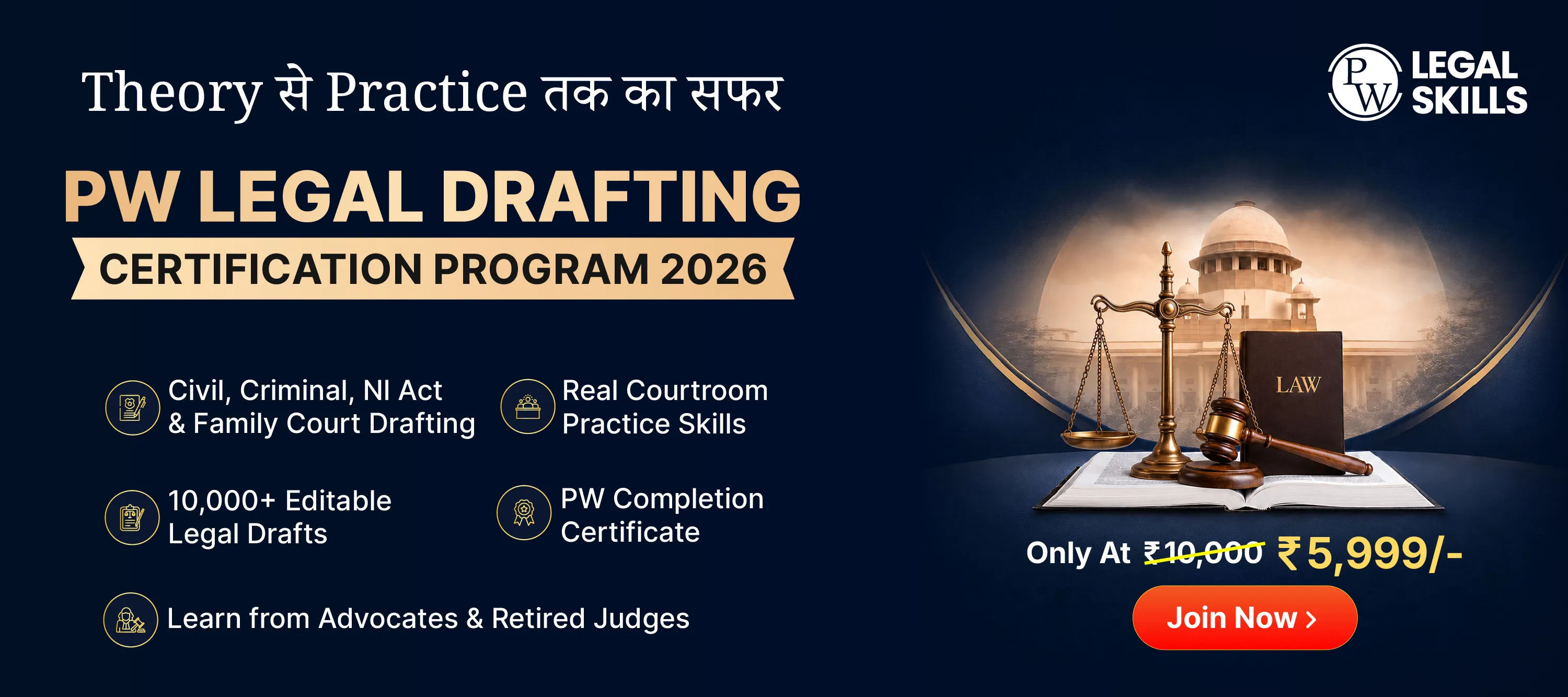
Drafting is one of the most practical skills students encounter during internships. The programme includes 10,000+ editable legal drafts in English and Hindi, covering several commonly used legal documents.
Students can work with formats related to:
-
Notices, FIRs and criminal complaints
-
Bail applications
-
Cheque bounce matters under Section 138 of the NI Act
-
Quashing and appeals
-
Plaint and written statement
-
Set-off and counterclaim
-
Injunction and caveat
-
Wills and testamentary agreements
-
Sale, lease, gift and mortgage
-
Partnership deeds and powers of attorney
-
Family settlement agreements
Exposure to these formats can help interns become more familiar with professional drafting and assist seniors more confidently.
Understanding Civil Litigation From Notice to Decree
Interns working with civil litigation matters need to understand how a case progresses beyond individual documents. The programme covers the civil case lifecycle from notice to decree, along with practical litigation stages.
The civil litigation modules include areas such as:
-
Money recovery and declaration suits
-
Permanent and mandatory injunctions
-
Possession and specific performance suits
-
Temporary injunction applications
-
Receiver and commissioner applications
-
Affidavit of evidence
-
Witness summoning
-
Examination-in-chief, cross-examination and re-examination
-
Expert evidence
-
Execution petitions and attachment applications
-
First and second appeals
-
Review and revision petitions
-
Civil writ petitions and SLPs
This broader understanding can help students follow case proceedings more effectively when working with litigation teams.
Building Criminal Litigation Skills for Internships
Criminal litigation also requires an understanding of how proceedings move from the initial complaint or FIR towards judgment. The programme covers the criminal proceeding lifecycle along with practical drafting and courtroom stages.
Students are introduced to:
-
Criminal proceedings from FIR to judgment
-
Court-wise bail practice under Sections 473 to 496 of the BNSS
-
Criminal complaints
-
Electronic evidence certification under Section 63 of the BSA
-
Framing of charges and discharge applications
-
Examination-in-chief, cross-examination and re-examination
-
Revision and appeal
-
Criminal writ petitions and SLPs under Article 136
Such exposure can help interns better understand the documents and procedures they encounter while working with advocates.
How Client Management and Court Skills Improve Internship Performance
Internships are not limited to drafting. Students also need to understand professional communication and how legal work connects with clients and courts.
The programme includes client management, client counselling, court procedure and filing understanding, along with SCC/Live Law training. These areas can help students develop a more practical understanding of how legal professionals handle information, cases and client interactions.
The course also introduces judgment reading and analysis, which can help students approach case law more systematically.
Live Classes and Practice Support
The programme is designed around practical learning rather than recorded lectures alone. It includes weekend live classes on Saturdays and Sundays, along with additional weekday evening sessions. Recordings are also available if students miss a live class.
Students receive:
-
Live and recorded lectures
-
Drafting notes and templates
-
Assignments
-
Practice exercises
-
Case-based learning
-
Instant learning support
-
10,000+ editable legal drafts
-
PW Completion Certificate
The course follows a Hinglish teaching approach, while lower-court drafts are covered in both English and Hindi.
PW Complete Advocacy Program 2026 Highlights
The PW Complete Advocacy Program 2026 offers a 9-month learning journey with weekend live classes, a drafting toolkit, a completion certificate, and placement assistance.
|
Course Detail |
Information |
|
Course Duration |
9 Months |
|
Course Start |
20 June 2026 |
|
Validity |
31 December 2027 |
|
Course Live Date |
12 June 2026 |
|
Course Launch |
13 June 2026 |
|
Orientation |
15 June 2026 |
|
Classes |
Weekend live + additional weekday evening sessions |
|
Drafting Toolkit |
10,000+ editable legal drafts |
|
Language |
Hinglish; lower-court drafts in English & Hindi |
|
Certificate |
PW Completion Certificate |
|
Placement Assistance |
2 interviews in Delhi NCR region |
The course is designed for law students, judiciary aspirants, fresh advocates, interns and beginners who want to develop practical legal drafting and litigation skills.
How the Program Can Support Your Internship Journey
The main value of practical legal training is that it can reduce the gap between knowing the law and understanding how legal work is actually performed. By practising drafts, learning court procedures, studying judgments and understanding civil and criminal litigation, students can approach internships with greater familiarity and confidence.
The PW Complete Advocacy Program 2026 focuses on these practical areas through structured learning, live instruction, assignments and extensive drafting resources. For students preparing to enter litigation chambers or law firms, these skills can provide a stronger foundation for handling internship responsibilities and learning from senior legal professionals.



FAQs
Who can join the PW Complete Advocacy Program?
How can the programme help during legal internships?
Are legal drafting resources included in the course?
Will students receive a certificate after completing the course?

Get Free Counselling Today
and Clear up all your Doubts
 Live & recorded classes available at easeDashboard for progress trackingLakhs of practice questions

