







How Criminal Litigation Skills Improve Your Career Opportunities



Most law students learn criminal law through books, lectures, and case studies, but courtroom work can feel very different. Knowing legal provisions is not the same as drafting a bail application, preparing a criminal complaint, or cross-examining a witness. These practical skills are important for students who want to work in litigation.
Criminal litigation skills help students apply their legal knowledge in real work situations. They can make it easier to contribute during internships, assist senior lawyers, and prepare for opportunities in litigation chambers and law firms. Building these skills can help students become more confident and ready for the practical demands of a legal career.
What Are Criminal Litigation Skills?
Criminal litigation skills are more than knowing laws and case details. They include understanding how a criminal case moves through court, from filing to judgment. They also involve working with clients, understanding court decisions, and preparing legal documents.
These skills help students use what they learn in class in real legal work. Learning how cases are handled in practice can help them become more confident and better prepared for internships and early legal roles.
How These Skills Make a Real Difference in Your Career
Criminal litigation skills can help students turn their legal knowledge into practical work skills. They can also make it easier to take on responsibilities during internships and early legal roles.
-
Performing Better During Internships, Chamber Work and Law Firm Roles
Interns and junior associates are often asked to draft notices, prepare case notes, or assist during hearings. Students who understand court procedures and basic drafting can contribute to such tasks with greater confidence instead of learning everything from the beginning.
-
Assisting Seniors and Handling Casework with Confidence
Confidence in criminal litigation comes with practice and exposure. When students have practised drafting bail applications, criminal complaints, or written submissions, they can assist senior lawyers with case work instead of only observing. This practical experience can help them take on more responsibilities as they begin their legal careers.
What You Need to Learn to Build Courtroom-Ready Skills
Building criminal litigation skills requires more than learning legal provisions. Students need to understand how cases move through court and practise the key tasks involved at different stages of a criminal case.
-
Understanding Criminal Proceedings
A criminal case moves through several distinct stages, starting with the filing of an FIR and ending with the final judgment. Understanding each of these stages, and what happens at every step in between, is the foundation of criminal litigation practice.
-
Courtwise Bail Practice Under Sections 473–496 BNSS
Bail is one of the most frequently used remedies in criminal practice. Learning courtwise bail practice under Sections 473 to 496 of the BNSS helps students understand how bail applications are drafted and argued at different stages of a case.
-
Criminal Complaints and Electronic Evidence Certification (Section 63 BSA)
Filing a criminal complaint correctly, with certifying electronic evidence under Section 63 of the BSA, has become an important part of modern criminal practice as more cases rely on digital evidence such as messages, call records, and CCTV footage.
-
Framing of Charges and Discharge Applications
Knowing how charges are framed, and when a discharge application can be filed, helps a young lawyer understand the direction a criminal case can take at an early stage.
-
Examination-in-Chief, Cross-Examination and Re-Examination
Courtroom questioning is a skill in itself. Learning how to conduct examination-in-chief, cross-examination, and re-examination prepares students for one of the most demanding parts of a criminal trial.
-
Revisions, Appeals, Writ Petitions and SLPs in Criminal Matters (Article 136)
Criminal litigation does not end at the trial court. Understanding how to file revisions, appeals, writ petitions, and Special Leave Petitions under Article 136 prepares students to handle matters at the High Court and Supreme Court level as well.
How Legal Drafting Skills Help in Litigation Careers
Legal drafting is an important part of litigation work. Learning to prepare different legal documents can help students take on practical responsibilities during internships and early legal roles.
-
Notices, FIRs, Bail Applications and Criminal Complaints
Students may be asked to prepare notices, FIRs, bail applications, or criminal complaints during their early legal work. Practising these documents can help them understand how legal knowledge is applied to actual cases.
-
Cheque Bounce Cases Under Section 138 NI Act
Cheque bounce cases under Section 138 of the NI Act are an important area of litigation practice. Learning the drafting requirements for these cases can help students become familiar with another type of legal work.
-
Quashing and Appeal Petitions
Quashing and appeal petitions require an understanding of legal procedure and proper drafting. Learning to prepare these documents can help students develop skills needed for matters before higher courts.
How Practice and Guidance Build Litigation Skills
Reading about criminal procedure and legal drafting is useful, but students also need regular practice to apply what they learn. Working on drafts, receiving feedback, and understanding why a particular format or argument is used can help them become more confident in practical legal work. PW's Advanced Criminal Litigation & Legal Drafting Program 2026 provides live sessions, drafting practice, and editable legal drafts to support this learning.
How PW's Advanced Criminal Litigation & Legal Drafting Program Helps Improve Career Opportunities
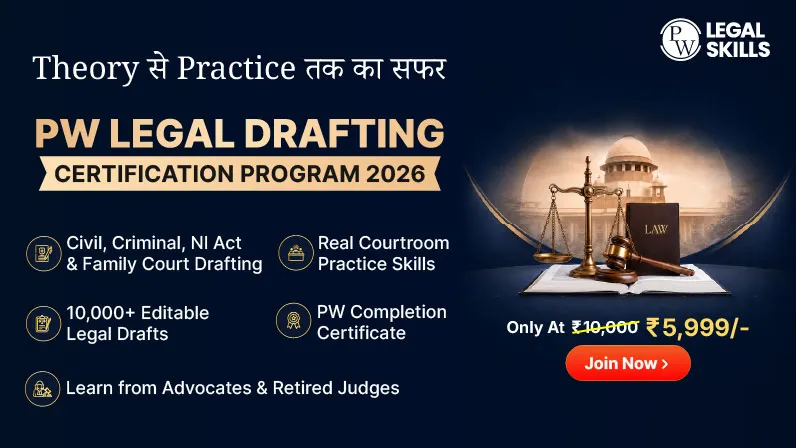
PW's Advanced Criminal Litigation & Legal Drafting Program helps students build practical skills alongside their legal knowledge. The 9-month online course covers legal drafting, court procedure, client management, judgment analysis, and criminal litigation through live classes, practice exercises, and 10,000+ editable legal drafts in English and Hindi.
These skills can help students perform better during internships, assist senior lawyers with case work, and prepare for opportunities in litigation chambers and law firms. The program also offers placement assistance for two interviews in the Delhi NCR region and covers freelance drafting and legal startup opportunities.
This program is suitable for law students, judiciary aspirants, fresh advocates, and interns who want to improve their practical drafting skills. It is also useful for students who have mostly studied legal theory and want to learn how it is applied in real legal work.
You can explore the batch details and enrol here: PW Advanced Criminal Litigation & Legal Drafting Program 2026.





FAQs
How do criminal litigation skills improve career opportunities?
What skills are important in criminal litigation?
Can criminal litigation skills help during internships?
Can fresh advocates benefit from these skills?
Does PW's program cover criminal litigation?
What does the PW program offer?

Get Free Counselling Today
and Clear up all your Doubts
 Live & recorded classes available at easeDashboard for progress trackingLakhs of practice questions

