






Is a Legal Drafting Course Worth It in 2026?



Law school teaches you the law, but it may not always give you enough opportunities to practise drafting legal documents. You may understand a legal provision and still feel unsure about how to use it while preparing a plaint, bail application, legal notice, or written statement.
This gap between legal theory and practical work is where a legal drafting course can help.
Drafting is a skill that improves with practice. You need to understand how facts are presented, how legal provisions are used, and how a document is structured for a particular legal matter. Practical training can help you develop this understanding before you enter professional legal work.
For law students, judiciary aspirants, interns, and fresh advocates, a structured drafting course can therefore be a useful addition to regular legal education.
What Makes Legal Drafting Skills Important in 2026?
Legal work involves much more than knowing laws and reading judgments. Documents form an important part of legal practice. During an internship or your early professional career, you may be asked to assist with notices, complaints, applications, agreements, or other legal documents.
Your drafting skills can become particularly relevant at different stages of your career.
-
During internships, you may be expected to understand documents and assist seniors with basic drafting tasks. Having some prior practice can make it easier to follow these assignments.
-
At the beginning of your career, you may work on different types of legal documents depending on your role. Understanding the basic structure of these documents can help you approach them with greater clarity.
-
During legal practice, drafting becomes a regular professional skill. Civil, criminal, family, property, and other matters can require different documents and formats.
Knowing the law and applying it while drafting are two different skills. A good drafting course should help you work on both sides by connecting legal concepts with practical documents.
What Should You Look for in a Good Legal Drafting Course?
Not every drafting course will offer the same learning experience. Before enrolling, you should check whether the programme gives you enough opportunities to practise.
A useful course should cover different types of legal documents instead of focusing on only one format. It should also explain the purpose of each document and where it fits into the legal process.
You can look for the following features:
-
Practical drafting formats and examples
-
Coverage of civil, criminal, family, and property matters
-
Assignments and drafting exercises
-
Court procedure and filing-related learning
-
Case-based exercises
-
Judgment reading and analysis
-
Client management or counselling
-
Access to reference drafts and templates
-
Live classes along with recordings
Drafting is also connected to other parts of legal practice. For example, preparing a document may involve understanding the facts of a matter, identifying relevant provisions, organising information, and following the required procedure.
Therefore, a course that covers the broader legal workflow can give you a more practical learning experience.
Why the PW Legal Drafting Certification Program Is Worth Considering
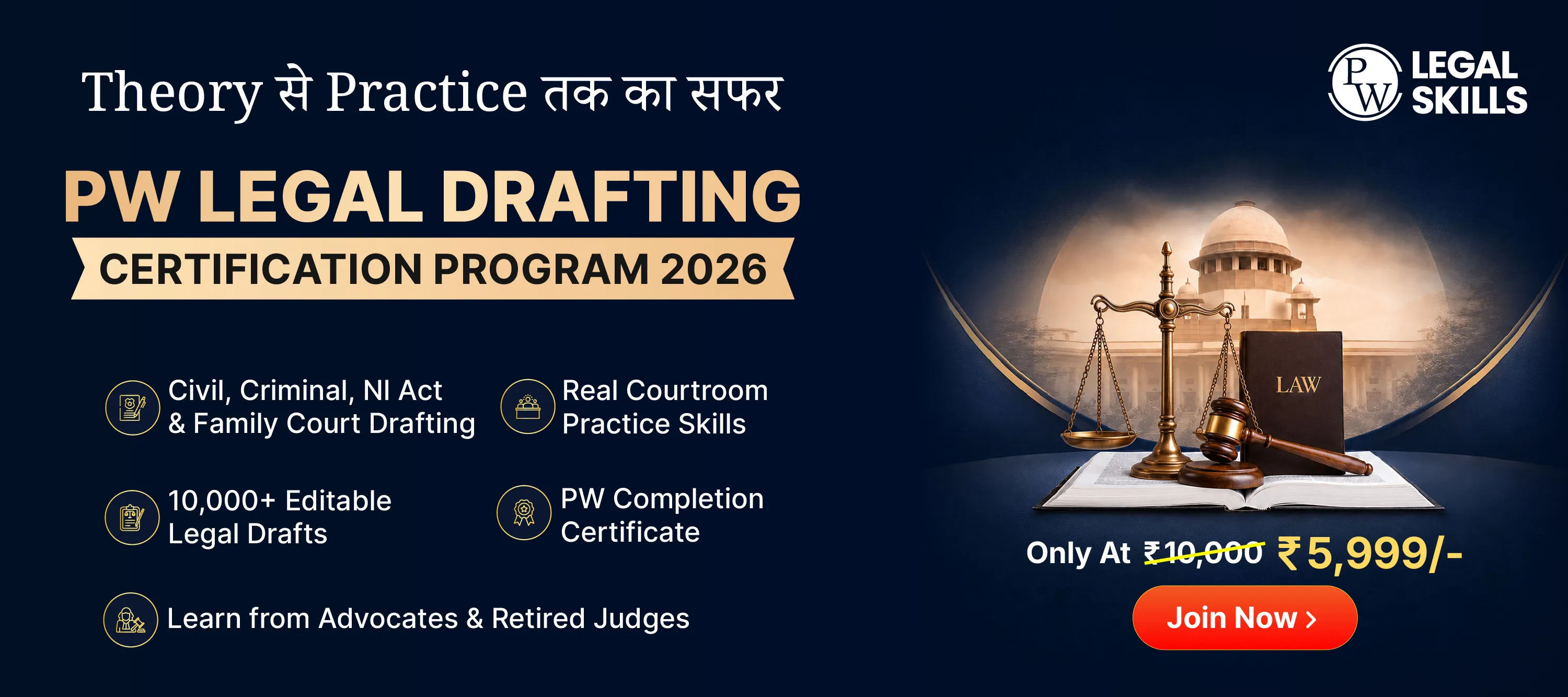
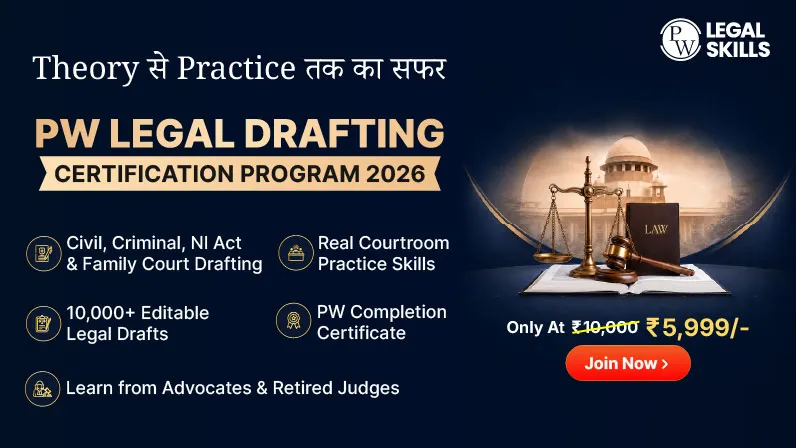
The PW Legal Drafting Certification Program 2026 Batch 2 is designed for learners who want to develop practical legal drafting skills. The programme is conducted online and uses Hinglish as the teaching language.
|
Course Detail |
Information |
|
Course |
PW Legal Drafting Certification Program 2026 Batch 2 |
|
Duration |
4 months |
|
Mode |
Online |
|
Classes |
Live + Recorded |
|
Live Schedule |
Weekend classes with additional sessions |
|
Language |
Hinglish |
|
Drafting Resources |
10,000+ editable legal drafts |
|
Draft Languages |
English and Hindi |
|
Certificate |
PW Completion Certificate |
|
Validity |
30 July 2027 |
The faculty for this batch includes:
-
Karan Sangwan Sir
-
Atma Prakash Singh Sir
-
Shrimee Ma'am
-
Arjita Chaturvedi
-
Kiffi Agarwal Ma'am
-
Apoorva Ma'am
-
Gyanendra Chaturvedi
The programme is structured around practical legal drafting, court procedures, documentation, and professional legal workflows.
What Do You Get With the PW Legal Drafting Course?
A key resource included in the programme is the 10,000+ editable legal drafts in English and Hindi. These can give you reference material while practising different types of documents.
The course covers drafting across several legal areas.
-
Criminal drafting includes notices, FIR-related documents, bail, criminal complaints, cheque bounce matters under Section 138 of the NI Act, quashing, and appeals.
-
Civil drafting includes plaints, written statements, set-off, counterclaims, injunctions, caveats, wills, and testamentary agreements.
-
Family law drafting includes maintenance, restitution of conjugal rights, divorce, and Talaq-related matters.
-
Property and agreement drafting includes sale, lease, gift, mortgage, partnership deeds, family settlement agreements, and Power of Attorney.
The course also covers areas beyond document formats. You can learn about court procedures and filing, client management, judgment reading and analysis, client counselling, and modern legal practice.
The programme also includes a module on AI-powered legal drafting and modern legal practice, introducing learners to the changing nature of legal workflows.
Assignments and case-based exercises are included to give you opportunities to practise what you learn during the course.
After completing the programme, you receive a PW Completion Certificate.
Who Should Join the PW Legal Drafting Course?
Learners can consider the course at different stages of their legal journey.
-
Law students can use it to supplement their academic learning with practical drafting exercises. This can be particularly useful if you want to build drafting familiarity before starting internships or professional work.
-
Judiciary aspirants can consider the course if they want additional exposure to legal documents and court procedures alongside their regular examination preparation.
-
Legal interns can use drafting practice to become more familiar with documents they may encounter during their internship.
-
Fresh advocates can consider the programme if they want structured practice across different areas of drafting as they begin their professional journey.
The course is also designed to be accessible to beginners. If you already have some drafting experience, the assignments, exercises, and wider document coverage can give you additional areas to practise.
Is a Legal Drafting Course Worth Your Time and Money?
Yes, Legal drafting is a skill that develops through practice. Reading legal provisions can help you understand the law, but preparing documents requires a different kind of application.
A course can be useful when it gives you opportunities to work with different formats, understand court procedures, complete assignments, and learn how drafting fits into professional legal practice.
The PW Legal Drafting Certification Program 2026 Batch 2 brings these elements together through live and recorded classes, practical exercises, a collection of 10,000+ editable legal drafts, coverage across multiple areas of law, and a PW Completion Certificate.





Get Free Counselling Today
and Clear up all your Doubts
 Live & recorded classes available at easeDashboard for progress trackingLakhs of practice questions

