Traditional Art vs Digital Art: Career Scope, Opportunities and Future
 Mishika Gupta16 Nov, 2026

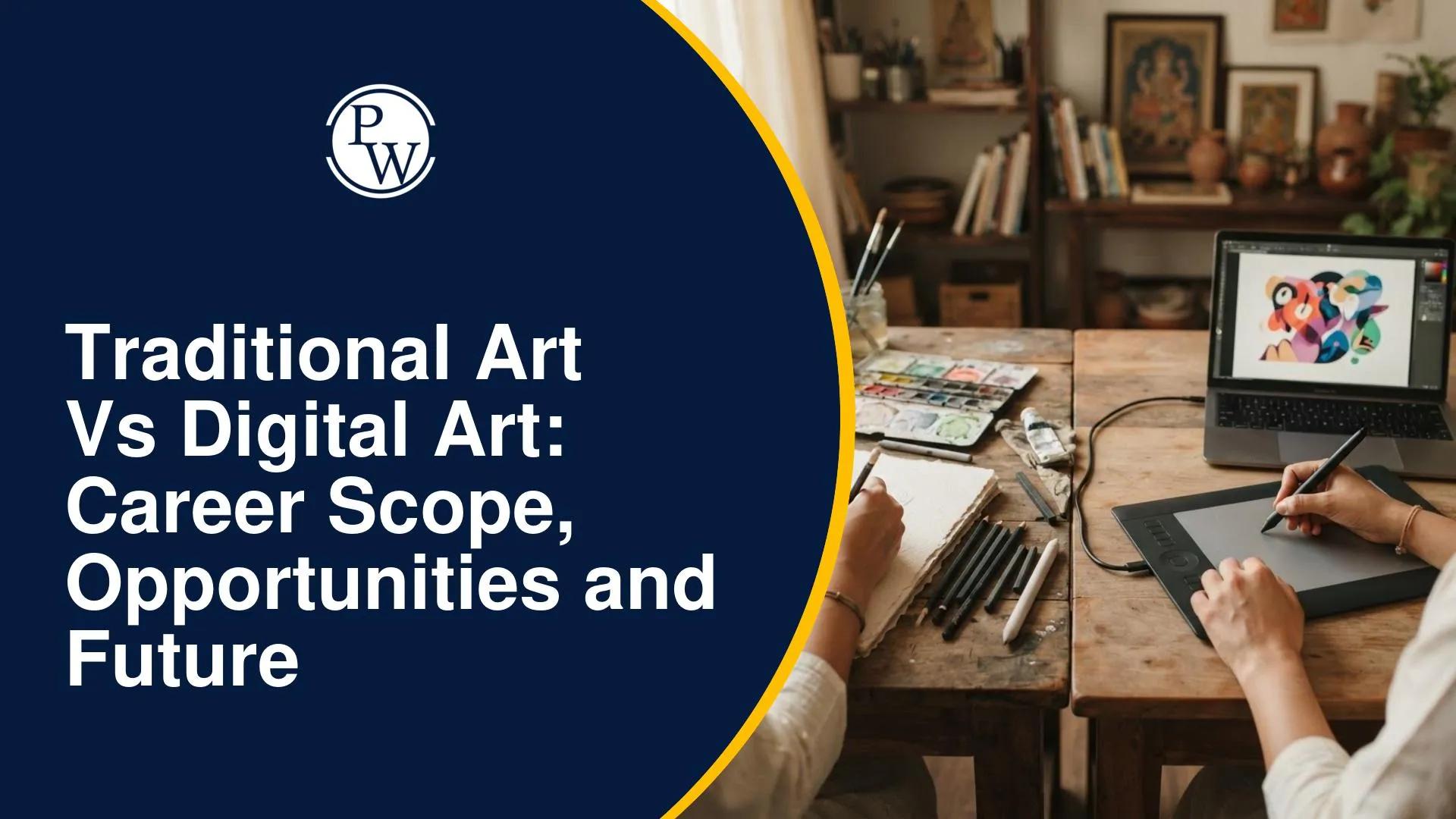
Art has evolved from traditional forms of expression, such as drawing and painting, to digital creations made using computers, tablets and specialised software. Today, artists can work with physical materials, digital tools or a combination of both. These developments have also expanded the career paths available to people interested in creative fields.
However, choosing between traditional art and digital art can be confusing, particularly when you are starting your artistic journey. Traditional art focuses on physical techniques and materials, whereas digital art uses technology to create and edit visual work. Understanding their differences, career opportunities and earning potential can help you decide which medium aligns with your interests and long-term goals.
Understand Traditional Art and Digital Art
Traditional art and digital art are two forms of artistic expression. Both require creativity, observation and an understanding of visual elements, but they differ in the materials and methods artists use to create their work.
What Is Traditional Art?
Traditional art refers to artwork created using physical materials and techniques. Artists work directly on surfaces such as paper, canvas, wood or other materials to produce drawings, paintings and sculptures.
Some common forms of traditional art include:
-
Pencil Drawing and Sketching: Creating images using graphite pencils, focusing on lines, shapes, proportions and shading.
-
Charcoal Art: Using charcoal sticks or pencils to create expressive drawings with strong contrasts and tonal variations.
-
Watercolour Painting: Applying water-based colours to paper to create transparent layers, textures and colour effects.
-
Acrylic Painting: Using fast-drying acrylic paints to create artwork on canvas, paper and other suitable surfaces.
-
Oil Painting: Working with oil-based paints to develop layered artwork, detailed textures and rich colour effects.
-
Sculpture and Clay Modelling: Creating three-dimensional artwork by shaping materials such as clay, stone or other substances.
-
Printmaking: Producing images by transferring designs from prepared surfaces onto materials such as paper or fabric.
Traditional art allows artists to work directly with materials and develop a personal connection with their creative process.
What Is Digital Art?
Digital art refers to artwork created or modified using digital devices and software. Artists may use computers, graphic tablets, styluses or touchscreens to produce illustrations, paintings, animations and other visual content.
Some common forms of digital art include:
-
Digital Illustration: Creating drawings and visual designs using digital tools.
-
Digital Painting: Using software and digital brushes to create paintings that resemble traditional artistic techniques.
-
Concept Art: Developing visual ideas for characters, environments, objects and settings used in films, games and other creative projects.
-
Character Design: Creating the appearance, features and visual identity of characters for animation, games and illustrations.
-
2D and 3D Animation: Producing moving visuals through two-dimensional drawings or three-dimensional digital models.
-
Graphic Design: Creating visual content for advertisements, branding, publications and digital platforms.
-
3D Modelling and Digital Sculpting: Building and shaping three-dimensional objects, characters and environments using specialised software.
Digital art gives artists access to tools that allow them to edit, adjust, reproduce and share their work through digital platforms.
Traditional Art vs Digital Art: Key Differences
Traditional and digital art share many artistic fundamentals, but their tools, working methods and professional applications differ. Understanding these differences can help you identify which medium suits your learning preferences and creative goals.
|
Basis of Comparison |
Traditional Art |
Digital Art |
|
Tools and Equipment |
Uses pencils, charcoal, paints, brushes, canvas and paper. |
Uses computers, tablets, styluses and digital art software. |
|
Medium |
Artwork is created on physical surfaces using tangible materials. |
Artwork is created or edited in a digital environment. |
|
Corrections and Editing |
Changes may require erasing, repainting or reworking parts of the artwork. |
Artists can use undo, layers, selection tools and editing features to make changes. |
|
Learning Requirements |
Requires practice with physical materials, drawing techniques and artistic fundamentals. |
Requires artistic fundamentals as well as familiarity with digital tools and software. |
|
Initial Investment |
Basic drawing materials can be affordable, while specialised paints and equipment may cost more. |
Requires access to a suitable digital device and, depending on the tools, paid software or accessories. |
|
Reproduction |
Original artwork may need scanning, photography or printing to create copies. |
Digital files can be duplicated, edited and shared more easily. |
|
Portability |
Portability depends on the materials and equipment being used. |
Artwork can be accessed and edited on compatible digital devices. |
|
Professional Applications |
Includes fine arts, commissioned paintings, illustration, murals and art education. |
Includes animation, gaming, graphic design, digital illustration and concept art. |
|
Sharing Artwork |
Artists may use exhibitions, galleries, photographs and physical displays. |
Artists can share work through online portfolios, social media and digital platforms. |
|
Creative Workflow |
Involves direct interaction with physical materials and surfaces. |
Involves digital tools, software features and screen-based processes. |
Both mediums require time, practice and a strong understanding of artistic principles. Digital tools may make certain corrections easier, but they do not automatically make creating artwork simpler.
Career Opportunities in Traditional Art and Digital Art
Both traditional and digital art offer different professional paths. Your opportunities will depend on the type of work you enjoy, the skills you develop and the industry you want to enter.
Career Opportunities in Traditional Art
Traditional artists can work independently, teach art or create original artwork for individuals, organisations and exhibitions. Some career options include:
-
Professional Fine Artist: Creates original paintings, drawings or sculptures for exhibitions, galleries and private buyers.
-
Art Educator and Art Teacher: Teaches drawing, painting and other artistic techniques in schools, academies or independent classes.
-
Children's Book Illustrator: Creates hand-drawn illustrations for children's stories, educational books and publications.
-
Mural and Wall Artist: Designs and paints large-scale artwork for buildings, public spaces and private properties.
-
Commissioned Artist: Creates personalised portraits, paintings and other artwork based on client requirements.
-
Gallery and Exhibition Artist: Displays original artwork through galleries, exhibitions and art events.
-
Art Entrepreneur: Builds an independent art business by selling original work, prints, handmade products or conducting workshops.
These career paths allow artists to work with physical materials, develop their own creative styles and build professional relationships with clients and art communities.
Career Opportunities in Digital Art
Digital artists can work in creative industries that require illustrations, visual designs, animation and computer-generated artwork. Some career options include:
-
Digital Illustrator: Creates digital artwork for books, websites, advertisements, publications and other projects.
-
Concept Artist: Develops visual concepts for characters, environments, objects and scenes used in films, games and animation.
-
Character Designer: Creates character appearances, expressions, costumes and visual details for animated content and games.
-
2D Animator: Produces two-dimensional animated sequences for films, advertisements, games and online content.
-
3D Artist: Creates three-dimensional models, objects, environments and visual assets using specialised software.
-
Game Artist: Designs characters, backgrounds, props, textures and other visual elements used in video games.
-
Graphic Designer: Develops visual communication materials for brands, businesses, publications and digital platforms.
-
UI/UX Designer: Works on the visual design and user experience of websites, applications and digital products.
-
Digital Content Creator: Produces visual content for social media, online platforms, educational resources and independent creative projects.
Digital art offers opportunities across several industries, particularly where visual communication, animation and digital content are required.
Salary, Skills and Earning Potential: Traditional Art vs Digital Art
Earning potential varies across traditional and digital art careers. Your income may depend on your specialisation, experience, location, portfolio, employment type and client base. Understanding the different ways artists earn and the skills required can help you plan your professional development.
Salary and Earning Potential in Traditional and Digital Art
Traditional artists may earn through the sale of original artwork, commissioned projects, exhibitions and teaching. Digital artists may work in companies, studios or independently through freelance assignments and commercial projects.
Common earning opportunities in traditional art include:
-
Selling original paintings, drawings and sculptures.
-
Creating commissioned portraits and personalised artwork.
-
Participating in art exhibitions and gallery events.
-
Conducting art workshops and masterclasses.
-
Teaching at schools, art academies or independent classes.
-
Taking up commercial illustration assignments.
-
Creating murals and commissioned projects.
-
Selling prints and art merchandise.
Common earning opportunities in digital art include:
-
Working full-time with animation, gaming or design companies.
-
Taking up freelance illustration projects.
-
Working on animation and visual effects assignments.
-
Joining game development studios.
-
Creating concept art and character designs.
-
Completing graphic design projects for businesses.
-
Selling digital assets through online marketplaces.
-
Creating online courses and tutorials.
-
Licensing artwork for commercial use.
The following table provides broad indicative annual earning ranges for selected art-related careers in India.
|
Career |
Approximate Annual Earnings |
|
Traditional Art Teacher |
Rs. 2.5–6 LPA |
|
Freelance Fine Artist |
Highly variable |
|
Professional Illustrator |
Rs. 3–8 LPA |
|
Graphic Designer |
Rs. 2.5–7 LPA |
|
Digital Illustrator |
Rs. 3–8 LPA |
|
2D Animator |
Rs. 3–8 LPA |
|
3D Artist |
Rs. 3–10 LPA |
|
Concept Artist |
Rs. 4–12 LPA |
|
Game Artist |
Rs. 3.5–10 LPA |
|
UI/UX Designer |
Rs. 4–12 LPA |
Note: LPA means Lakhs Per Annum. These figures are broad illustrative estimates, not guaranteed salaries or official industry averages. Actual compensation varies considerably. Senior specialists and highly successful independent artists may earn more.
Skills Required to Become a Successful Artist
Whether you choose traditional or digital art, certain foundational skills are essential. These abilities help you create effective artwork and develop your own artistic approach.
Core artistic skills include:
-
Drawing Fundamentals: Learn lines, shapes, forms, proportions, perspective and composition to develop a strong foundation.
-
Anatomy: Understand human and animal anatomy, particularly if you are interested in portrait art, character design, illustration or animation.
-
Colour Theory: Learn how colours interact, how to create harmonious combinations and how colour influences visual communication.
-
Light and Shadow: Understand light, shadow, contrast and values to create depth and realism in your artwork.
-
Observation: Develop the ability to analyse objects, people, environments and visual references.
-
Creativity and Visual Storytelling: Learn to communicate ideas and emotions through visual elements.
Additional skills and software for digital artists:
If you want to enter the digital art industry, you should also become familiar with tools relevant to your chosen specialisation.
|
Software |
Common Use |
|
Adobe Photoshop |
Digital painting and image editing |
|
Adobe Illustrator |
Vector graphics and illustration |
|
Procreate |
Digital drawing and painting |
|
Clip Studio Paint |
Illustration, comics and manga |
|
Blender |
3D modelling, sculpting and animation |
|
Autodesk Maya |
3D animation and modelling |
|
Krita |
Digital painting and illustration |
|
Adobe After Effects |
Motion graphics and visual effects |
You do not need to learn every software package. Choose tools according to your intended specialisation and practise using them regularly.
Choosing Between Traditional Art and Digital Art: Career Preparation and Future Scope
Your choice between traditional and digital art depends on your interests, career goals and preferred working style. Understanding the role of AI, artistic fundamentals, and emerging creative fields can also help you plan your career.
Is Traditional Art Still Relevant in the Age of AI?
AI tools can generate images, edit artwork, create visual variations and assist with creative tasks. However, artistic knowledge and human creativity remain important.
Artists bring personal experiences, original thinking, visual storytelling, cultural understanding and artistic judgement to their work.
AI applications in traditional art:
-
Generating visual references.
-
Exploring compositions and colour palettes.
-
Planning artwork.
-
Identifying creative directions.
AI applications in digital art:
-
Developing ideas and references.
-
Editing images.
-
Assisting with repetitive tasks.
-
Supporting creative experimentation.
AI can assist artists, but understanding anatomy, perspective, composition, visual consistency, and design remains essential. Artists who combine creative skills with the ability to adapt to new tools can respond better to changing workflows.
Traditional Art vs Digital Art: Which One Should You Choose?
Your choice should reflect the kind of work you enjoy and the career you want to pursue.
Choose traditional art if:
-
You enjoy drawing and painting with physical materials.
-
You are interested in fine arts and original artwork.
-
You like hands-on creative work.
-
You want to pursue art teaching, commissions or exhibitions.
Choose digital art if:
-
You enjoy technology and creative software.
-
You are interested in animation or gaming.
-
You want to create digital illustrations or character designs.
-
You are interested in graphic design or digital freelance projects.
What if you like both?
You can learn both mediums. Traditional drawing can strengthen your artistic fundamentals, while digital tools allow you to edit, develop and share your work.
Why Learning Traditional Art Fundamentals Can Improve Your Digital Art
Digital tools do not replace the need for artistic fundamentals. Creating convincing digital artwork still requires an understanding of proportions, anatomy, light, shadow and perspective.
|
Traditional Skill |
Digital Application |
|
Pencil sketching |
Digital sketching |
|
Human anatomy |
Character design |
|
Perspective |
Environment design |
|
Shading |
Digital lighting |
|
Colour theory |
Digital painting |
|
Composition |
Visual storytelling |
|
Figure drawing |
Animation and games |
Building these fundamentals first can help you create better artwork in either medium.
How to Start Your Career in Traditional or Digital Art
Developing artistic skills, building a portfolio and gaining practical experience can help you prepare for a professional career.
-
Build Your Fundamentals: Practise drawing, shapes, proportions, perspective, anatomy, shading and composition.
-
Try Different Mediums: Work with pencils, charcoal, watercolours, acrylics and digital tools to identify your interests.
-
Choose a Specialisation: Consider fine arts, illustration, animation, concept art, character design, graphic design or game art.
-
Learn Relevant Tools: Develop skills in software or traditional techniques related to your chosen field.
-
Build a Portfolio: Include your strongest work and demonstrate technical ability, creativity, originality and relevant skills.
-
Take Up Projects: Gain experience through freelance assignments, internships, commissions, competitions and collaborations.
-
Build Your Professional Presence: Share your work on Behance, ArtStation, Instagram or your own website and connect with creative communities.
-
Keep Learning: Practise regularly, improve your techniques and adapt to changes in creative tools and industry practices.
The Future of Art: What Can We Expect?
Traditional creativity and digital technology are increasingly coming together. Some important areas offering opportunities for artists include:
-
Gaming Industry: Character design, environments, props, textures, animation and visual effects.
-
Animation and Visual Effects: Visual design and animation for films, OTT content and advertisements.
-
Digital Illustration and Publishing: Artwork for books, educational materials, marketing and online media.
-
Immersive Technologies: Visual environments and interactive designs for virtual reality (VR), augmented reality (AR) and mixed reality (MR).
-
Hybrid Art Practices: Combining traditional sketches and paintings with digital editing and illustration.
-
Independent Art Businesses: Selling artwork, conducting workshops, teaching online and creating digital products.
Traditional and digital art offer different creative methods, career paths and opportunities. This blog compares their techniques, tools, relevance and future scope while highlighting how traditional skills support digital art. It also explains how to choose a medium, develop your skills, build a portfolio and begin an art career.
Traditional Art vs Digital Art FAQs
Is traditional art better than digital art?
Can I become a professional artist without learning digital art?
Is digital art easier than traditional art?
Which is more affordable: traditional art or digital art?